Industry news

Industry news

How to Choose the Perfect CCT Track Light for Your Space
2026-03-02 11:18:56

Why CCT Track Lighting is Revolutionizing Modern Spaces

In commercial and retail environments, lighting isn’t just functional—it’s strategic. CCT Track Lights (Correlated Color Temperature track lights) have emerged as a game-changer, offering unparalleled flexibility in color temperature adjustment (typically 2700K–6500K) to match ambiance, time of day, or product displays. This guide dives deep into selecting, using, and installing CCT track lighting, with real-world shop examples. Whether you’re illuminating a boutique, gallery, or café, mastering CCT track lights ensures optimal aesthetics, energy efficiency, and customer engagement.

17下午.png

Understanding CCT Track Lights – Product Deep Dive

1.1 What is CCT?

Correlated Color Temperature (CCT) measures light warmth/coolness in Kelvins (K):

2700K–3000K: Warm white (cozy, intimate – ideal for lounges).

3500K–4000K: Neutral white (balanced – perfect for retail).

5000K–6500K: Cool white (energizing – suited for task areas).

Why it matters for track lights: Adjustable CCT allows dynamic scene shifts (e.g., warm evenings vs. bright midday in a store).

1.2 Key Components of CCT Track Lights

Track Systems:

Types: H, J, or L-shaped tracks (compatibility matters).

Voltage: 12V low-voltage (safer) vs. 120V line-voltage (longer runs).

Light Heads:

Adjustability: 360° rotation ± 90° tilt for precision aiming.

Optics: Beam angles (15° spot vs. 60° flood) for focus/wash effects.

LED Chips:

CRI >90: High Color Rendering Index for true-to-life colors.

Dimmability: Compatible with 0-10V, TRIAC, or DALI controls.

1.3 Benefits Over Fixed-CCT Lights

Energy Savings: LED efficiency (80–100 lumens/watt).

Longevity: 50,000-hour lifespan vs. halogen/halogen.

Design Flexibility: Reconfigure layouts without rewiring.

How to Choose the Right CCT Track Light – 7 Critical Factors

2.1 Define Your Lighting Goals

Ambient vs. Accent Lighting:

Ambient: Wider beams (36°–60°) for general illumination.

Accent: Narrow beams (15°–25°) to highlight products/art.

Task Lighting: For counters or registers (4000K–5000K enhances focus).

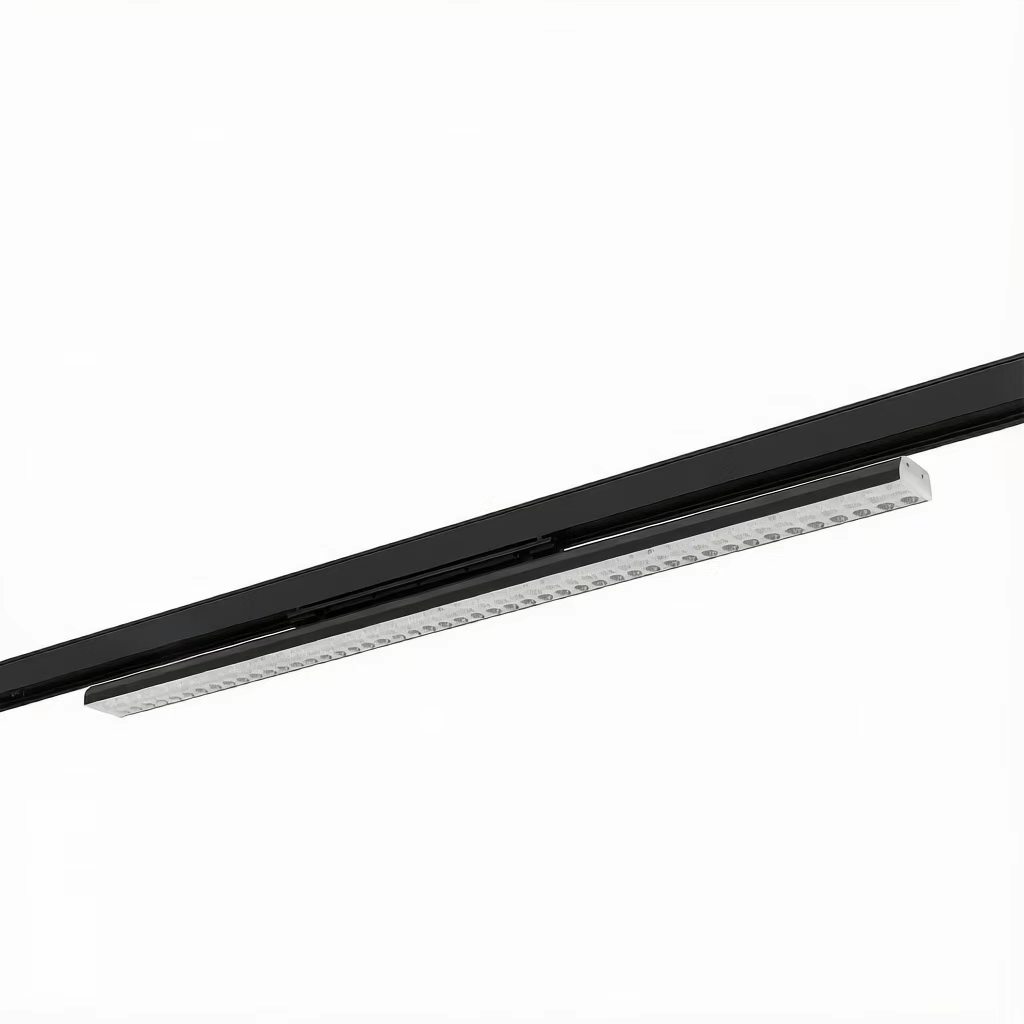
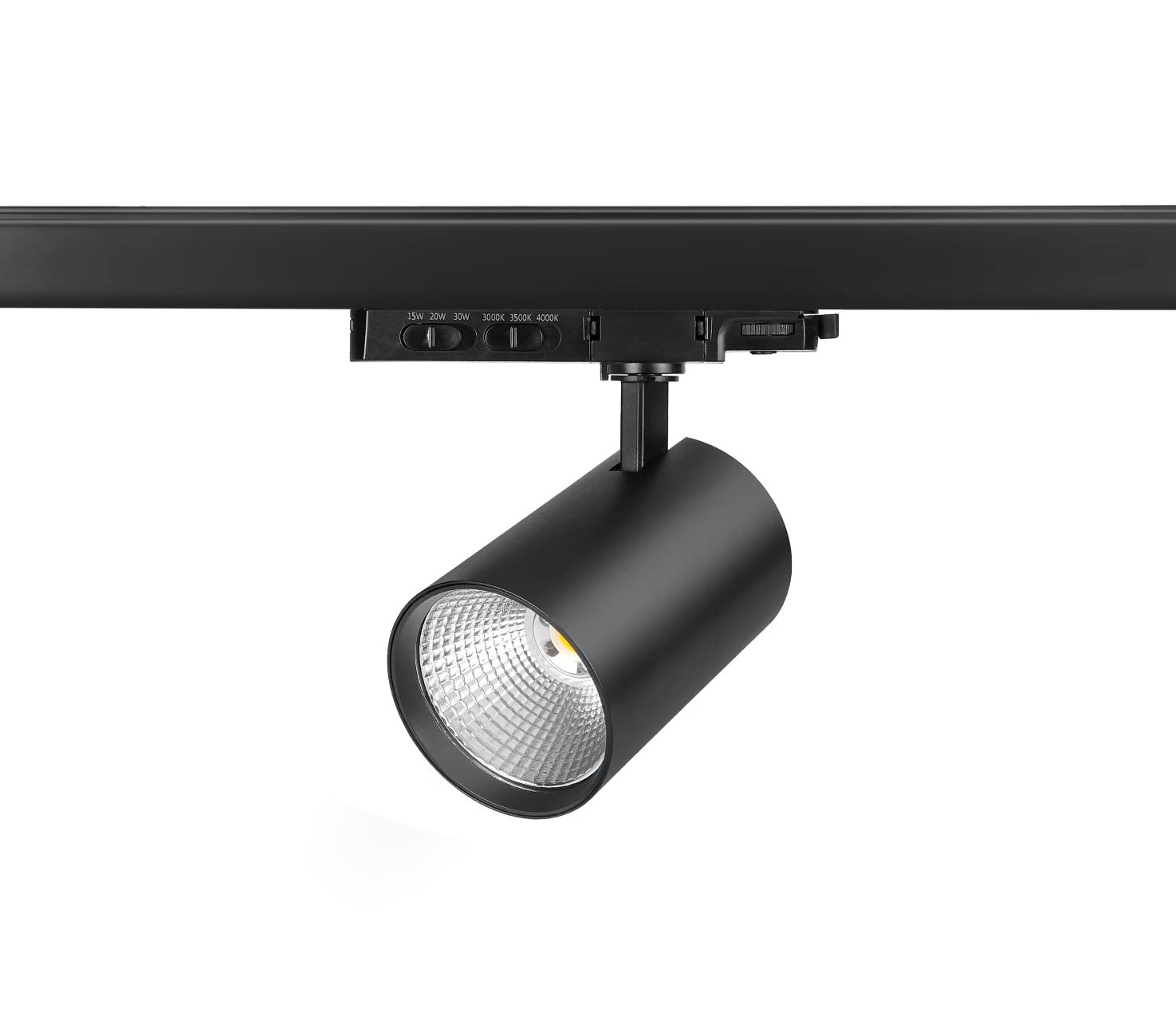
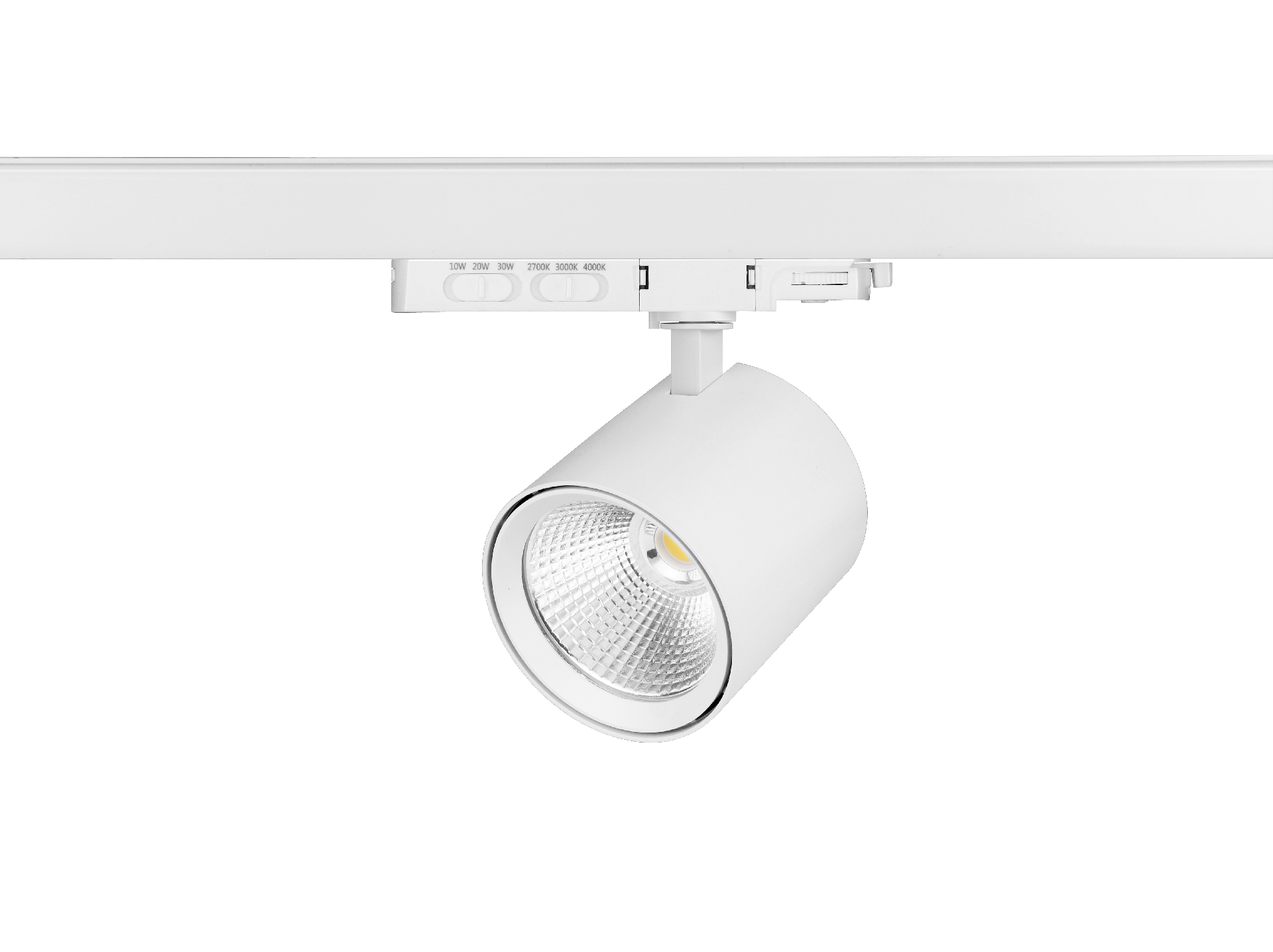
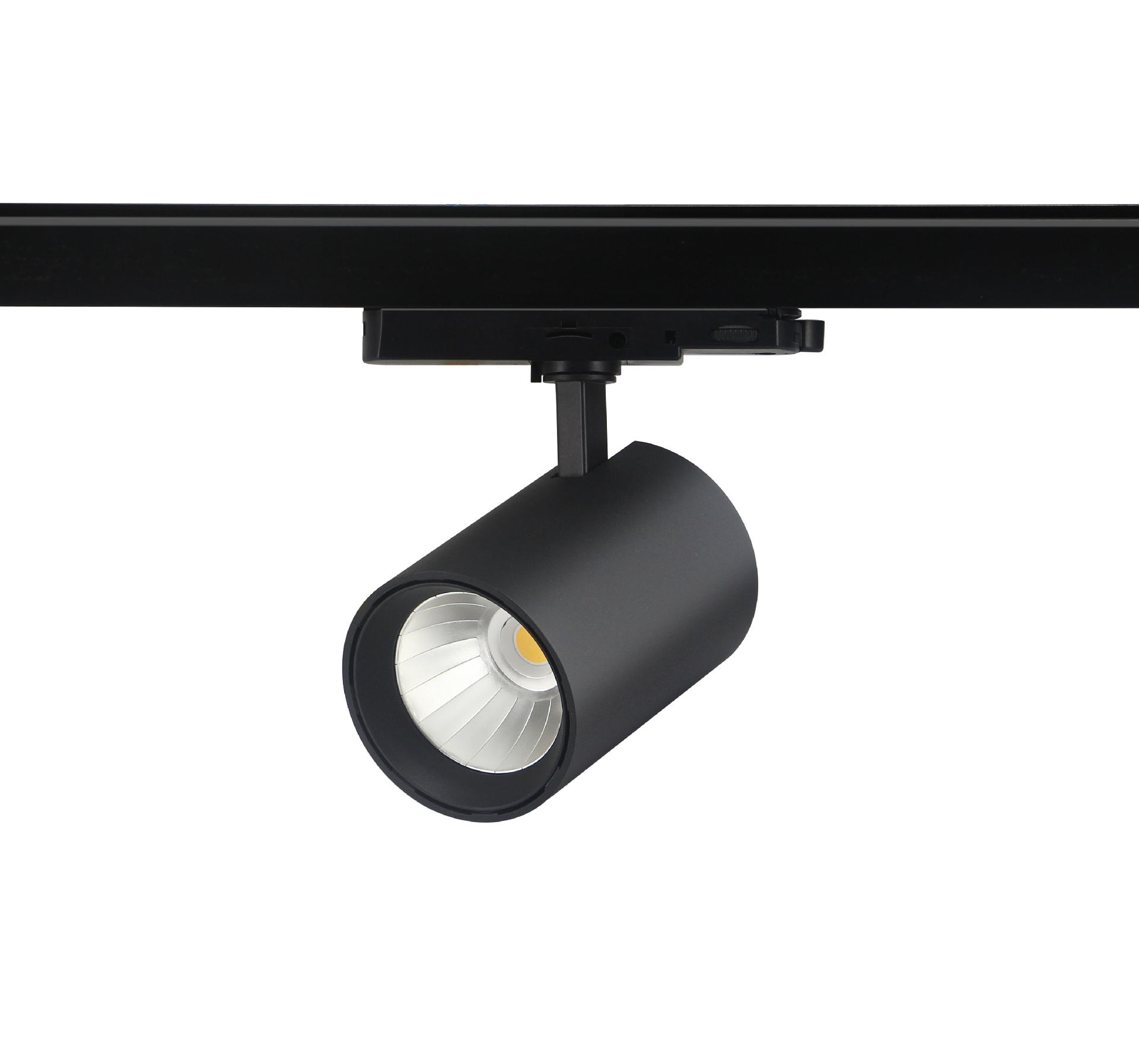
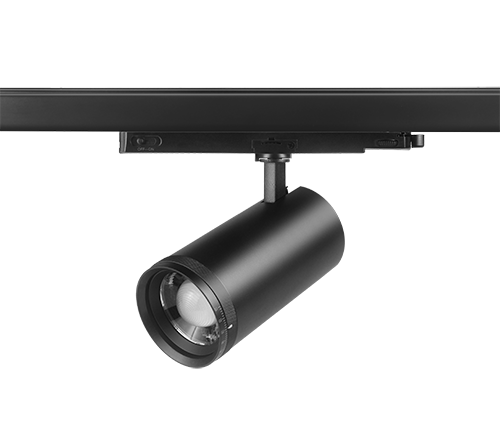
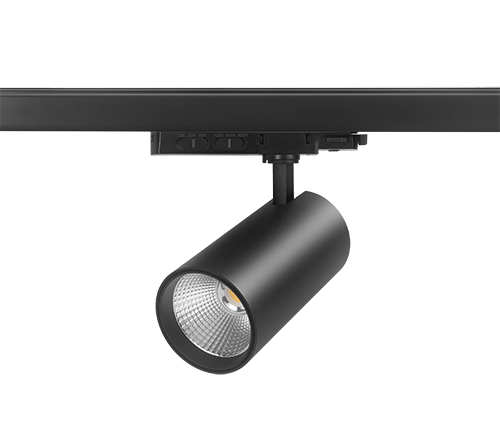
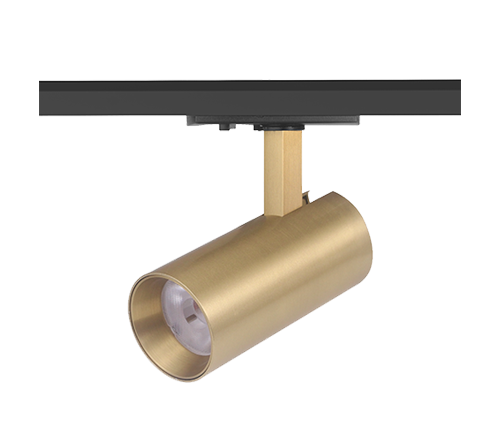
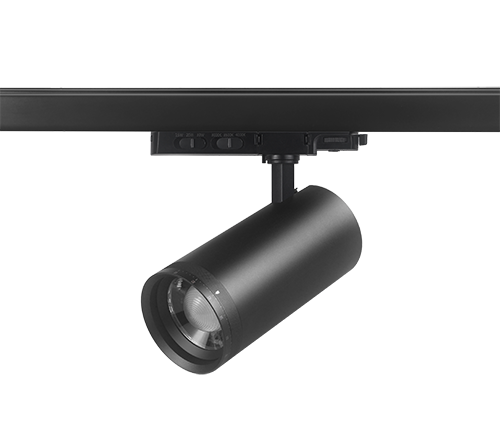
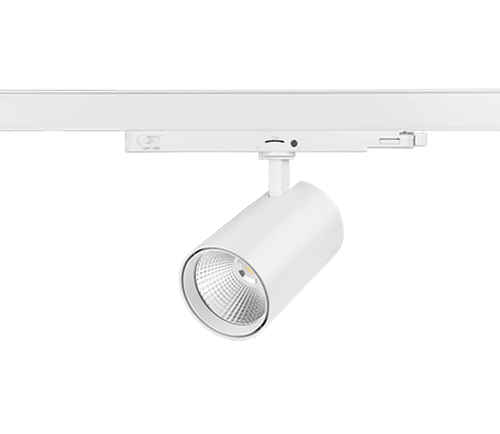
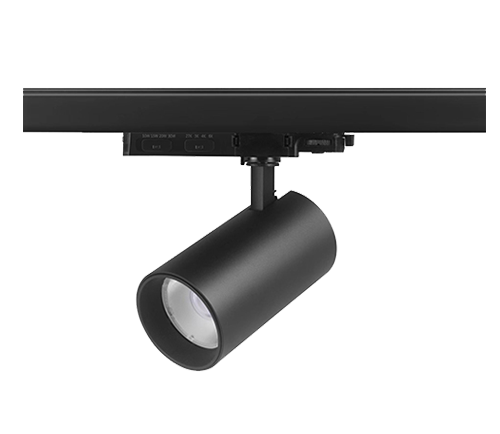
FeaturesCCT track light
CCT2700K-3000K-4000K changeable
Watts15W-20W-30W switchable
Angles15°/24°/36°60°
SizeD85*L140mm
Available ColorsBlack/White/Gold
DimingTriac dimmable

With all those features inegrated into one light, just need to switch the bottom on the adapter to change Watt and CCT 

2.2 Prioritize CCT Range & Control

Range: Ensure 2700K–6000K for full versatility.

Control Systems:

Basic: Wall dials for manual CCT adjustment.

2.3 Match Lumens to Space Size

Calculate Lumens Needs:

Shops: 50 lumens/sq. ft (e.g., 500 sq. ft = 25,000 lumens total).

Use 20W–30W heads (2,000–3,500 lm each) for retail.

2.4 Beam Angle & Optics

Spot (15°–24°): Jewelry, art frames.

Flood (36°–60°): Clothing racks, wall washes.

Asymmetric Optics: For wall grazing (e.g., textured displays).

2.5 Track Compatibility & Installation

Track Type: Match existing systems (e.g., Juno J-Track or Halo H-Track).

Load Capacity: Ensure tracks support total wattage (e.g., 20A max).

2.6 Energy Efficiency & Certifications

Look for ENERGY STAR or DesignLights Consortium (DLC) listings.

THD <20%: Low Total Harmonic Distortion for grid safety.

2.7 Flexibility

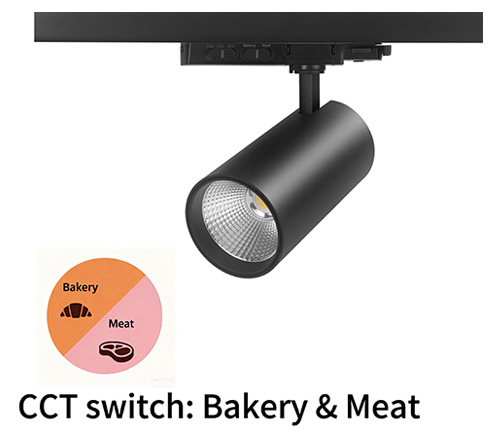
This CCT track light are available in 3Power & 3CCT adjustable in one light, which can be used in different places just need to change the POWER and CCT according to need.

CCT Track Light Applications – Transforming Retail Spaces

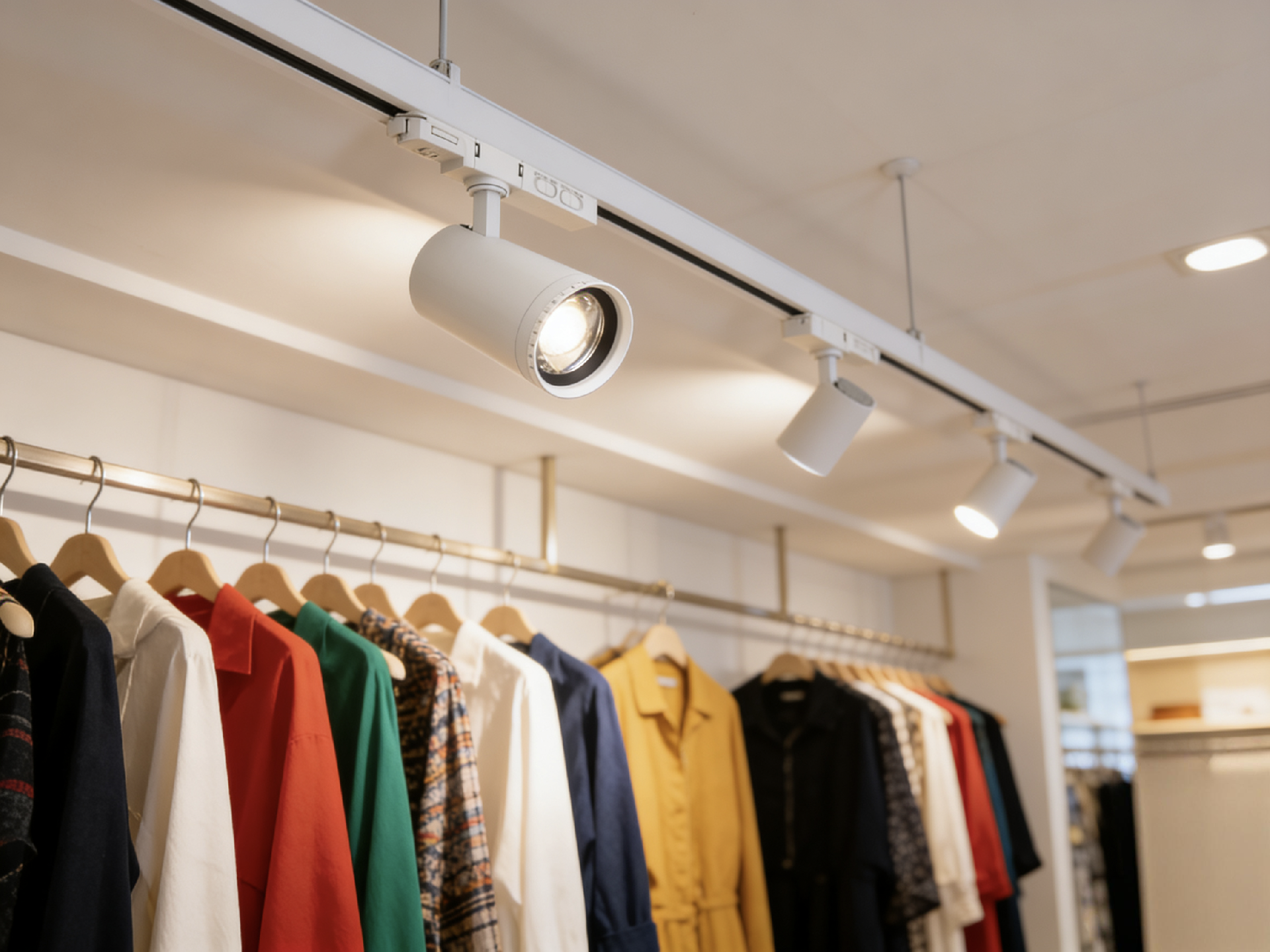
3.1 Boutique Clothing Stores

Setup: Tracks parallel to entryways, heads angled toward mannequins.

CCT Strategy:

3000K for warm, inviting fitting rooms.

4000K on display windows for vibrant daytime appeal.

Tip: Use this CCT track light for seasonal rearrangement. Since you can change the POWER and CCT freely

1.0.14.png

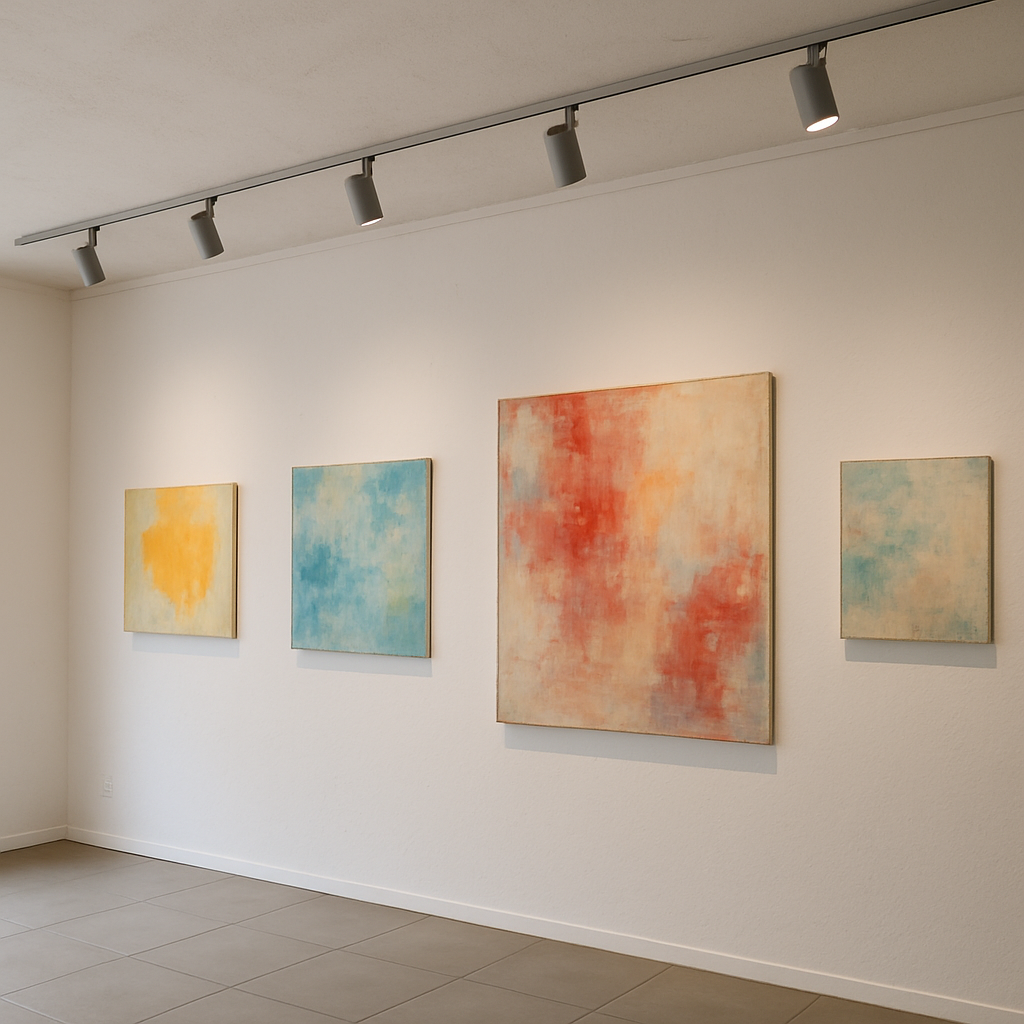
3.2 Art Galleries & Museums

Setup: Ceiling-mounted tracks with 15° spot heads.

CCT Strategy:

2700K for classical paintings (enhances warmth).

5000K for sculptures/metallic art (maximizes reflectivity).

CRI >95 is non-negotiable for color accuracy.

3.3 Cafés & Restaurants

Setup: Tracks above bars/tables with dimmable heads.

CCT Strategy:

Daytime: 5000K for kitchen tasks.

Evening: 2700K dining ambiance.

Pro Tip: Pair with occupancy sensors to save energy.

3.4 Jewelry Stores

Setup: Concentrated tracks over glass cases.

CCT Strategy: 3000K–3500K for diamond brilliance.

Optics: Ellipsoidal reflectors to eliminate case glare.

Installation Guidelines & Real-World Samples

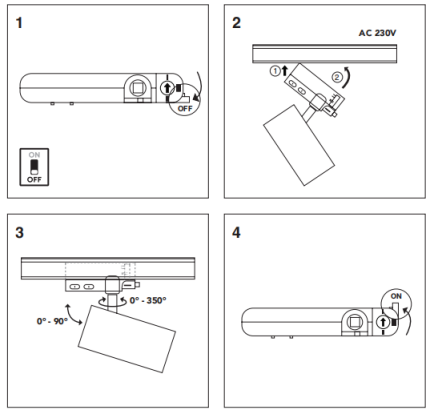
4.1 Step-by-Step Installation

Plan Layout: Sketch tracks avoiding HVAC/structural beams.

Mount Tracks: Secure to ceiling joists (use toggle bolts for drywall).

Wire Connections: Link tracks via L/T connectors; hire electrician for main feed.

Attach Heads: Snap heads onto tracks and lock rotation.

Program Controls: Sync dimmers/CCT controllers (test zones).

11-1.png

4.2 Sample Shop Installations

Sample 1: Minimalist Bookstore

Track: Black 8-ft linear system.

Result: 2700K lounge vs. 4000K reading nooks.

Sample 2: High-End Shoe Retailer

Track: White curved layout following display islands.

Heads: 12x 30W flood lights (4000K) + 4x spotlights (6500K for new arrivals).

Sample 3: Supermarket Fresh Produce

Track: Grid ceiling system.

Heads: 50x 20W 5000K high-CRI floods (makes greens appear fresher).


Conclusion: Mastering CCT Track Lights for Maximum Impact

Choosing the right CCT track light blends science and artistry. Prioritize flexibility (CCT range), precision (beam control), and efficiency (LED tech), then tailor installations to your space’s narrative—whether it’s a calming boutique or a high-energy showroom. With tunable color temperatures and modular designs, CCT track lighting isn’t just an upgrade; it’s the future of adaptive illumination.


skype

Contact