Suppliers offer you a 3 phase track light. Does this mean your project must have the three-phase LED spots? What is the purpose of having three-circuits in one track, and does each individual track light have independent control?
In commercial lighting, the word "3 phase track" generally refers to a three-circuit track lighting system, rather than a requirement for three-phase lighting system. Each compatible track light is equipped with a adapter that can be configured to connect to one of the three- circuit led track light. This allows fictures installed on the same track to be divided into different switching groups.
However, having three-circuit in the track does no automatically mean that three independent track lighting systems are available. Separate control is only possible when the circuits are correctly connected to individual POWER and switching arrangements.

In this guide, we will explain what 3 phase track lighting really means, how its three cirsuits operate, how many lighting groups can actually be controlled independently, why all the lights may sometimes turn to together, and what you should check before purchasing or installing a lighting system.
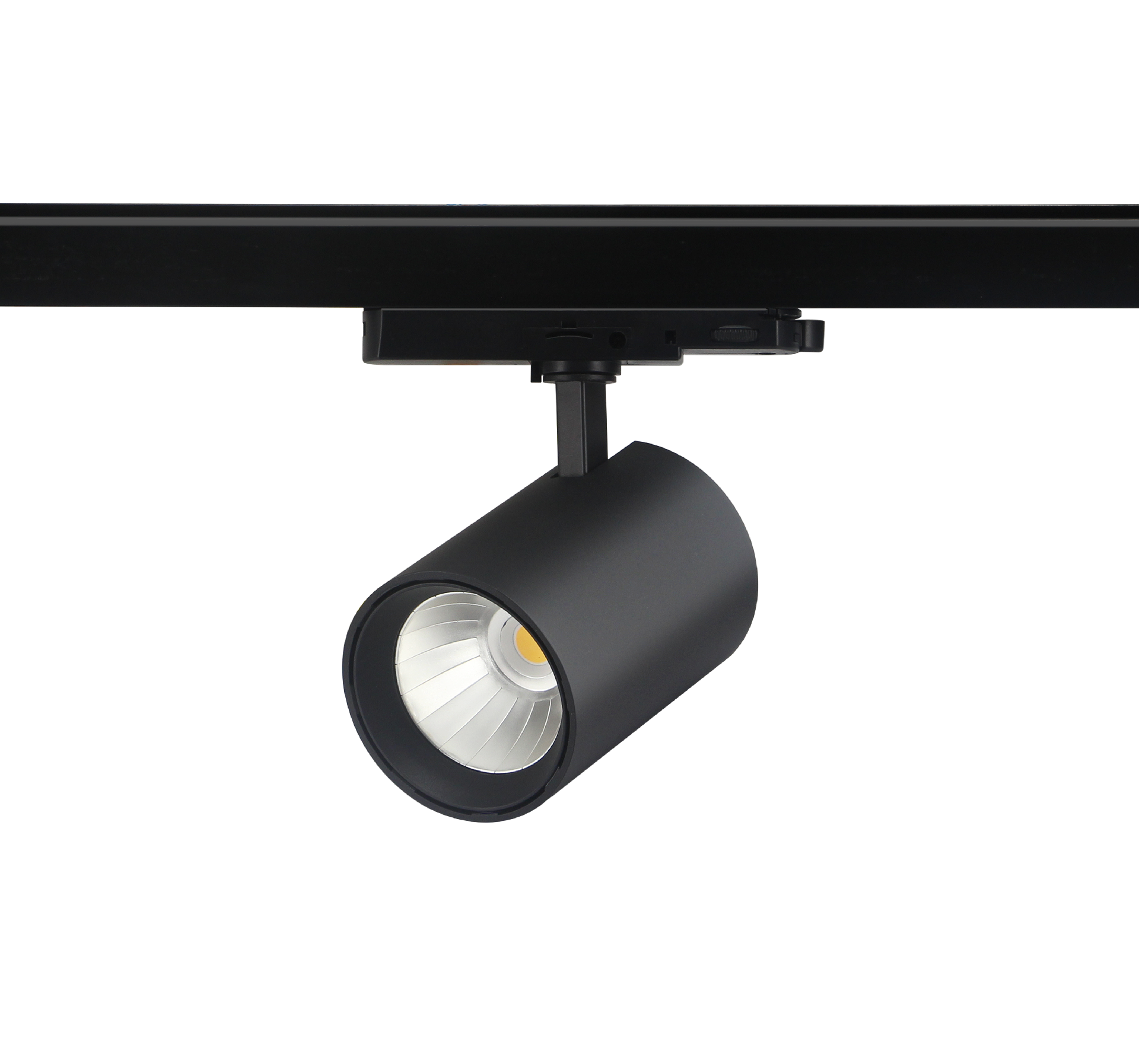
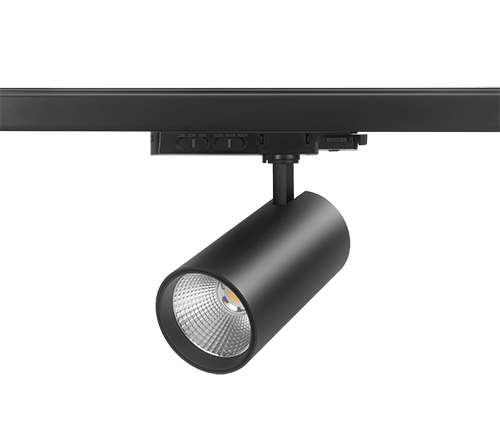
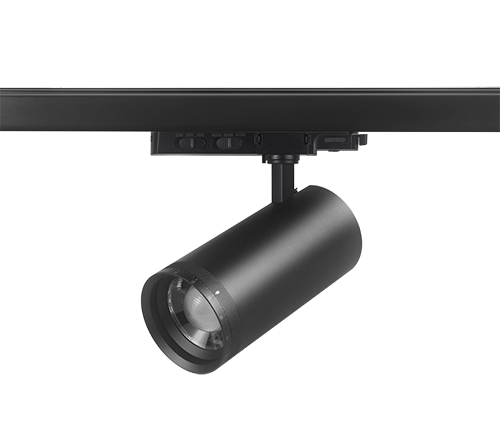
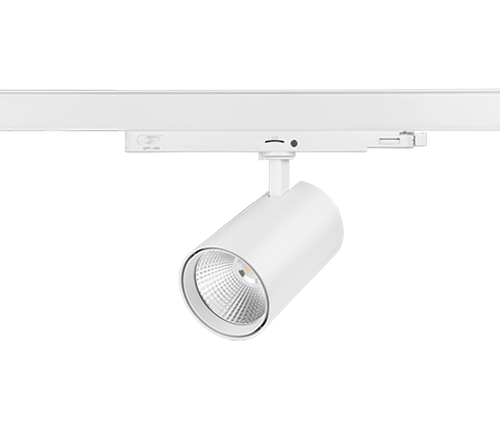
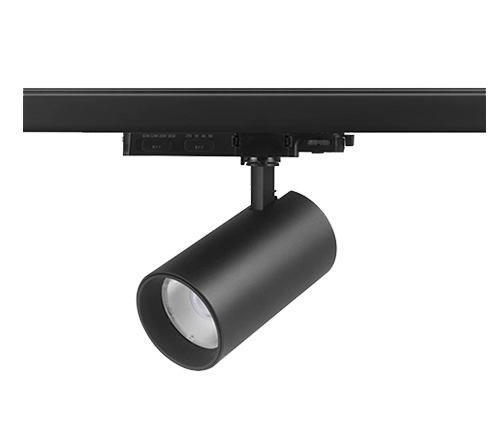
A 3 phase LED track light is a track-mounted LED luminaire designed to operate with a compatible three-circuit track lighting system.
The system typically consists of:
Three-circuit track rail: A track profile containing multiple electrical conductors for separate lighting circuits.
LED track light: The lighting fixture installed on the rail.
Three-circuit adapter: The electrical and mechanical connection between the fixture and the track.
Circuit selector: A switch or selector mechanism on the adapter that assigns the fixture to a specific circuit.
Power supply and control equipment: The electrical components that provide and manage power to the track.
The main advantage is that multiple lighting groups can share the same physical track while remaining separately controllable.
Each group can be assigned to a different circuit. When the electrical installation provides separate switching or control for those circuits, staff can operate the lighting groups independently.
What Does "3 Phase/ 3 Circuit" Actually Mean?
In commercial track lighting, the terms below are frequently used to describe a three-circuit system:
Although these names are widely used in the market, the more technically descriptive term is three-circuit track lighting.
The word "phase" can be misleading because it is also used to describe electrical power distribution. A conventional three-circuit track system may operate from a single-phase mains supply with three separately switched live conductors. Other installation arrangements may differ.
Therefore, a buyer should never assume that a track marked "3 phase" automatically requires a three-phase building supply.
The correct supply configuration, conductor arrangement, protective earth, neutral loading and circuit protection must be confirmed from the manufacturer's wiring diagram and approved by a qualified electrical professional.
How Does a Three-Circuit Track System Work?
A three-circuit track contains separate electrical paths, commonly identified as L1, L2 and L3, together with a neutral and protective-earth arrangement.
The exact conductor configuration varies by manufacturer. Some systems use the track's metal housing for protective earthing, while others use a dedicated protective-earth conductor.
Each compatible track light has an adapter that connects the fixture to the required conductors. A selector on the adapter allows the installer to assign the fixture to circuit 1, 2 or 3.
For example:
| Track light | adatper setting | assigned circuit | lighting group |
| Spotlight A | Position 1 | L1 | Main retail lighting |
| Spotlight B | Position 2 | L2 | Product display lighting |
| Spotlight C | Position 3 | L3 | Promotional lighting |
| Spotlight D | Position 4 | L4 | Maint retail lighting |
The result is three separately assignable lighting groups within one track installation.
It is important to understand that the track itself does not automatically provide three independent lighting scenes. The circuits must be connected and controlled appropriately at the electrical distribution or control system.
One of the most common questions from lighting buyers is whether they should choose single-circuit or three-circuit LED track lights.
The answer depends on the size of the project, the number of lighting zones, the required control flexibility and the available installation budget.
Single-Circuit LED Track Lighting
A single-circuit track lighting system has one switched lighting circuit. All compatible fixtures connected to that circuit normally operate together.
This system is suitable for applications where the lighting arrangement is relatively simple and separate control groups are unnecessary.
Common applications include:
Three-Circuit LED Track Lighting
A three-circuit system provides up to three separately assignable lighting circuits on one track.
This allows different groups of luminaires to be controlled independently, provided the electrical installation includes the required separate switching or control.
It is particularly useful for larger commercial spaces where lighting requirements change throughout the day or between different operating conditions.
For example, a supermarket may need general aisle lighting throughout opening hours, while promotional displays and selected product areas require separate operation.
Single-Circuit vs. Three-Circuit Track Lighting: Comparison Table
| Comparsion | Single-circuit track lighth | Three circuit track light |
| Lighting circuits | 1 | 3 |
| Independent lightin groups | 1 | up to 3 |
| Fixture assignment | one circuit | selectable cirsuit |
| Lighting control | All fixture together | separate groups |
| Installation complexity | generally simpler | more planning required |
| Track and adapter requirements | single-circuit compatible | three-circuit compatible |
| Typical applications | small shops, homes, offices | retail stores, galleries and showrooms |
| Initial system cost | generally lower | generally higher |
| future lighting flexibility | more limited | greater flexiblity |
A three-circuit system is not automatically better for every project. If all luminaires need to operate together, a single-circuit system may provide a more economical solution.
However, if a commercial space requires multiple lighting zones or may need a different lighting arrangement in the future, three-circuit track lighting can provide valuable flexibility.
Three-circuit LED track lighting is widely used in commercial environments because it combines flexible fixture positioning with separate circuit control.
For professional buyers, the benefits extend beyond the lighting effect itself. The system can also simplify lighting management and provide more options when the layout of a commercial space changes.
3.1 Independent Control of Three phase Lighting Groups
The primary advantage is the ability to assign track lights to three separate circuits.
A store can operate general lighting, accent lighting and promotional lighting independently without requiring three completely separate physical track installations.
Like:
Circuit 1: Main lighting for the shopping floor.
Circuit 2: Accent lighting for product displays.
Circuit 3: Decorative or promotional lighting.
This arrangement gives store managers more control over lighting operation and can help avoid unnecessary operation of selected lighting groups.
Actual energy savings depend on the lighting design, operating schedule, connected load and control strategy.
3.2 Greater Flexibility for Commercial Lighting Design
Commercial spaces frequently change their product displays, merchandising layouts and interior arrangements.
A clothing retailer may introduce seasonal displays, while a furniture showroom may regularly rearrange product collections.
With a compatible track lighting system, fixtures can generally be repositioned along the rail and redirected toward new display areas.
The circuit selector also allows a compatible fixture to be reassigned to another lighting group when the system is isolated and adjusted according to the manufacturer's instructions.
This makes three-circuit track lighting particularly suitable for commercial spaces where lighting arrangements are expected to evolve.
3.3 Suitable for Different Lighting Functions
A single commercial space may require several different lighting effects.
For example, a showroom may need:
General illumination for safe movement.
Focused accent lighting for featured products.
Wallwashing for architectural surfaces.
Decorative lighting for selected displays.
Three-circuit track lighting makes it possible to distribute these functions across separate control groups.
The optical performance of each fixture remains important. Buyers should also consider beam angle, lumen output, colour temperature, CRI and glare control.
3.4 Better Adaptability for Future Commercial Changes
A lighting system should not only meet the requirements of the current floor plan. It should also accommodate possible changes in the business.
Retail stores, galleries and showrooms may change their displays several times a year.
A three-circuit track lighting system gives designers and operators more options to reorganize lighting groups without replacing the entire track infrastructure.
This is particularly useful for commercial projects where long-term adaptability is an important purchasing consideration.

4. Where Are 3 Phase/3 Circuit LED Track Lights Commonly Used?
Three-circuit LED track lighting is especially useful in commercial environments that require multiple lighting groups and flexible fixture positioning.
4.1 Retail Stores and Fashion Shops
Retail lighting has a direct influence on product presentation and the customer experience.
A clothing store, for example, may need general illumination for the shopping floor, focused lighting for mannequins and accent lighting for seasonal displays.
A three-circuit track system can allocate these lighting functions to separate groups.
LED track spotlights with suitable beam angles and colour rendering can help highlight clothing textures, colours and product details.
For retail buyers, the following specifications are worth considering:
CRI 90 or higher for colour-sensitive displays, where required.
Multiple beam angle options for different display sizes.
Consistent colour temperature across the installation.
Suitable glare control for customer comfort.
Compatible three-circuit adapters.
4.2 Supermarkets and Grocery Stores
Supermarkets have different lighting requirements across their sales areas.
General aisle lighting should provide comfortable and consistent visibility, while fresh produce, promotional displays and selected product categories may require more focused illumination.
A three-circuit track system can help separate these lighting functions.
For example:
| Are | Lighting requirement | Possible lighting approach |
| Main aisles | general illumination | wider beam distribution |
| Fresh produce | product-focused lighting | adjustable track spotlights |
| Promotional displays | accent lighting | focused beam |
| Entrance area | visual attraction | decorative accent lighting |
The selection of light sources should also consider colour rendering, glare, illuminance and the specific requirements of food display applications.
4.3 Museums and Art Galleries
Museums and galleries often need precise control over lighting direction and intensity.
Different artworks may require different lighting treatments. Some paintings need controlled accent lighting, while other displays benefit from broader illumination.
Three-circuit track lighting allows curators or facility managers to separate lighting groups according to the exhibition layout.
For these projects, buyers should pay particular attention to:
High CRI and R9 performance.
Stable colour consistency.
Appropriate beam angles.
Low-glare optical design.
Flicker performance.
Suitable dimming compatibility.
UV and infrared considerations where relevant to conservation requirements.
The track circuit arrangement alone does not guarantee artwork protection. The complete luminaire specification and lighting design must meet the requirements of the collection.
4.4 Commercial Showrooms
Car showrooms, furniture exhibitions, luxury product displays and building material showrooms often use different lighting layers.
A car showroom, for instance, may require general illumination across the floor, accent lighting for vehicle displays and additional lighting for the reception area.
A three-circuit system can provide separate control groups while maintaining a coordinated ceiling installation.
The flexibility to reposition track lights is also useful when the product display layout changes.
4.5 Restaurants, Hotels and Hospitality Spaces
Hospitality environments often require different lighting conditions during different operating periods.
A restaurant may use brighter general lighting during preparation and cleaning, followed by softer accent lighting during dining hours.
A three-circuit track system can help separate these functions.
For projects requiring more advanced scene control, buyers should also consider whether DALI-2, wireless lighting controls or other compatible dimming solutions are required.
5. 3 Phase LED Track Lights vs. 1 Phase 3-Wire Track Lights: What Is the Difference?
This is an important technical distinction for LED lighting importers and distributors.
The terms "1 phase 3 wire" and "3 phase" are sometimes confused because both contain numbers relating to the electrical configuration.
However, they describe different aspects of a track lighting system.
A common single-circuit, 1-phase track arrangement uses conductors for line, neutral and protective earth. It provides one lighting circuit, even though it may be marketed as a 3-wire track.
A common three-circuit track system provides three selectable live circuits and a shared neutral, with protective earthing provided according to the system design.
The exact conductor arrangement must always be checked against the manufacturer's technical documentation.
Key Differences
| Feature | 1 phase 3 wire track light | 3 Circuit track light |
Circuit arrangement
| Single circuit | three circuits |
| typical function | one lighting group | up to three lighting groups |
| track adapter | matching single circuit adapter | matching three circuit adapter |
| fixture assignment | one circuit | L1, L2 OR L3 |
| Independent switching | not normally available through the track alone | available when separately whired and controlled |
| typical application | small commercial and residential spaces | larger commercial installations |
Can a 1-Phase 3-Wire Track Light Be Installed on a 3-Phase Track?
Absolutely not. The track light adapter must match the electrical and mechanical interface of the track system.
A single-circuit adapter and a three-circuit adapter may have different conductor contacts, selector mechanisms and physical configurations.
Even if two adapters look similar, that does not prove that they are interchangeable.
Before purchasing, confirm:
The exact track system and profile.
The adapter type.
The conductor arrangement.
The rated voltage and current.
The protective-earth arrangement.
The manufacturer's compatibility documentation.
For wholesalers and distributors, it is particularly important to distinguish these products in catalogues, product labels and quotation documents.
Incorrect terminology can lead to purchasing errors, installation delays and avoidable after-sales problems.
6. How to Choose the Right 3 Phase LED Track Lights in 2026 or the upcoming 2027
For B2B buyers, choosing a three-circuit LED track light requires more than checking wattage and price.
The complete system should be evaluated, including the track rail, adapter, LED driver, optical performance, control requirements and installation conditions.
6.1 Confirm Track and Adapter Compatibility First
Compatibility should be the first item on the purchasing checklist.
Different track manufacturers may use different mechanical profiles, conductor arrangements and adapter interfaces.
Do not assume that every product described as a 3-phase track light will fit every three-circuit track rail.
Ask the supplier to confirm:
Track profile and system type.
Adapter model and interface.
Electrical contact arrangement.
Circuit selector operation.
Rated voltage and current.
Compatible connectors and accessories.
For distributors importing products from different manufacturers, requesting a sample adapter for physical verification can reduce compatibility risks.
6.2 Select the Appropriate Wattage
Wattage should be selected according to the required illuminance, mounting height, beam distribution, room dimensions and target application.
Common commercial LED track light power options include 15W, 20W, 30W and higher-output models.
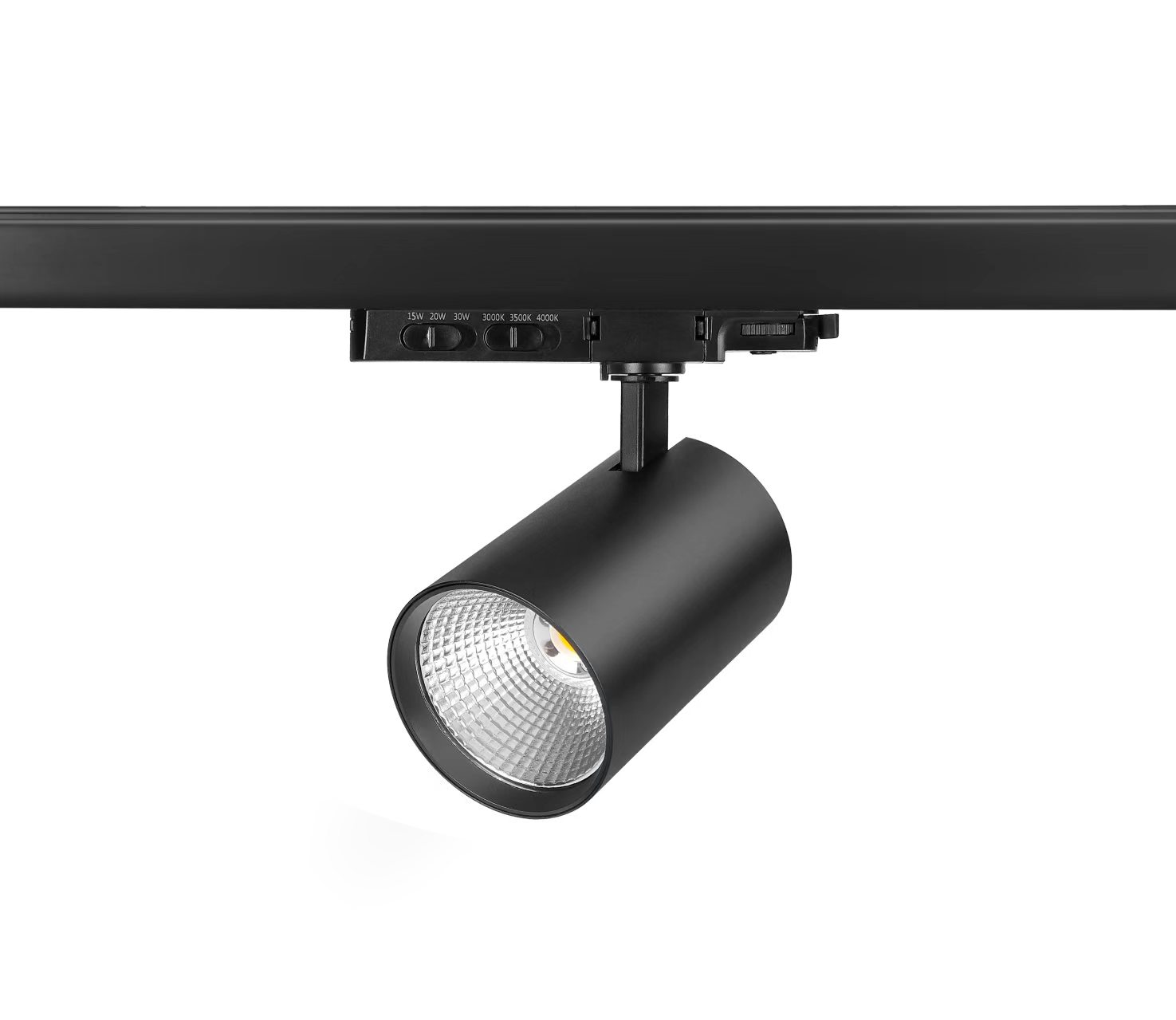
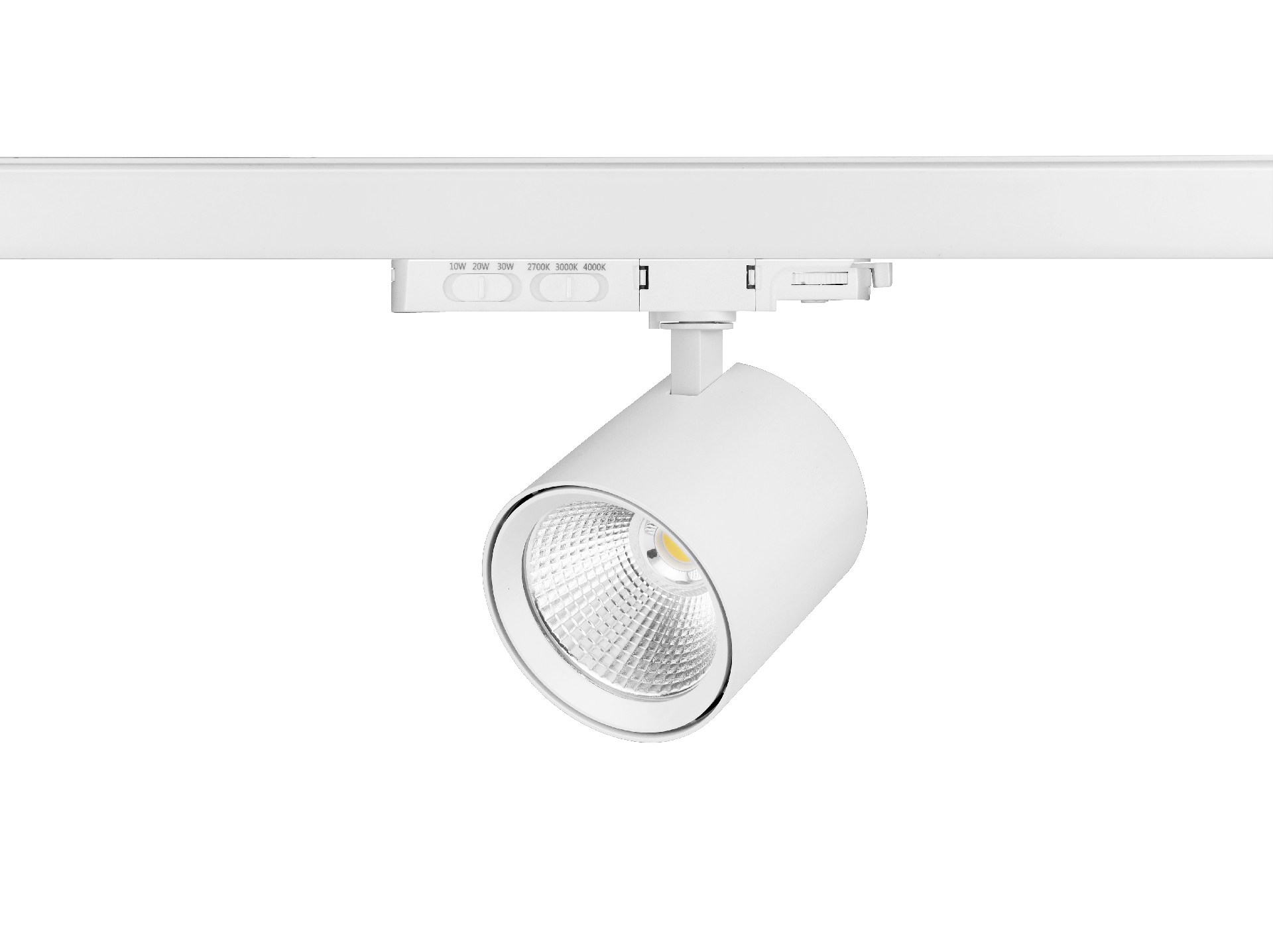
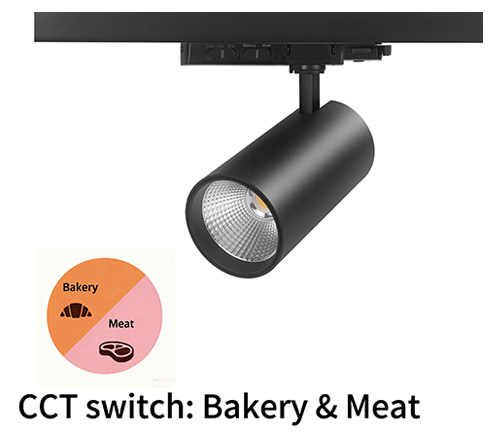
A 30W LED track light is not automatically brighter than every 20W model in practical use. Luminous efficacy, optical efficiency and beam distribution also affect the light delivered to the target surface. With our POWER CCT switchable led track light, just need one peice of it can achieve the multiple usages to achieve the power switch from 15W-30W, and CCT switch from 2700K-4000K.
Buyers should compare actual lumen output and photometric data rather than relying on wattage alone.
6.3 Choose the Right Beam Angle
Beam angle determines how light is distributed from the fixture.
Different applications require different beam distributions.
| Beam Angle | Typical use |
| 15-24° | focused accent lighting |
| 24-36° | retail displays and product hightlighting |
| 36-60° | wider product and general accent lighting |
A narrow beam can create a concentrated highlight, while a wider beam distributes light across a larger area.
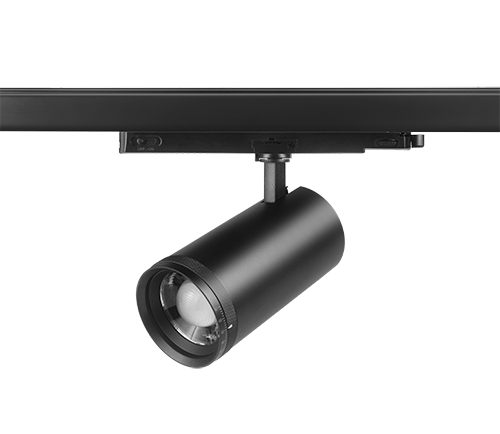
For projects that frequently change their display arrangements, zoomable LED track lights can provide additional flexibility by allowing the beam angle to be adjusted.
However, the selected beam angle should always be evaluated together with mounting height, aiming direction, illuminance and glare.
6.4 Pay Attention to CRI and Colour Consistency
Colour rendering is important in retail, museums, galleries and product showrooms.
CRI indicates how accurately a light source renders colours compared with a reference source under defined test conditions.
For many commercial applications, CRI 80 is a common baseline. For colour-sensitive retail displays, CRI 90 or higher may be preferred.
Buyers should also check colour consistency between batches.
SDCM is commonly used to describe the degree of colour variation between light sources. A lower SDCM value indicates tighter colour consistency.
For projects requiring a consistent visual appearance, ask suppliers to specify the actual SDCM performance and supporting test documentation.
6.5 Check Dimming Compatibility
Not all three-circuit track lights are dimmable.
The number of circuits describes the electrical grouping of the track. It does not automatically determine the dimming method.
Depending on the luminaire and system, available control options may include:
Similarly, DALI-2 control requires suitable DALI-2 equipment, wiring and system configuration. A three-circuit adapter alone does not make a luminaire DALI-2 compatible.
If the project requires smart lighting management, confirm the complete control architecture before placing an order.
7. What Should Importers and Wholesalers Ask an LED Track Light Manufacturer?
For B2B purchasing, selecting the right manufacturer is just as important as selecting the right product.
A reliable supplier should provide clear technical specifications, consistent product quality and support for different project requirements.
Before placing a bulk order, consider asking the manufacturer the following questions.
| Purchasing topic | Questions to as |
| track compatibility | which track systems and adapters are supported |
| electrical specifications | what are the input voltage and rated current |
| product performance | what are the lumen output, lighting efficiency and CRI |
| optical options | which beam angles are available |
| dimming | are triac dimmable or DALI2 dimmable versions available |
| color consistency | what SDCM value cna be supplied |
| certifications | which certifications and test reports apply to the exact model |
| customization | are OEM and ODM service available |
| warranty | what is the warranty period and coverage |
Why OEM and ODM Services Matter for LED Lighting Distributors
Different markets have different requirements for product appearance, electrical specifications, track adapters, packaging and certification documentation.
OEM and ODM services can help distributors develop products that better match their target customers and local market requirements.
For example, a lighting distributor may require:
Custom product colours.
Different wattage options.
Specific colour temperatures.
Different beam angles.
Customized packaging.
Private-label branding.
Project-specific technical specifications.
When evaluating a manufacturer, buyers should confirm which customizations are technically available and whether the final product can meet the relevant compliance requirements.
8. Why Choose Pustlux for Commercial LED Track Lighting?
Pustlux, operated by Pust Lighting Company, focuses on POWER CCT switchable LED track lighting solutions for commercial applications and B2B customers.
For lighting importers, wholesalers, distributors and project contractors, product flexibility and consistent technical support are important factors when building a long-term supplier relationship.
Pustlux offers CC LED track lighting solutions designed for different commercial environments, including retail stores, showrooms, supermarkets and other commercial spaces.
Power and CCT Switchable LED Track Lights
Power-selectable and CCT-selectable LED track lights can help distributors simplify product selection and offer more flexible lighting solutions.
Depending on the model, selectable wattage and colour temperature options can allow one luminaire to serve different application requirements.
For example, a product with 3POWER and 3CCT functionality can provide three wattage settings and three colour temperature settings.
This gives distributors more flexibility when planning product ranges and supporting projects with changing lighting requirements.
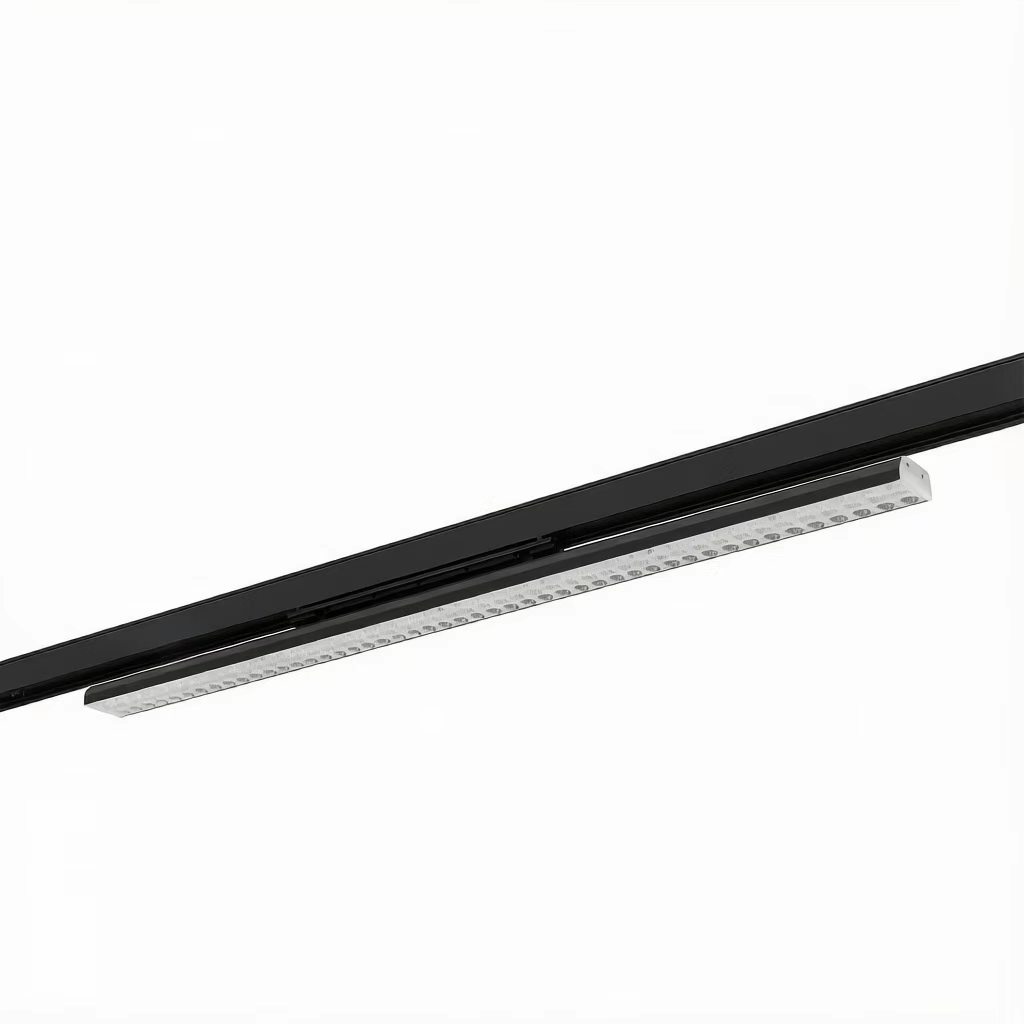
LED Linear Track Lights for Commercial Applications
LED linear track lights are suitable for applications that require broader and more continuous light distribution.
They can be used in supermarket aisles, commercial showrooms and other spaces where a combination of general illumination and flexible track installation is required.
For buyers comparing linear and spotlight track products, the selection should be based on the required light distribution, ceiling layout, mounting height and application.
OEM Services and Product Customization
OEM services are available in Pust Lighting Company.
We work with B2B customers to discuss product configurations and customization requirements according to project and market needs.
Whether you are sourcing LED track lights for wholesale distribution or developing a product range for commercial lighting projects, our team can help you evaluate suitable product specifications.
Contact Pustlux to discuss your LED track lighting requirements and request product information.
9. FAQs About 3 Phase LED Track Lights
Q1: What are 3 phase LED track lights?
3 phase LED track lights are luminaires designed for compatible three-circuit track lighting systems. They can be assigned to one of three separate electrical circuits, allowing different groups of fixtures to be controlled independently when the installation is wired and configured accordingly.
Q2: Do 3 phase track lights require a three-phase power supply?
Not necessarily. In commercial lighting, "3 phase" usually refers to three selectable circuits within the track rather than a requirement for three-phase building power. The actual supply arrangement must be confirmed from the manufacturer's wiring diagram and local electrical requirements.
Q3: What is the difference between 1 phase and 3 phase track lighting?
A single-circuit track normally operates all connected fixtures as one lighting group. A three-circuit track allows compatible fixtures to be assigned to up to three separate lighting groups, provided the circuits are separately wired and controlled.
Q4: Can I install a single-phase track light on a three-phase track?
Not automatically. The adapter must be compatible with the track's mechanical profile and electrical contact arrangement. Check the manufacturer's compatibility documentation before installation.
Q5: Can 3 phase LED track lights be dimmed?
Yes, if the luminaire, LED driver and dimming equipment support the selected dimming method. Depending on the product, options may include phase-cut dimming, DALI-2 or other compatible control solutions.
Q6: What is the difference between 3 circuit and DALI track lighting?
Three-circuit track lighting provides up to three separately assignable electrical groups. DALI is a digital lighting control system that supports more advanced control functions.
The two concepts are not identical. Some track systems support DALI through specific adapters, control conductors or system configurations. Buyers should confirm the complete system architecture.
Q7: Are 3 phase track lights suitable for retail stores?
Yes. Three-circuit track lighting is useful in retail stores because general lighting, accent lighting and promotional displays can be assigned to separate lighting groups.
Q8: Are three-circuit track lights more expensive than single-circuit track lights?
They are generally more expensive because the track, adapters, accessories and installation requirements can be more complex. However, the additional flexibility may be valuable for commercial projects requiring multiple lighting groups.
Q9: Can I use different LED track light wattages on the same three-circuit track?
In many systems, compatible luminaires with different wattages can be installed on the same track. However, the total load on each circuit and the overall track rating must remain within the manufacturer's specified limits.
Q10: What should I check before ordering 3 phase LED track lights in bulk?
Confirm the track type, adapter compatibility, electrical ratings, wattage, lumen output, CRI, beam angle, dimming method, certifications, warranty and spare-part availability. Request technical datasheets and samples when necessary.
Q11: Can three-circuit track lights provide individual control for every fixture?
Not through the three-circuit arrangement alone. The system normally provides up to three separately controlled groups. Individual fixture control requires an additional compatible control solution, such as an appropriately designed DALI or wireless lighting system.
Q12: What is the best track lighting system for a commercial project in 2026?
There is no single best solution for every project. Single-circuit systems are suitable for simpler lighting arrangements, while three-circuit systems provide greater flexibility for multiple lighting groups. Projects requiring advanced individual control should evaluate DALI-2 or other suitable control technologies.
Conclusion: Is 3 Phase LED Track Lighting the Right Choice for Your Project?
3 phase LED track lights, more accurately described as three-circuit track lighting, provide a flexible solution for commercial spaces that require multiple independently controlled lighting groups.
Compared with single-circuit track lighting, a three-circuit system offers more options for managing general illumination, accent lighting and promotional displays along the same track installation.
However, choosing the right product requires more than looking at the words "3 phase" on a catalogue.
Buyers should verify the track profile, adapter compatibility, electrical supply arrangement, circuit ratings, LED performance and dimming requirements before purchasing.
For importers, wholesalers, distributors and project contractors, working with a manufacturer that provides clear technical documentation and OEM customization support can help reduce purchasing risks and improve product suitability for the target market.
Looking for a reliable LED track lighting manufacturer for your next commercial project? Contact Pust Lighting Company to discuss LED track light specifications, OEM services and customized lighting solutions for your upcoming lighting project.
 Tel.+86 15013617190
 Email:info@pustlux.com