Industry news

Industry news

How to Choose the Right CCT Track Light for Commercial Spaces: A Complete Guide
2025-12-03 10:28:39


Choosing the perfect lighting for commercial environments isn’t just about brightness—it’s about color temperature, ambiance, and functionality. CCT (Correlated Color Temperature) track lights offer unmatched flexibility for retail stores, offices, galleries, and restaurants. 

Commercial lighting is a professionally designed lighting system that incorporates ambient, task, accent, and decorative fixtures to create the ideal atmosphere, improve product presentation, increase staff productivity, and lower energy and maintenance costs by utilizing high-performance LED lighting technologies.

ba.png

This guide dives deep into selecting the ideal CCT track lights, covering technical nuances, application-specific recommendations, and expert tips to optimize your space.

1. Why Commercial Lighting Design is More Important Than Ever.

Lighting is one of the most effective techniques in modern commercial design.  Customers remember ambience more vividly than furniture or decor, and lighting accounts for 80% of that ambience.

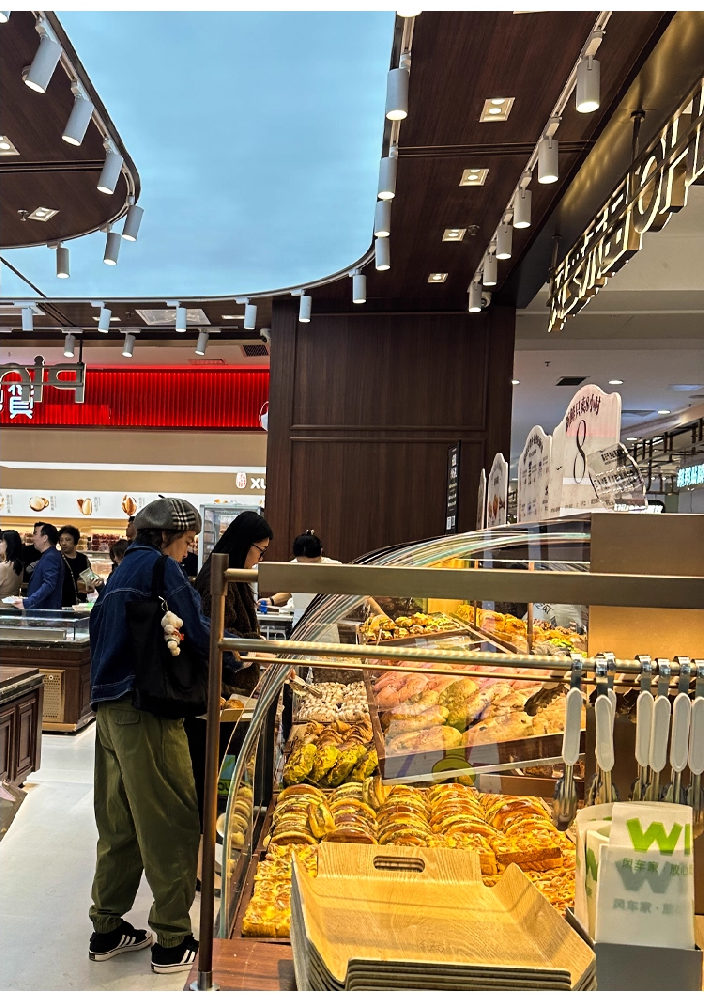
 In competitive markets such as the EU hospitality and food service industry, commercial lighting has a direct impact:

  • Guest Comfort and Mood

  • Dwell time and repeat visits.

  • perceived product quality

  • Photo Appeal for Social Media

  • Brand identity and style.

  • Energy costs and operating efficiency.

A well-designed lighting strategy combines:

  •  The atmosphere is warm, friendly, and memorable.

  •  Functional lighting (for staff, service, and product prep)

  •  Energy efficiency (up to 70% cost reduction using LED)

  •  Brand expression (lighting for interior storytelling)

  •  maintenance and dependability (50,000h LED lifespan)

That is why successful businesses emphasize lighting as a fundamental design element.

11281.jpg

2.Why CCT Track Lights Matter in Commercial Settings

Track lights are versatile, directional fixtures ideal for highlighting products, artworks, or workstations. Adding CCT adjustability allows you to tune the color temperatures on demand:

  • Warm white (2700K–3500K): Creates cozy, inviting atmospheres (e.g., cafes, boutiques).

  • Neutral white (3500K–4500K): Balanced for offices or clinics where clarity and comfort coexist.

  • Cool white (5000K–6500K): Boosts alertness in retail or hospitals; mimics daylight.

Commercial Impact:

  • A retail study showed cool white lighting (4000K) increased sales by 15% by enhancing product visibility.

  • Offices with tunable CCT reported 20% fewer employee headaches thanks to reduced eye strain.

3.Step-by-Step: Choosing Your CCT Track Light

Follow this framework to avoid costly mismatches:

3.1. Analyze Your Space’s Primary Function

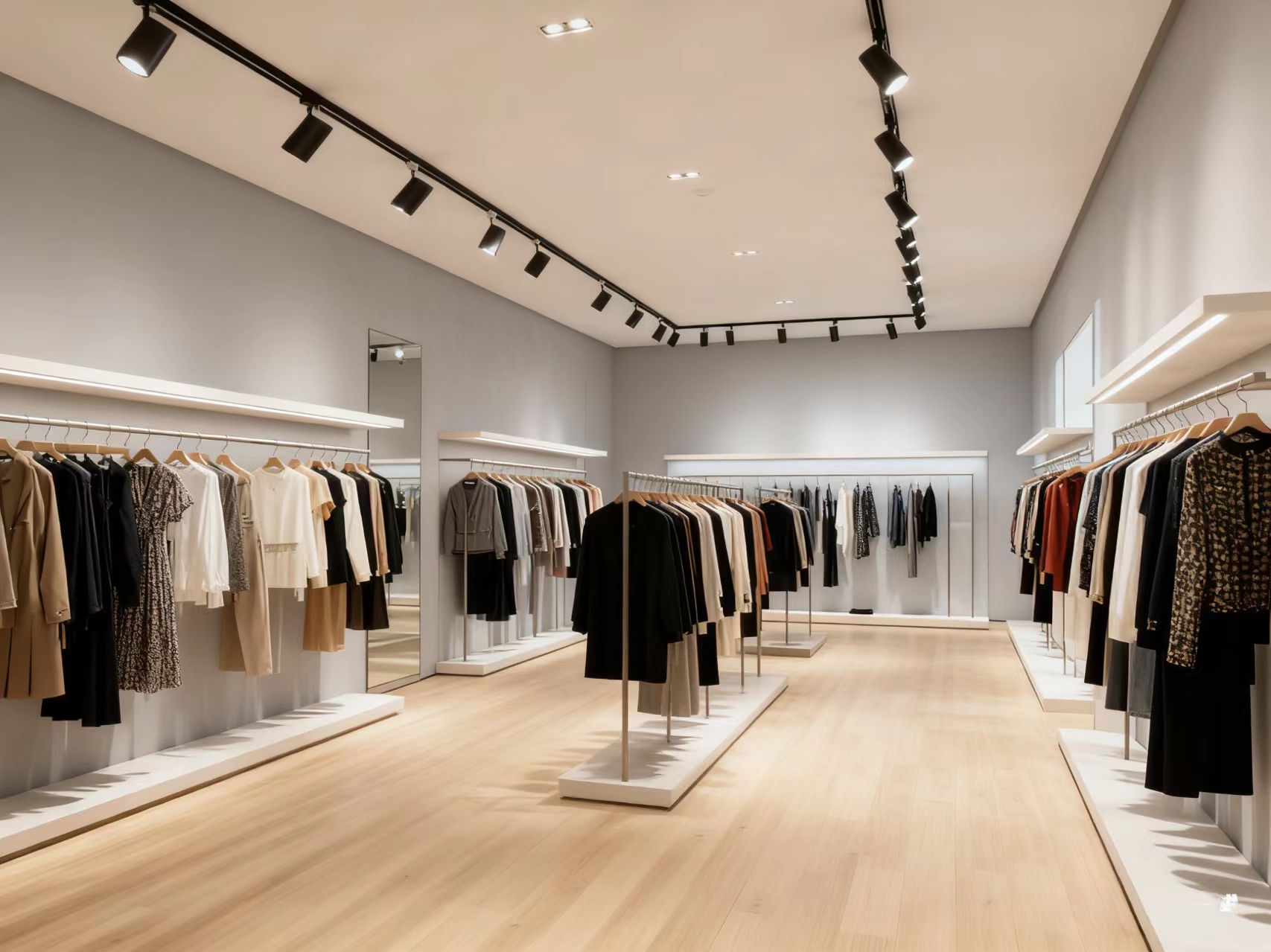
  • Retail/Showrooms: Opt for 3500K–4000K. This range renders true colors (e.g., fabrics, electronics) without glare. Pair with high CRI (≥90) for vibrancy.

  • Offices/Workspaces: 4000K–5000K improves focus. Use dimmable tracks to shift toward warmer tones in break rooms.

  • Hospitality (Restaurants/Hotels): 2700K–3000K in dining areas for warmth; 4000K in kitchens for precision.

  • Galleries/Museums: 3000K–4500K adjustable tracks. Warmer tones for classical art; cooler for modern installations.

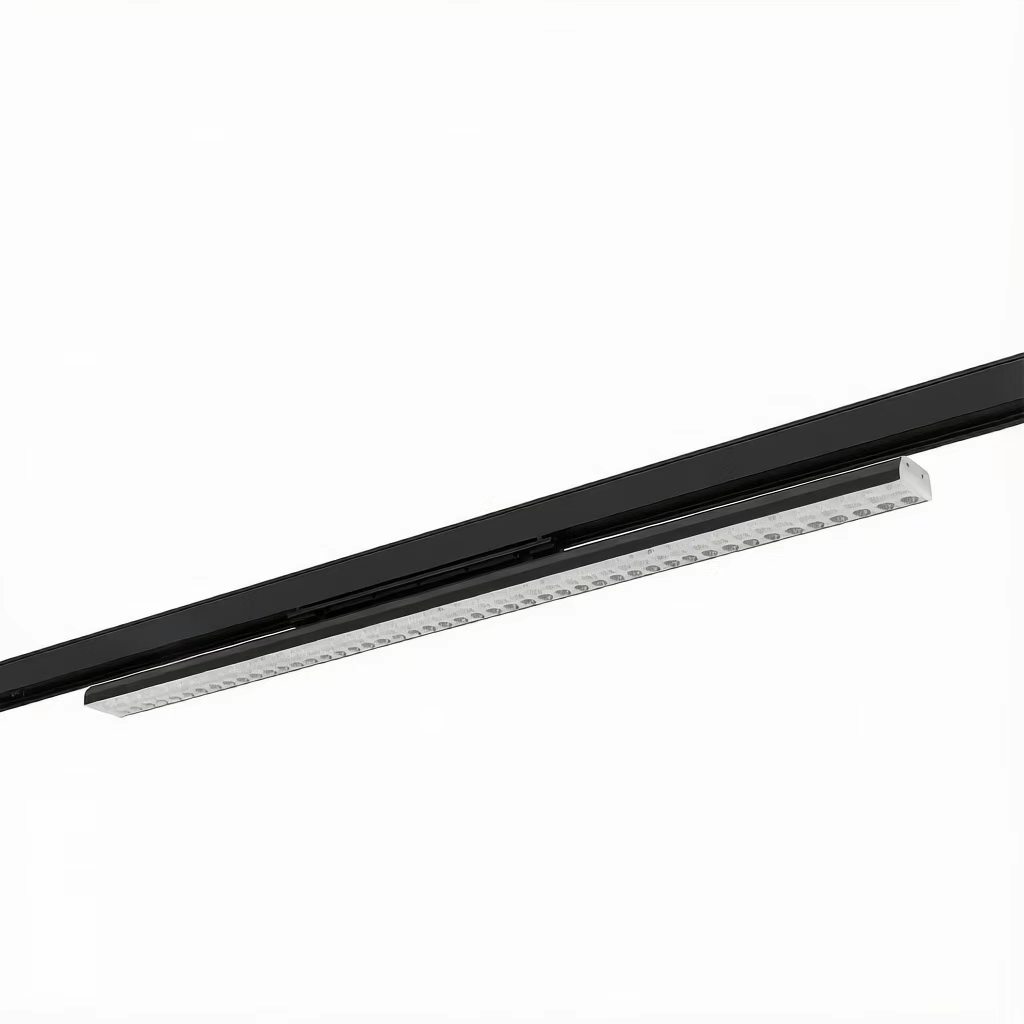
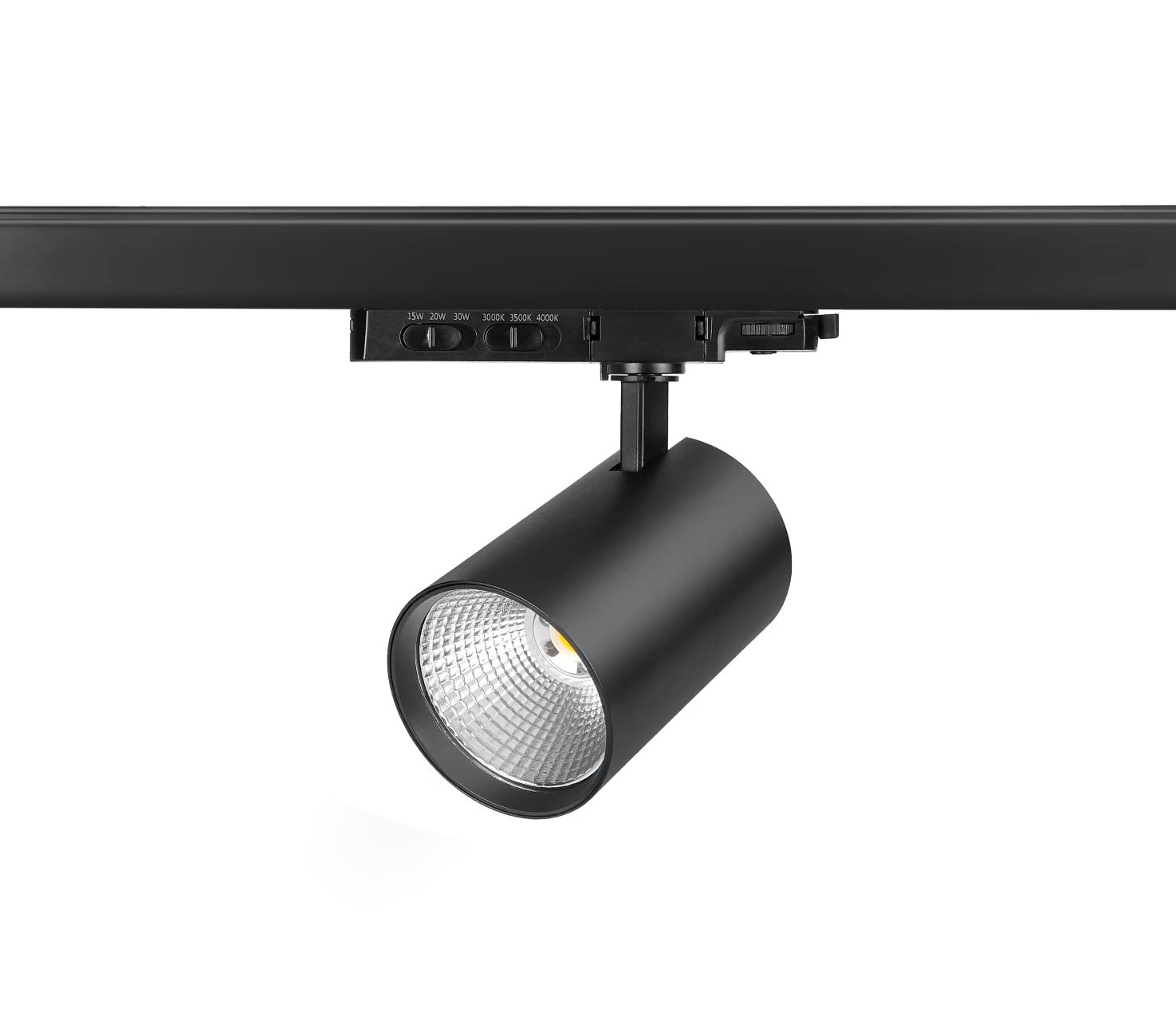
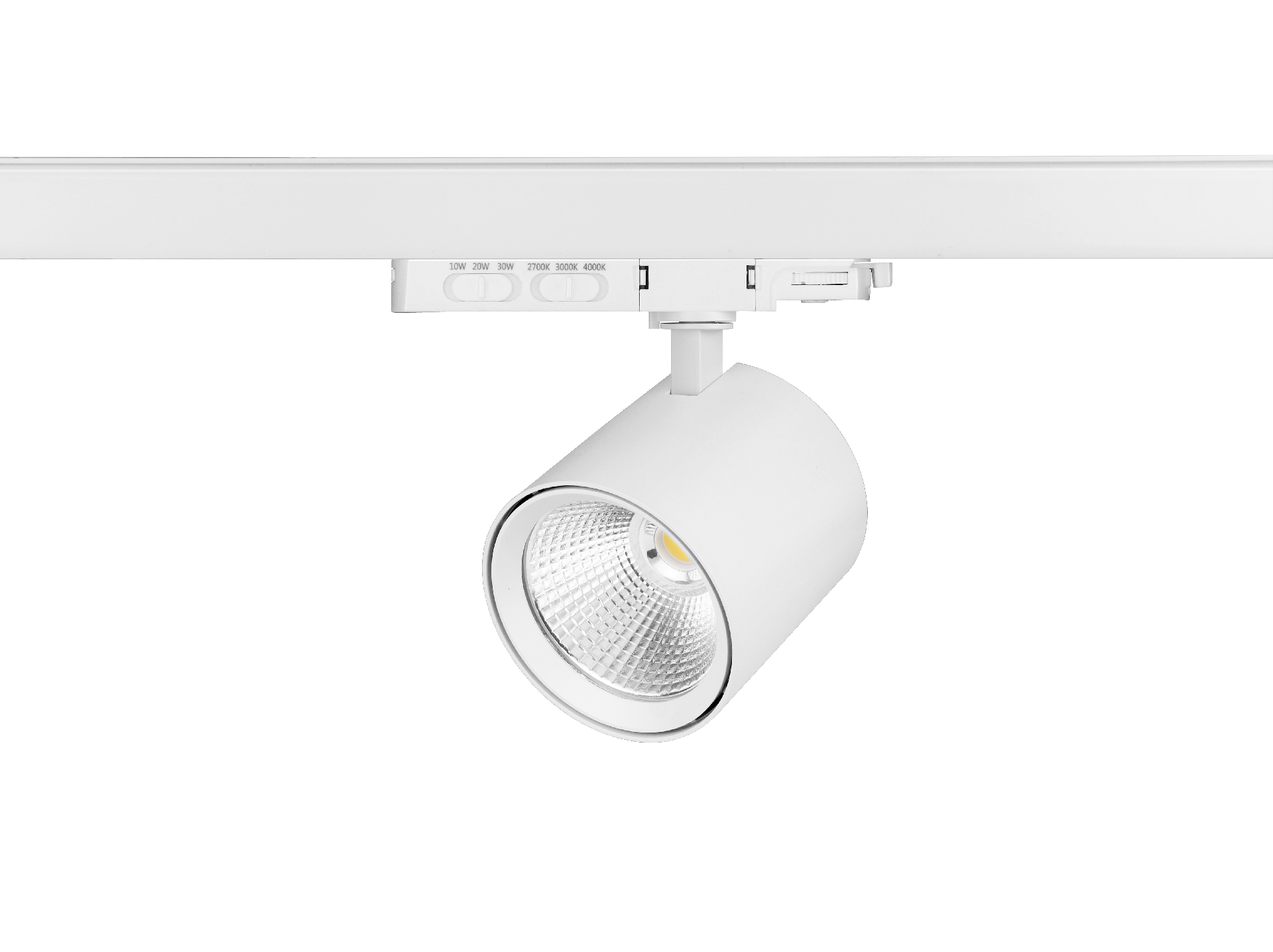
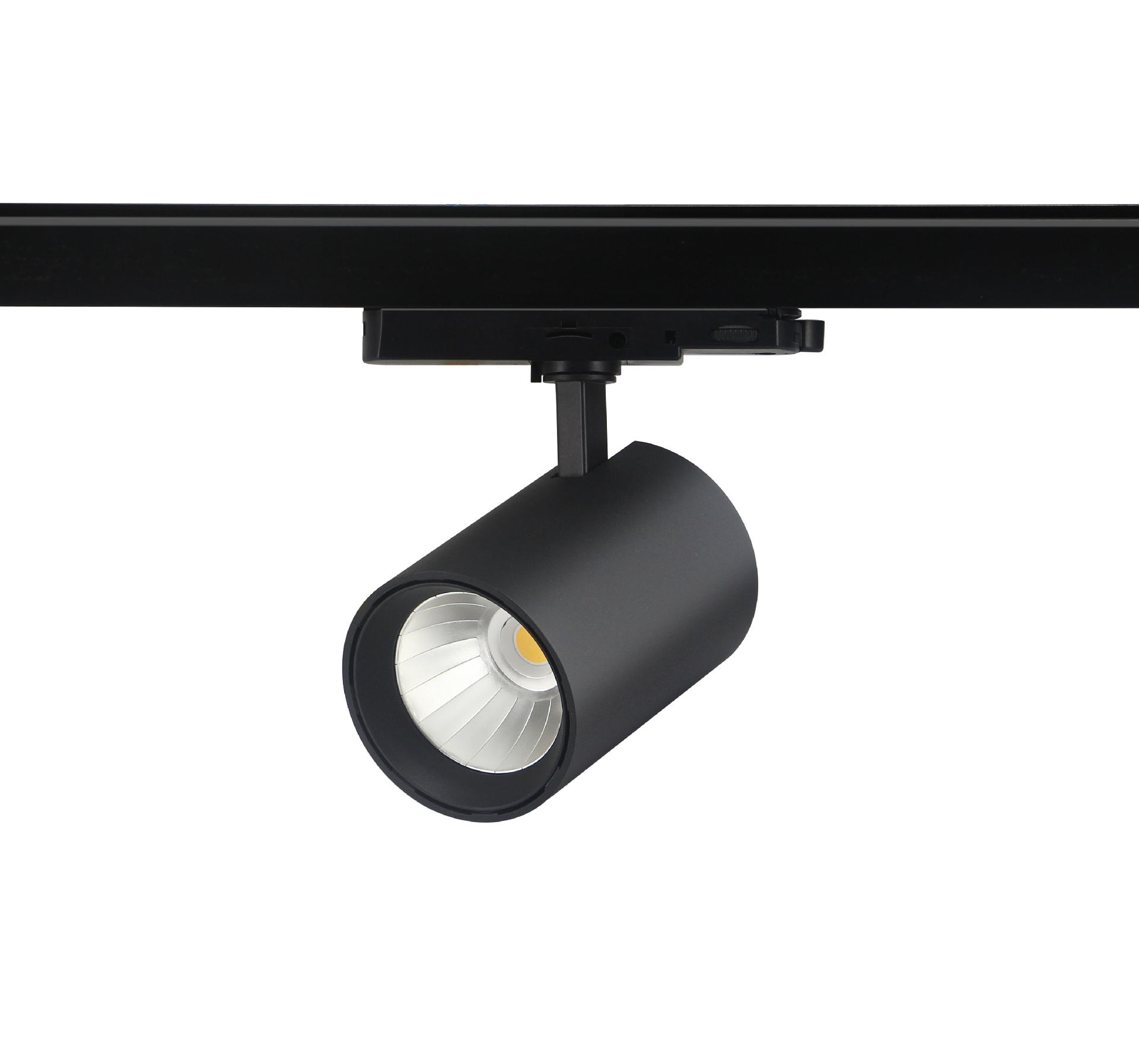
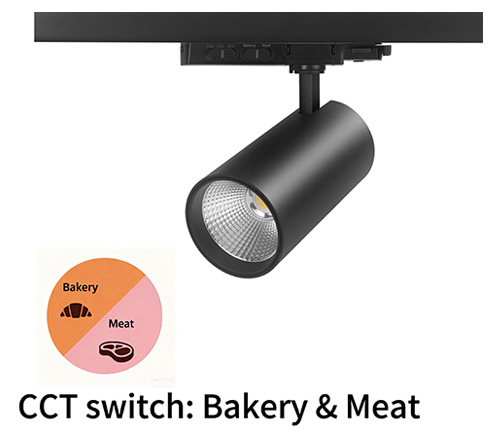
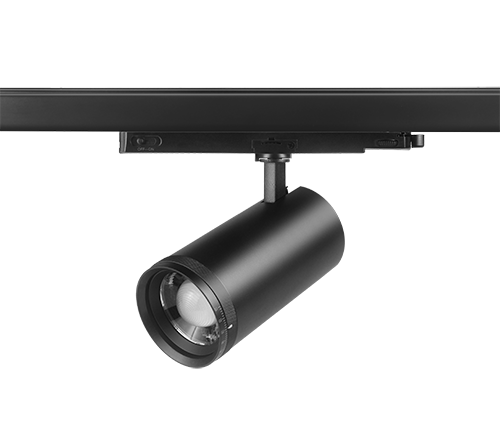
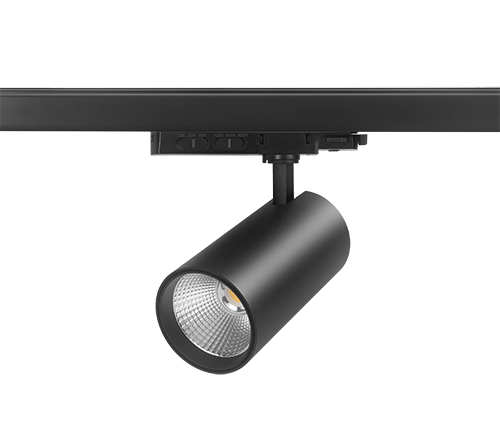
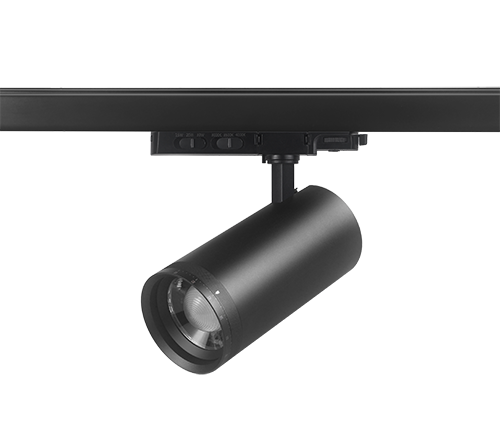
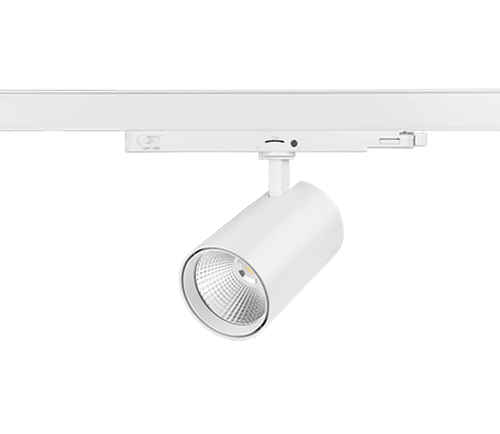
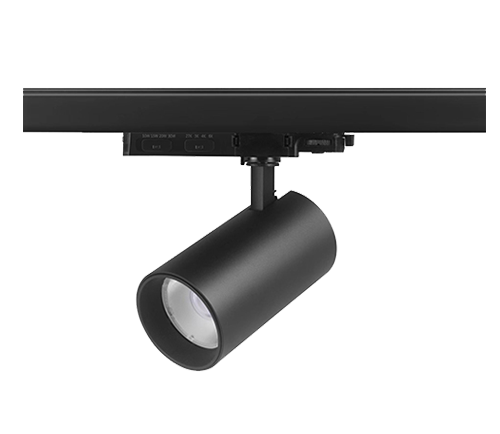
In these commercial spaces, users can switch the bottom to change the POWER & CCT with this POWER CCT adjustable dimmable led track light, which can help them save stocks.

3.2.Prioritize Technical Specs

CRI (Color Rendering Index): Never settle below 90. Low CRI distorts colors—critical for retail or art.

Dimming & Tunability:

  • Fixed CCT: Budget-friendly for single-use zones (e.g., warehouses at 5000K).

  • Tunable White: Switches between 2700K–6500K. Ideal for multi-purpose spaces (e.g., event venues).

Beam Angle:

  • Narrow (10°–25°): Accent lighting (e.g., spotlighting products).

  • Wide (≥40°): General illumination (e.g., conference rooms).

  • Energy Efficiency: Look for certified LEDs (100+ lumens/watt). Saves 50% on bills vs. halogens.

Wattages: 

This CCT track light allows users to switch the POWER in the range of: 15W-20W-30W/10W-20W-30W/20W-25W-30W.

This is a great track light integrated adjustable POWER & CCT dimmable into one light.

3.3.Durability & Compatibility

  • IP Rating: IP20 (splash-resistant) for restaurants; IP65 (dust/drip-proof) for warehouses.

  • Track System Compatibility: Match fixtures to track types (e.g., H-, J-, or L-track). Pro tip: Magnetic tracks simplify reconfiguration.

  • Heat Management: Aluminum housings dissipate heat, extending LED lifespan to 50,000+ hours.

3.4.Budget & ROI Considerations

Entry-level fixed CCT: $25–$50/light. 

Tunable CCT: 20% long-term savings via adaptability. Since with this adjustable CCT track light, users don't need to stocks too many. 1 PC can meet their different lighting demands.

ROI Example: A store upgrading to 4000K track lights saw a 6-month payback from reduced replacements and energy use.

4. Installation & Maintenance Best Practices

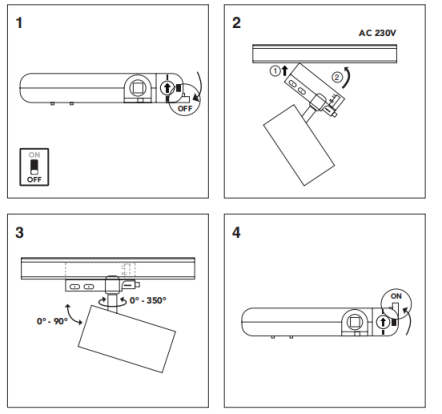
  • Professional Installation: Ensures proper load balancing on tracks (don’t exceed wattage limits!).

  • Spacing: Place lights 2–3 feet apart for even coverage. Use 4–6 fixtures per 100 sq. ft.

  • Maintenance: Clean lenses quarterly with microfiber cloths. Check drivers biannually for flickering issues.

11-1.png

FAQs: CCT Track Lights for Commercial Use

Q1: What’s the ideal CCT for a clothing store?

A: 3500K–4000K. This neutral range makes fabrics look true-to-life. Add 90+ CRI to prevent color distortion under mannequins or mirrors.

Q2: Can I mix CCTs in one space?

A: Yes—strategically. Use 2700K in lounge areas and 4000K at checkout counters.

Q3: How does CCT affect energy consumption?

A: CCT itself doesn’t impact energy use—but LED efficiency does. All CCTs in LEDs consume similar power; prioritize lumens/watt over Kelvin.

Q4: What beam angle is best for restaurant tables?

A: 24°–30°. Creates focusedpools light without spilling onto adjacent diners. Pair with 2700K for warmth.

Q5: Do CCT track lights work with dimming systems?

A: Most modern options integrate with Triac dimming or DALI. 

Conclusion: Lighting as a Commercial Strategy

CCT track lights blend aesthetics with functionality—transforming spaces while cutting costs. Remember:

Match CCT to your commercial activity (e.g., 5000K for task-intensive areas).

Never compromise on CRI or dimming capabilities.

Consult a lighting designer for complex layouts.

Investing in the right CCT track lighting boosts mood, productivity, and revenue. For deeper technical guidance, contact our team for more professtional suggestions.


skype

Contact