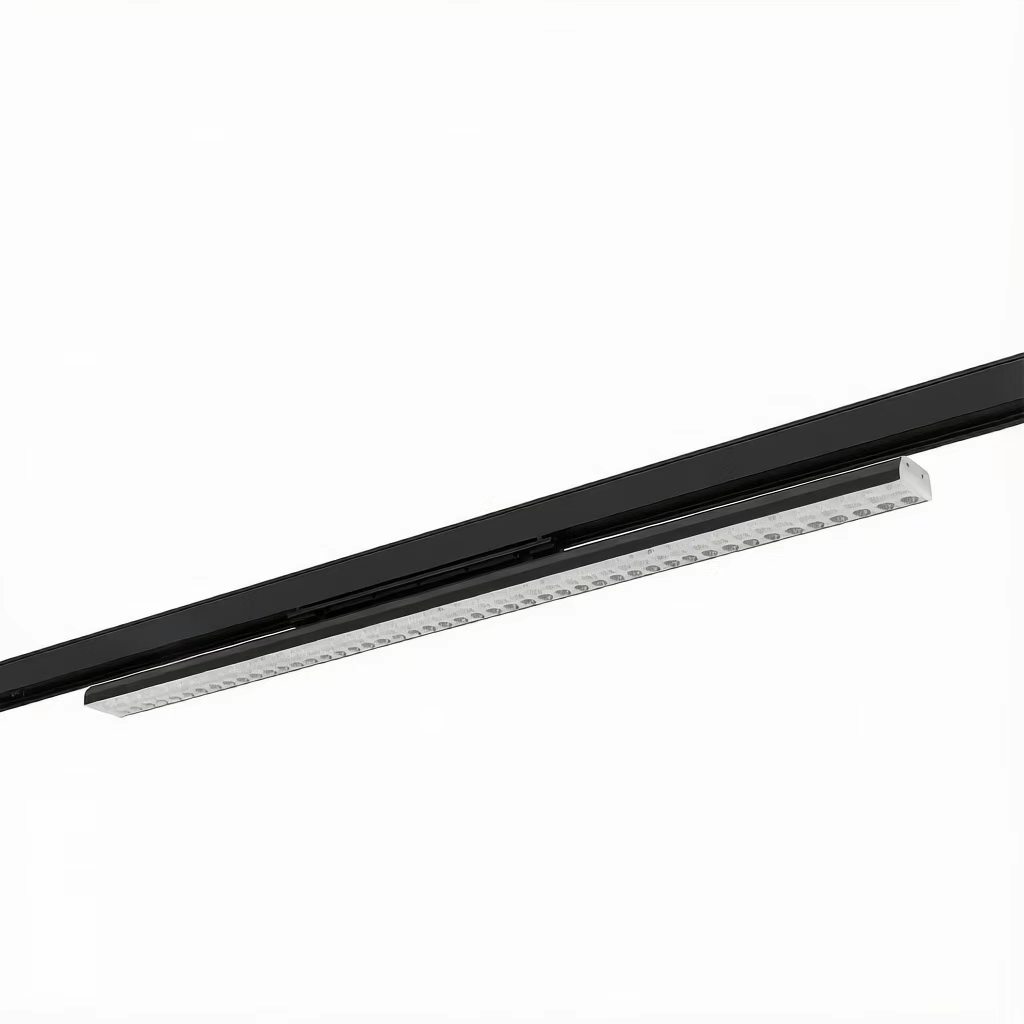
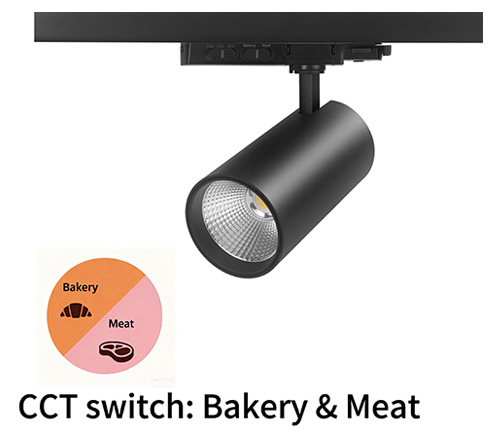
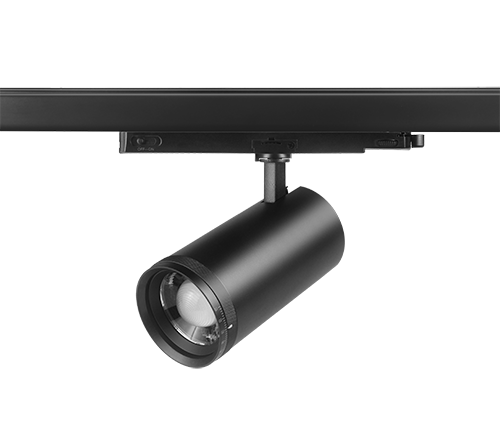
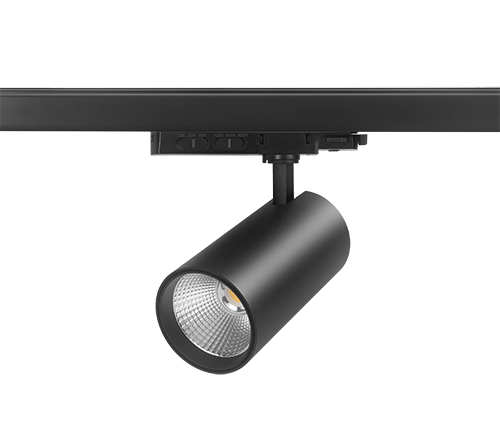
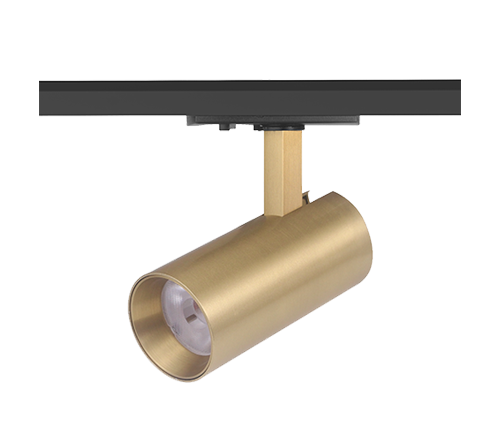
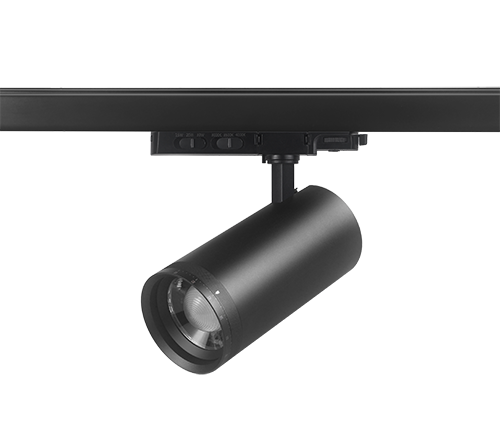
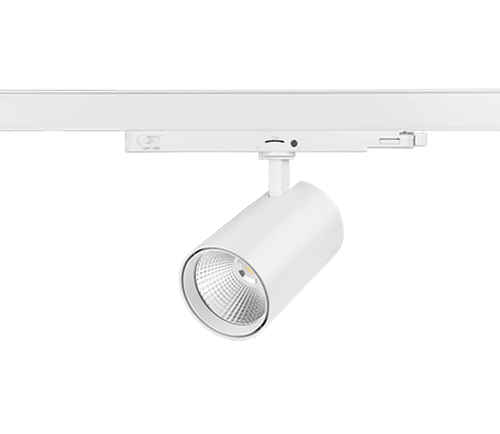
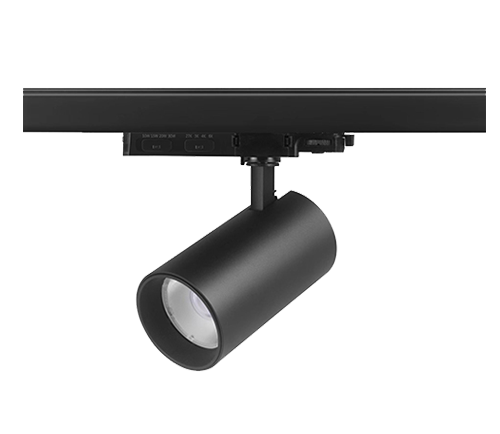
In the delicate ecosystem of an art gallery, light is both the protagonist and the protector. Selecting the right CCT track light system is a high-stakes decision that balances the psychological experience of the viewer with the physical preservation of the artwork.
As we move into 2026, the standard for "Museum-Grade" has evolved. It no longer refers simply to "bright light," but to high-fidelity, digitally controlled, and thermally managed illumination. This guide provides an exhaustive analysis of how to choose LED track lighting that meets the rigorous demands of the world's leading cultural institutions

1. The Science of Spectral Power Distribution of CCT track light
To understand museum-grade lighting, one must look beyond lumens. The Spectral Power Distribution (SPD) of a CCT track light determines how much energy is emitted at each wavelength of the visible spectrum.
The Blue Light Hazard & Preservation
Standard LEDs often have a "blue spike." For art galleries, this is a risk factor for photochemical degradation. Museum-grade LEDs utilize violet-chip technology or specialized phosphors to create a "Sun-like" spectrum. This ensures that while the light appears crisp and white, it lacks the harmful UV and high-energy violet peaks that cause pigments in oil paintings and ancient textiles to fade.
The Power of CCT (Correlated Color Temperature)
A "One-size-fits-all" color temperature is a relic of the past.
Tunable CCT: Allows curators to adjust from 2700K (warm, golden tones for 18th-century portraits) to 5000K (cool, daylight tones for contemporary blue-hued installations).
The Psychology of Kelvin: Warm light invites lingering and introspection; cool light promotes clarity and detail-oriented observation.
2. Color Rendering Excellence of the CCT track light: Beyond CRI 90
While the industry standard for retail is often CRI 80 or 90, museum-grade CCT track lights demand more.
TM-30-18: The New Gold Standard
The Color Rendering Index (CRI) only measures 8 color samples. The TM-30-18 standard measures 99. For a gallery, you must look for:
Rf (Fidelity Index): 95+ (How accurately colors are reproduced).
Rg (Gamut Index): 100±2 (How saturated or dull colors appear).
R9 Value: The most critical metric for art. R9 measures "saturated red." Without a high R9 (>90), oil paintings look muddy, and skin tones in portraits look ghostly.
3. Optical Precision and Beam Control of the 3CCT track light
Museum lighting is the art of "painting with light." This requires fixtures with interchangeable optics.
Interchangeable Lens Systems
A professional CCT track light should offer tool-free lens swapping:
Narrow Spot (5°–12°): For pinpointing a small sculpture or a jewelry display.
Medium Flood (24°–36°): For standard canvas sizes (e.g., 24x36 inches).
Wide Flood (50°+): For large murals.
Wall Washers: For creating an even "curtain" of light across an entire gallery wall, eliminating "hot spots."
Glare Cut-off and Visual Comfort
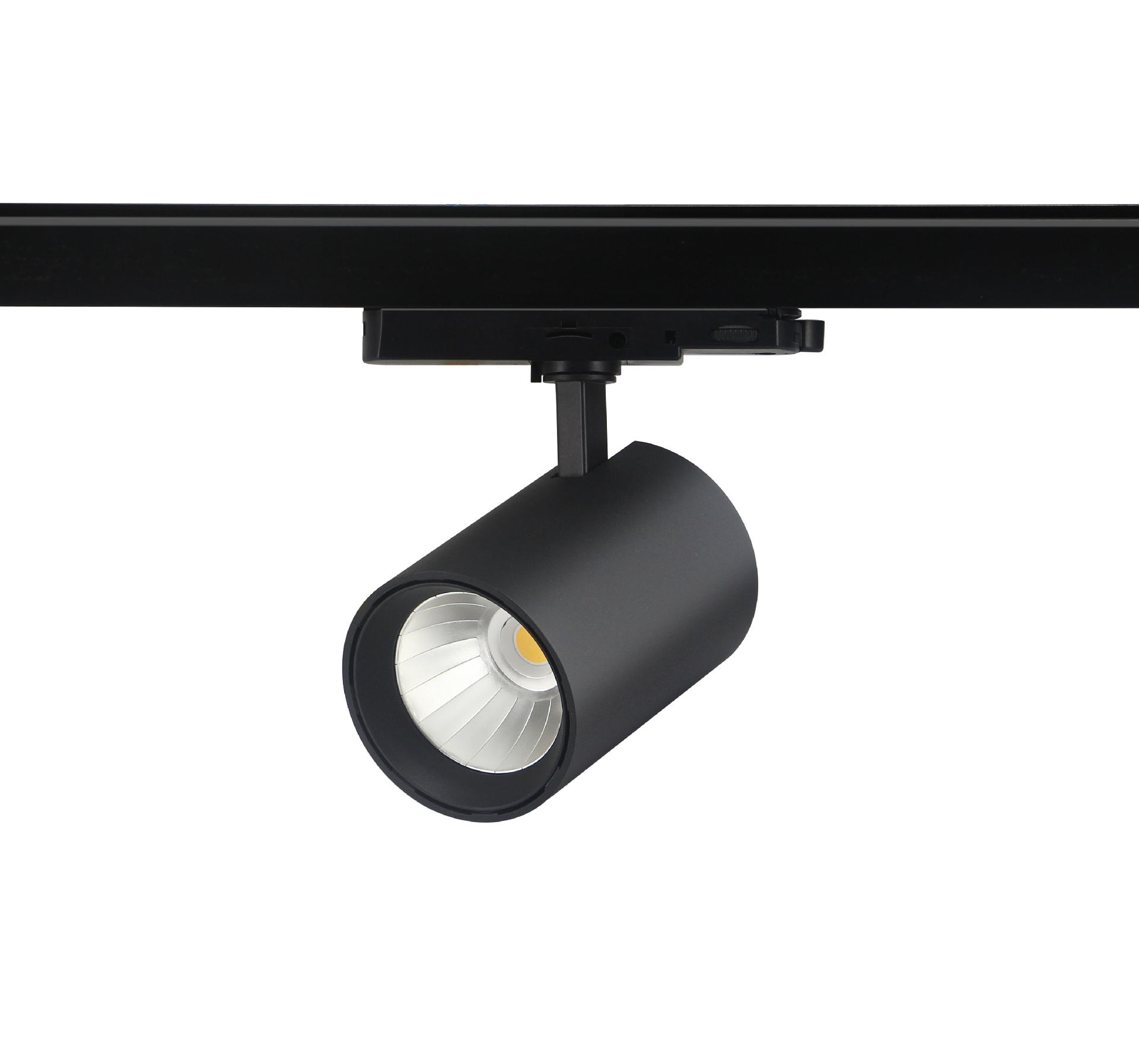
The viewer should see the art, not the light source. Museum-grade fixtures utilize deep-regressed COB (Chip on Board) designs and accessories like Honeycomb Louvers or Snoots to ensure a UGR (Unified Glare Rating) of less than 10.
4. Technical Specifications Table for the 3CCT track light
When sourcing for a gallery project, use this technical matrix to evaluate manufacturers.
Museum-Grade LED Track Light Specifications
| Feature | Museum Requirement | Why It Is Mandatory |
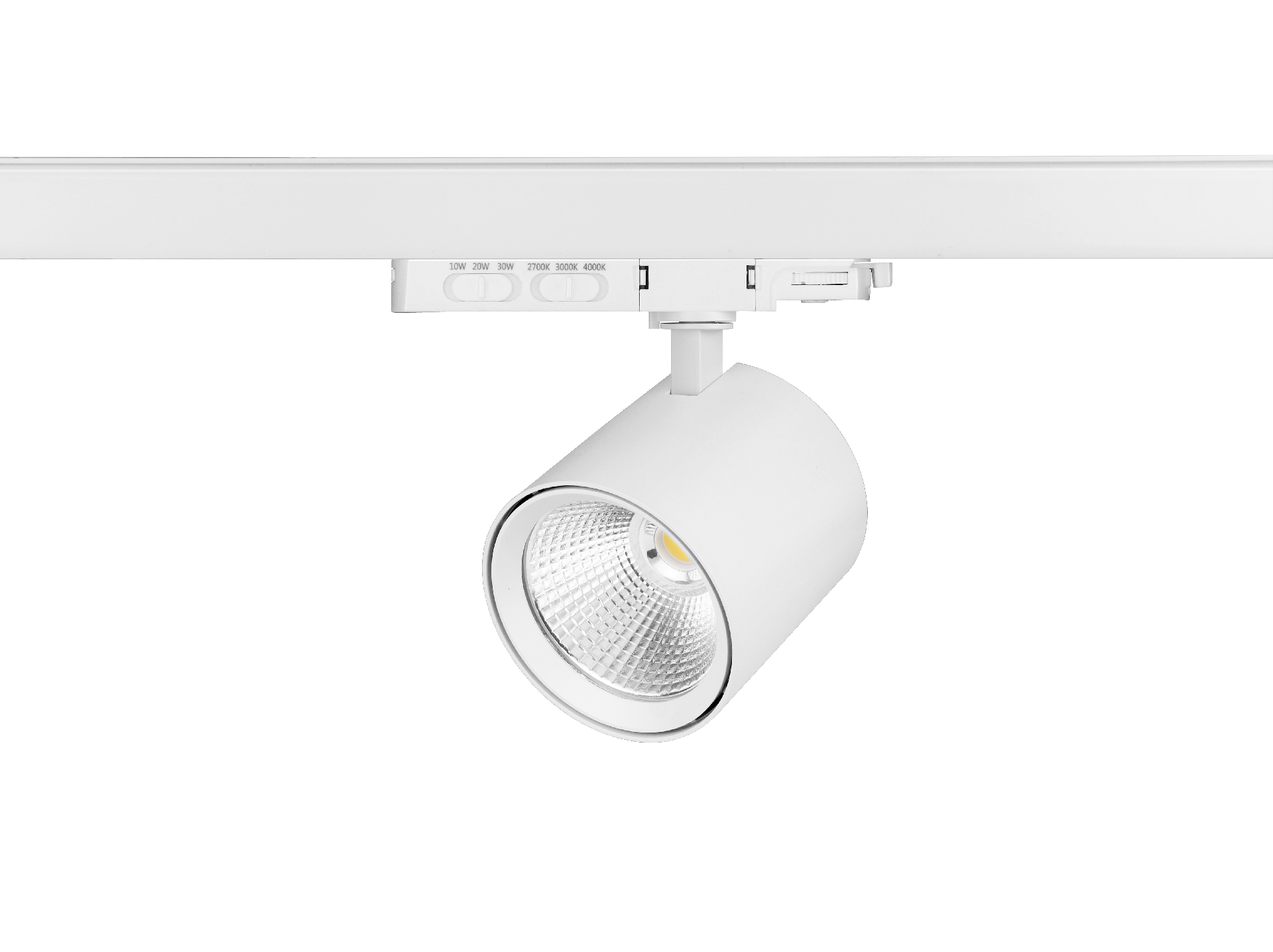
| 3CCT Range | Tunable White (2700K - 5000K) | Adaptability for different art eras/styles. |
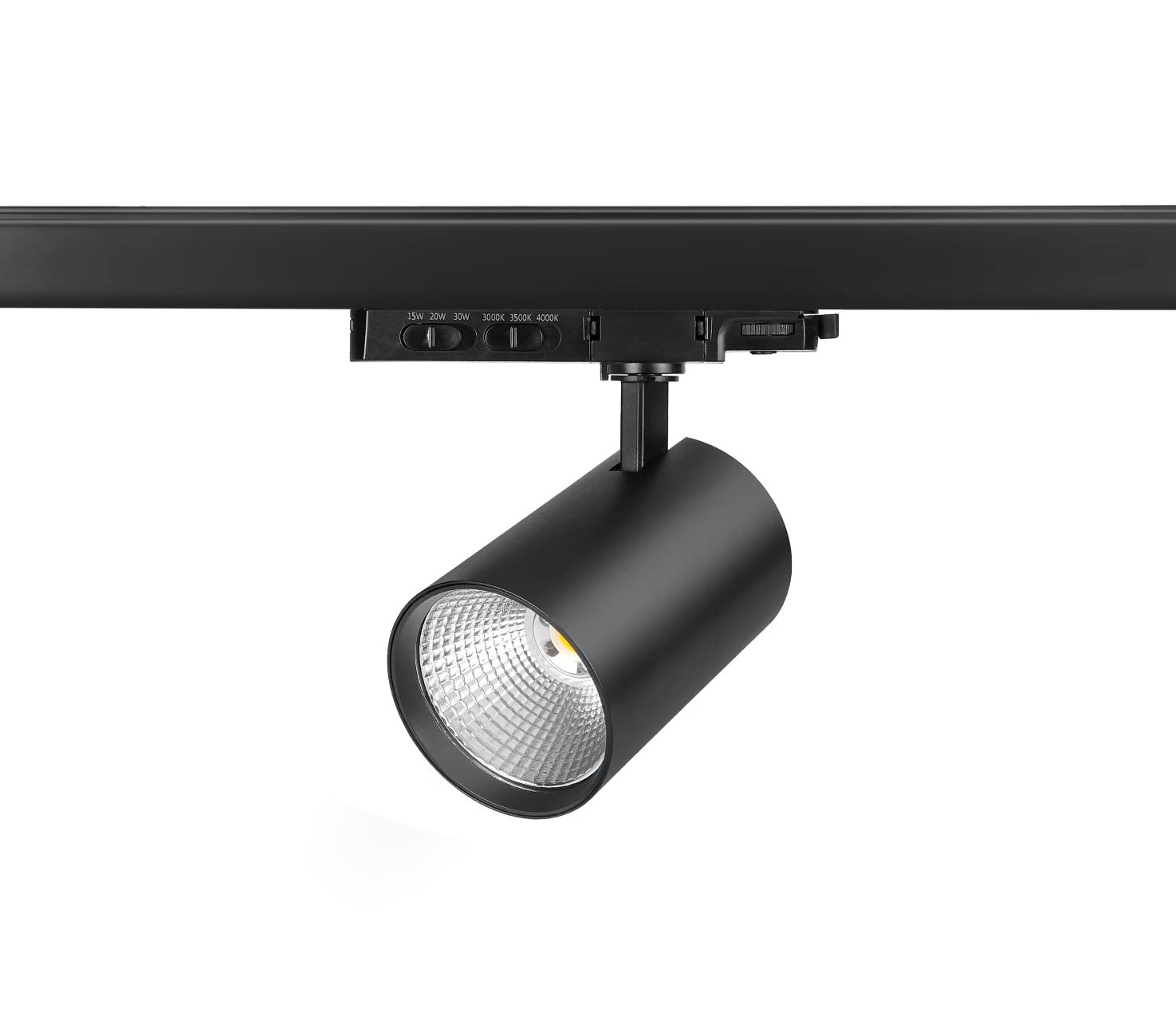
| 3POWER Range | Switchable Watts(15-20-30W) | Available for different lighting needs. |
| CRI (Ra / R9) | Ra 97+ / R9 95+ | To reveal the true depth of the artist's palette. |
| Color Consistency | < 2-Step MacAdam Ellipse | Ensures all lights on a rail look identical. |
| Dimming Range | Triac dimmable 100% (Flicker-Free) | Essential for light-sensitive organic materials. |
| Beam Options | 15°, 24°, 36°, 60° (Swappable) | Flexibility for changing exhibitions. |
| UV / IR Emission | 90-100 mW/lm | Prevents irreversible photochemical damage. |
| Control Protocol | DALI-2,Triac dimmable | Individual fixture control |
| L80 B10 Life | > 50,000 Hours | Reduces maintenance disruption in public spaces. |
With all functions in one light, the users just need to stock just one peice of this CCT track light to meet different lighting needs just by switching the bottom on the track adapter to change the POWER and Color temp according to the environment.
5. The Curatorial Tool: Mastering the TRIAC Dimmable System
Hardwired Precision: The TRIAC Advantage
Unlike wireless ecosystems that rely on signal stability, a triac dimmable track system uses the existing electrical wiring to transmit dimming commands. This ensures zero latency and 100% reliability, making it the preferred choice for large-scale permanent installations where signal interference from visitor mobile devices must be avoided.
Zone-Based CCT Control
Using a centralized wall-mounted phase-dimmer or a professional lighting console, a curator can achieve "Smooth Dimming" across the entire gallery.
Dynamic Warmth: Many modern TRIAC-compatible CCT fixtures utilize "Dim-to-Warm" technology. As you dim the light from 100% to 10%, the CCT automatically shifts from a crisp 4000K to a cozy 2700K, mimicking the natural glow of traditional halogen lamps.
Tactile Reliability: Adjust the atmosphere via a physical rotary or slide dimmer with granular precision—allowing for a full 100% "Installation Mode."
Strategic Scene Control
Through hardwired zone configuration, a TRIAC system allows for professional scene management:
Gala Preset: One flick of the master dimmer drops the entire hall to 20% intensity for an intimate, warm-toned evening reception.
High-Contrast Focus: By wiring the "Masterpiece" track on a separate TRIAC circuit from the ambient wall-washers, curators can maintain a high-intensity spotlight on a central canvas while keeping the surrounding gallery in a soft, dimmed state.
Why Choose TRIAC for Your Art Gallery?
Legacy Compatibility: Works perfectly with existing architectural dimming systems (like Lutron or Leviton).
Cost Efficiency: Lower hardware costs per fixture compared to DALI, allowing for a larger lighting budget for the art itself.
Flicker-Free Performance: Professional-grade TRIAC drivers ensure that even at 100% brightness, the light remains steady for museum visitors and professional photography.
6. Installation Strategy: The 30° Rule and Beyond
The placement of the track is as vital as the light itself.
Avoiding Glare: To prevent the viewer from seeing their own shadow or a reflection in the glass, the track should be installed so the light hits the artwork at a 30-degree angle from the vertical.
Distance Calculation: For a ceiling height of 10 feet (3 meters), the track should be placed roughly 3–4 feet away from the wall.
Flexibility: Multi-functional CCT track lighting systems are gaining popularity in galleries because they allow "plug-and-play" movement of fixtures without needing an electrician.
7. The "Expert" Section-The answers for the CCT track light
Q1: Why is a CCT track light better than a fixed-color light for art?
A: Art is diverse. A contemporary piece with cool blues looks vibrant at 4000K but "yellowed" at 2700K. Conversely, a gold-framed Renaissance piece looks cold and sterile at 4000K. A 3CCT track light allows the gallery to be a "chameleon," adapting its atmosphere to the specific needs of each show.
Q2: Does "High Efficiency" matter in a museum?
A: Yes, but not at the expense of light quality. While high-efficiency LEDs save costs, "Museum-Grade" prioritizes the Quality of Light (CRI/Rf). However, since galleries often keep lights on for 12+ hours a day, an efficacy of 100+ lm/W is recommended to keep operational costs low.
Q3: What is "flicker-free" dimming and why is it critical?
A: Standard dimming can cause a high-frequency strobe effect (flicker). While often invisible to the eye, it causes headaches for visitors and "banding" in photographs or videos taken by tourists. Museum-grade drivers use Deep Dimming technology to ensure a perfectly steady light at any percentage.
Q4: Can LED track lights damage oil paintings?
A: Modern, high-quality LEDs are significantly safer than the halogens of the past because they emit no UV or IR heat. However, total light exposure (Lux-hours) still matters. Using Smart CCT track lights to dim units when the gallery is empty is the best way to extend the life of the art.
8. Conclusion: The Investment in Excellence
Choosing a Museum-Grade LED Track Light system is an investment in the gallery’s reputation. By prioritizing CCT flexibility, high R9 values, and optical precision, you create a space where art is not just seen—it is experienced.
In the competitive world of 2026 art exhibitions, the right lighting is the difference between a "flat" display and a masterpiece that breathes.
 Tel.+86 15013617190
 Email:info@pustlux.com