Fixed LED vs. Switchable LED: Which is More Profitable for Lighting Importers?
In the highly competitive global lighting procurement market, commercial importers, wholesale distributors, and supply chain managers face a constant, high-stakes balancing act: How can we maximize net profit margins while simultaneously minimizing operational overhead and capital stagnation?
Traditional Fixed LEDs tie up millions of dollars of working capital in stagnant inventory, choke warehouse floor space with redundant stock-keeping units (SKUs), and expose importers to severe losses due to sudden shifts in localized project specifications.

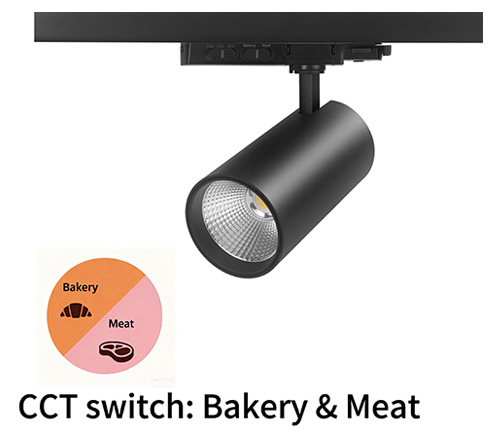
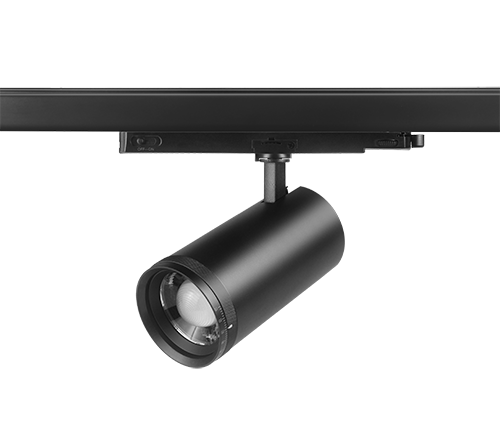
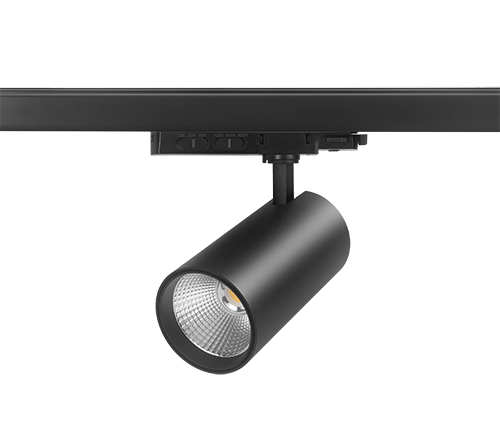
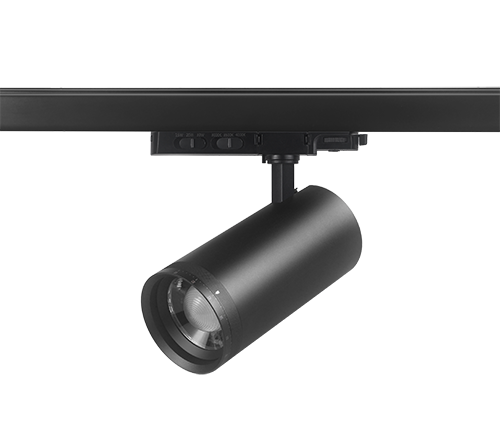
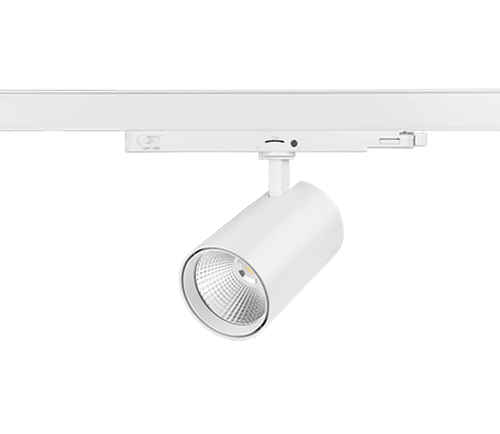
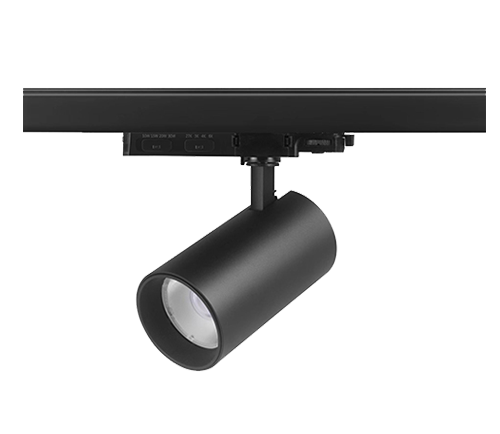
Today, an aggressive structural shift is reshaping the international supply chain. The introduction of advanced, field-adjustable LED technologies—specifically high-performance fixtures like the Pust 3CCT Track Light series integrating 3-Power & 3-CCT switchable mechanisms coupled with universal Triac dimming drivers—is fundamentally rewriting the economics of B2B lighting procurement.
1. Executive Summary: The Ultimate Total Cost Valuation
To accurately measure the profitability of an import line, supply chain executives must look far beyond the initial factory EXW price. True profitability in the B2B sector is a direct metric of Total Cost of Ownership (TCO), Capital Inventory Turnover Ratio, Warehousing Footprint Efficiency, and Customer Retention Rates.
At a pure component level, Fixed LEDs admittedly possess a slightly lower initial purchasing cost—typically running 8% to 15% cheaper at the factory assembly line due to simpler PCB configurations. However, this upfront saving is completely wiped out by the long-term financial penalties of running a fragmented supply chain.
The Pust 3CCT Track Light acts as a 9-in-1 universal solution (3 selectable wattages multiplied by 3 selectable color temperatures inside a single structural enclosure). By deploying this switchable track light architecture, importers can achieve radical inventory consolidation, slash monthly warehousing lease overhead, and instantly satisfy volatile retail and commercial project requirements without the need to over-order safety margins.
Macro-Comparison Matrix: Fixed vs. Pust 3CCT Track Light Supply Chain Economics
| Financial & Operational Metric | Fixed LED Track Lights (Traditional Sourcing) | Pust 3CCT Switchable Track Lights (Modern Sourcing) |
| SKU Requirement | 9 separate SKUs needed to cover 3 wattages and 3 CCTs | 1 single SKU covers all 9 configuration permutations |
| Capital Stagnation Risk | High (Capital locked inside unpopular spec variations) | Low (Highly fluid stock adaptable to any commercial demand) |
| Warehouse Space Overhead | Bloated (Requires 9x the physical pallet allocations) | Optimized (Compresses inventory volume by up to 80%) |
| Dead Stock/Obsolescence Rate | Severe (Leftover 5000K or low-wattage stock becomes e-waste) | Near Zero (Can be manually adapted on-site for the next job) |
| Average Importer Net Margin | Low / Compressed (Subject to brutal price wars) | Premium / High (Value-added engineering yields higher B2B markup) |
| Customer Sourcing Friction | High (Frequent ordering delays due to precise spec shortfalls) | Low (Instant fulfillment from a versatile, consolidated stock) |
2. Deconstructing the Retail & Commercial Inventory Nightmare with the 3CCT track light
To understand why the Pust 3CCT Track Light is inherently more profitable over a fiscal year, we must map out the financial bleeding caused by the traditional Fixed LED sourcing model, particularly in retail and commercial display environments where lighting requirements are notoriously volatile.
Consider a standard commercial project scenario: an upscale retail chain, a modern art gallery, or a car showroom. Depending on the seasonal merchandise, interior design, and layout updates, lighting requirements split across three distinct color temperatures:
3000K (Warm White): Required for fashion boutiques, high-end hospitality, and intimate retail zones to create an inviting atmosphere.
4000K (Natural Cool White): Required for general grocery, cosmetics, and mixed retail spaces to enhance product clarity and textures.
5000K (Daylight): Required for jewelry displays, automotive showrooms, and art galleries demanding hyper-realistic color rendering.
Simultaneously, varying ceiling heights and track layouts dictate different lumen intensities, translating to three distinct wattage draw options (e.g., 15W, 20W, or 30W).
Under the traditional Fixed model, to bid on this project with instant fulfillment, an importer must stock every single mathematical combination of this single product line, forcing them to manage 9 distinct SKUs for just one single aesthetic style of track light.
3. How Pust 3CCT Technology Optimizes Working Capital
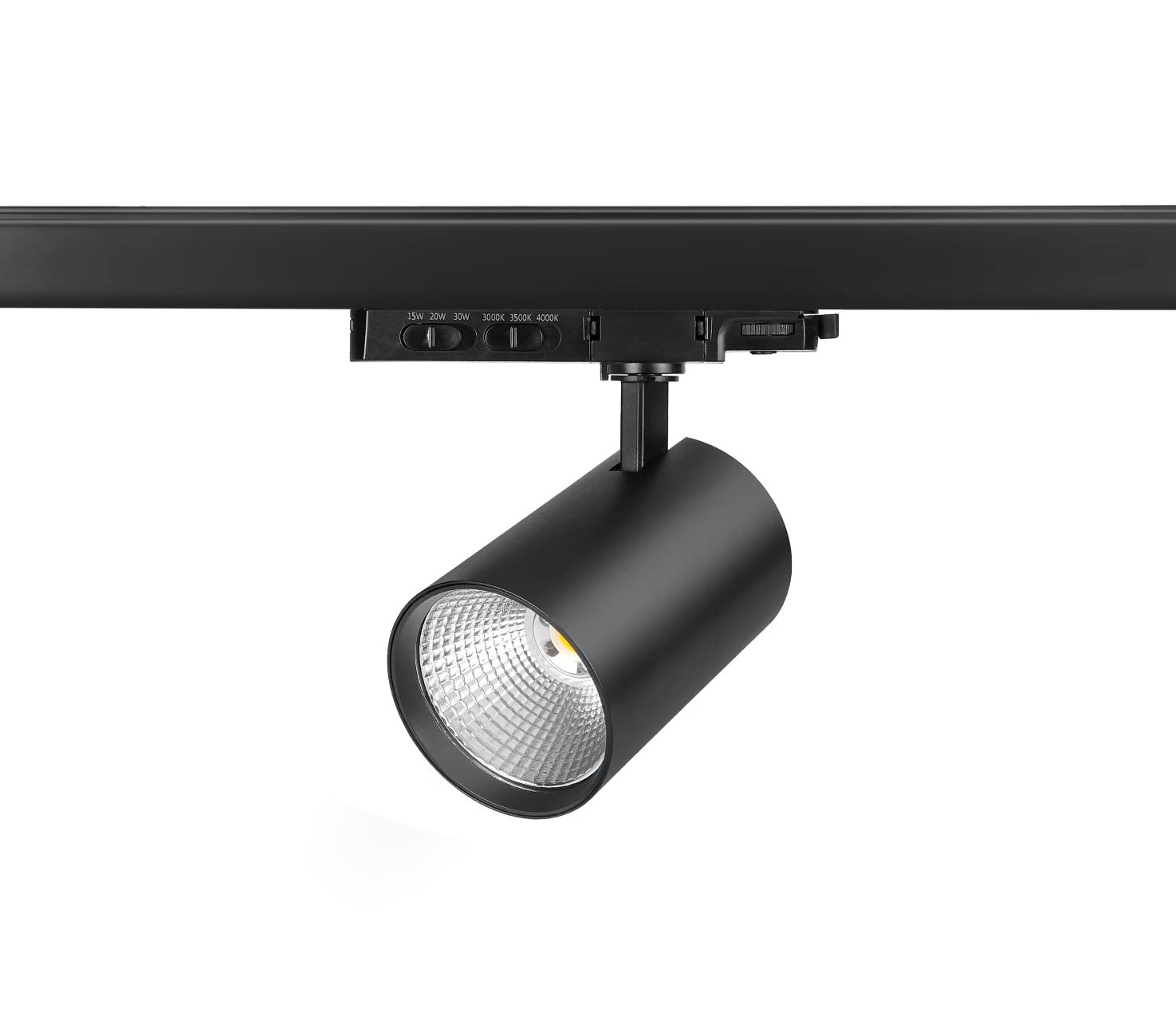
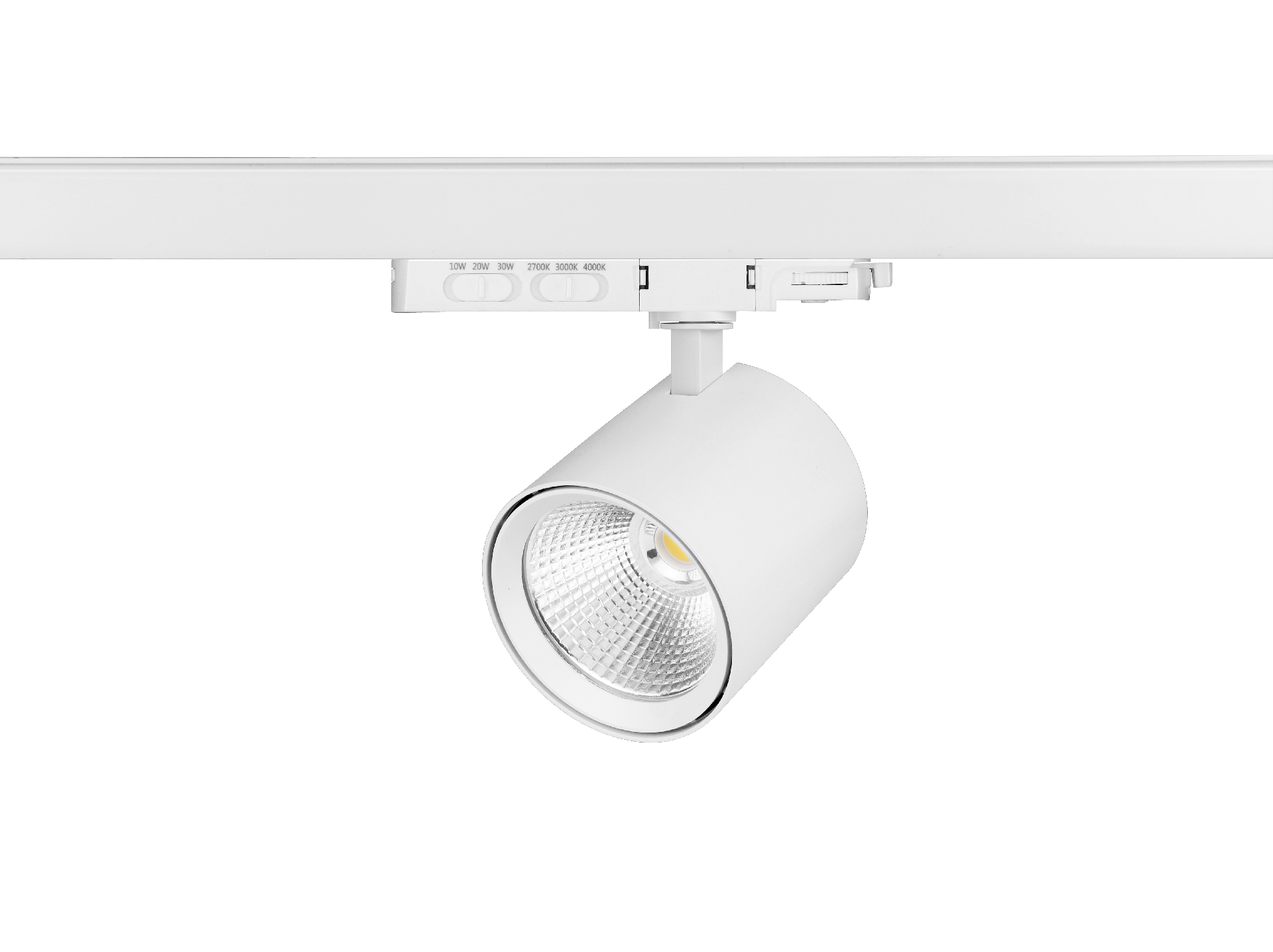
The Pust 3CCT Track Light completely disrupts this logistical bottleneck. By engineering low-profile Dual In-line Package (DIP) switches directly onto the track driver housing or the back of the aluminum fixture chassis, the factory compresses all 9 potential technical variations into one singular, universal product line.
[ Pust Track Light 9-in-1 Sourcing Consolidation ]
(3000K / 4000K / 5000K)  ×  (15W / 20W / 30W)  ===>  1 Universal SKU
The electrical installer, retail visual merchandiser, or distributor simply toggles these mechanical sliders in the field to select the exact wattage and color rendering profile required at the precise moment of installation. For an international importer, this yields compound financial advantages:
Eradication of SKU Proliferation: Instead of tracking 9 separate line items inside your ERP system, your logistical staff handles exactly one SKU, dropping administrative labor costs and data-entry errors.
Extreme Volumetric Warehousing Efficiency: Storing 1 highly concentrated, fast-moving SKU instead of 9 slow-moving variations allows you to compress your physical storage footprint requirements by up to 75% to 80%.
Acceleration of Inventory Turnover Ratio: Because your stock can adapt to satisfy any retail configuration, it never stops moving. Your cash is no longer locked inside stagnant, unselected fixture variations.

4. The Contractor & Retailer Premium: Why B2B Customers Will Pay More with the 3CCT track lighting
Your primary buyers—commercial electrical distributors, contractors, and retail project managers—are willing to pay a premium markup for the Pust 3CCT Track Light because it solves their daily operational headaches on active job sites.
Eliminating Spatial Changes and Costly Returns
In retail environments, store layouts change frequently. A clothing store might switch from a summer collection (best under 4000K) to a winter collection (best under 3000K). With Fixed LEDs, this requires a complete, costly fixture replacement. With the Pust 3CCT Track Light, the store manager or contractor simply climbs a ladder, flips the mechanical slider, and re-targets the lighting to match the new seasonal display. No returns, no friction, no lost time.
Flawless Legacy Retrofit via Advanced Triac Dimming
The Pust 3CCT Track Light pairs multi-wattage and multi-CCT adjustments with a premium, high-fidelity Triac dimmable driver. This ensures seamless integration with legacy phase-cut dimming components which is covering both leading-edge and trailing-edge dimmers) commonly found in older commercial buildings, allowing contractors to execute building-wide retrofits without tearing out walls to install complex 0-10V low-voltage control lines.
5. Engineering Profile of the Pust 3CCT Track Light
To successfully market premium switchable products to strict B2B engineering buyers, an importer must ensure that the internal electronic components are built to survive continuous commercial operation. Below is the comprehensive technical data profile of the professional-grade Pust 3CCT Track Light engine.
Pust Professional Commercial Switchable & Triac Dimmable Track Light Specification Sheet
| Engineering Parameter | Industrial Sourcing Standard / Value |
| Product Architecture | Field-Adjustable 3-Power & 3-CCT Multi-Function Solid-State Track Luminaire |
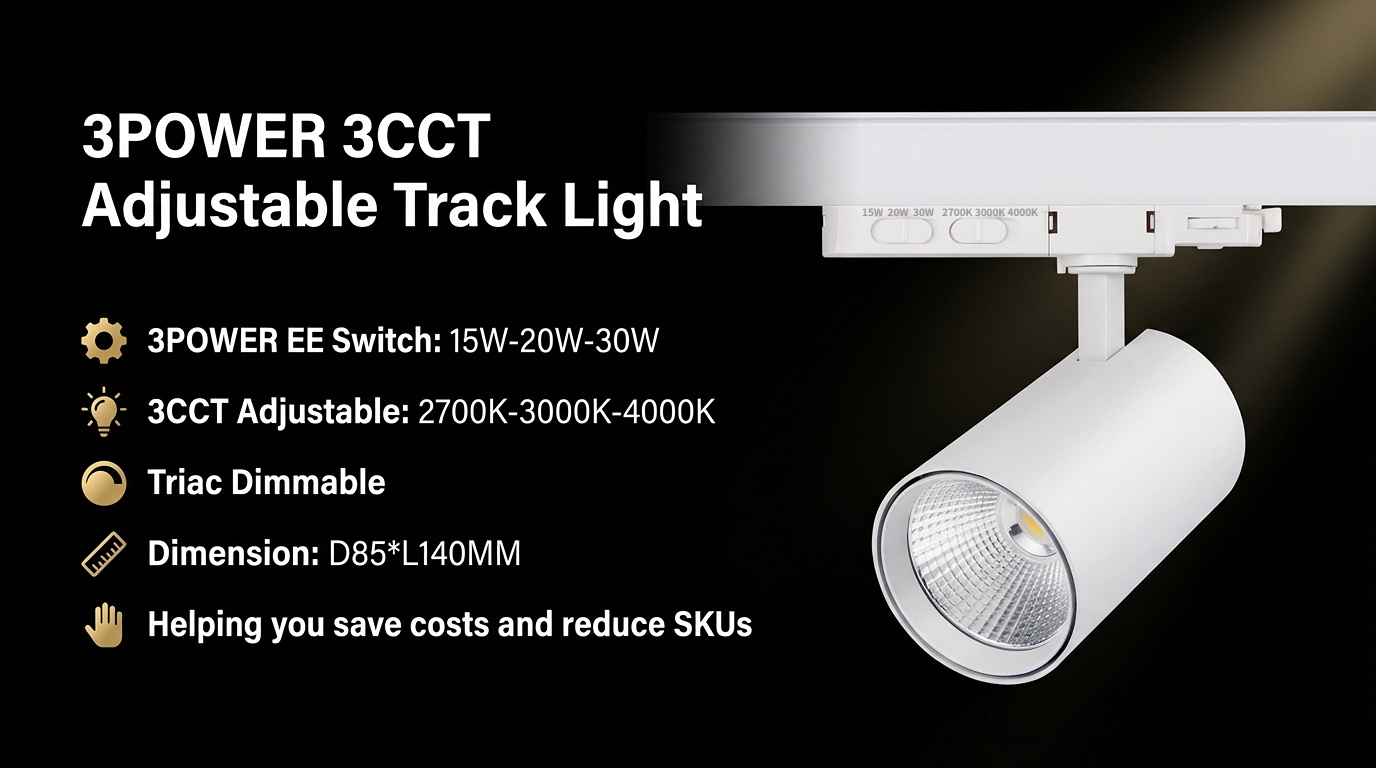
| Selectable Wattage Steps | 15W / 20W / 30W (Configurable via internal DIP switch) |
| Selectable CCT Spectrum | 3000K (Warm) / 4000K (Natural) / 6000K (Daylight) |
| Dimming Integration Protocol | Premium Triac Dimming (Smooth 0% to 100% range)
|
| System Luminous Efficacy | 100 lm/W to 110 lm/W at all configurations under stabilized testing |
| Color Rendering Index (CRI) | Ra > 90 (High fidelity, ideal for high-end retail and galleries) |
| SDCM (MacAdam Ellipse) | < 3 (Ensures rigid color consistency across all fixtures on the track) |
| Driver Engineering Profile | Pustlux intrack Driver, Flicker-Free Design, Surge Protection |
| Power Factor (PF) / THD | PF > 0.95 |
| Thermal Management Chassis | Cold-forging Aluminum Passive Heat Sink with optimized convective cooling |
| Operational Lifespan Rating | L70 > 50,000 Hours under continuous maximum thermal operation |
| Warranty & Compliance | 5-Year Commercial Replacement Warranty; CE, RoHS listed |
6.Overcoming Quality Risks in Switchable OEM Manufacturing
While the macroeconomic metrics clearly demonstrate that switchable track lights are more profitable, executing this strategy requires holding your OEM manufacturing partners to strict engineering standards to protect your brand reputation.
Mandate a Dual-Spectrum Interleaved Matrix Layout: Low-quality switchable fixtures pack separate, un-interleaved rows of cool and warm emitters, resulting in harsh pixelation shadows beneath the lens. Insist that the Pust 3CCT Track Light implements an alternate-placed chip matrix beneath a high-transmittance optical PMMA lens. When switched to 4000K, both chip sets illuminate simultaneously at balanced currents, creating a perfectly blended, uniform, spot-light beam.
Ensure Industrial-Grade Silicone IP Seals on DIP Switches: Dust accumulation is a major threat to track lights in retail environments. Ensure that the DIP switches are wrapped in an integrated, flexible silicone waterproof/dustproof boot to prevent contact corrosion and flickering.
Rigorously Audit the Triac Compatibility Matrix: Before committing capital to a full ocean container run, mandate that the factory’s engineering team provide an extensive Dimmer Compatibility Report featuring real-world bench testing data across at least 15 to 20 of the leading dimmer models popular in your target geographic market (e.g., Lutron, Clipsal, or Schneider).
7. Comprehensive B2B QAs about Mastering Sourcing Conversations
Q1: Won't the higher unit cost of the Pust 3CCT Track Light turn off budget-conscious wholesale buyers?
A: No. While it carries an upfront component premium of roughly 8% to 12% due to the multi-wattage driver and dual-chip array, it saves the wholesaler and contractor thousands of dollars in hidden operational costs. Wholesalers stop losing money on dead inventory clearance sales, and contractors avoid product returns and job delays. When framed as a logistical tool that optimizes cash flow, B2B buyers willingly pay the slight premium.
Q2: Does changing the wattage switch affect the lumen efficacy or lifespan of the track light?
A: When engineered correctly with an isolated constant current driver, lowering the wattage setting (e.g., from 25W down to 15W) under-drives the LED chips. This operating state actually increases their luminous efficacy and vastly reduces internal thermal stress, extending the operational lifespan of the components.
Q3: How do we handle energy efficiency certifications for a single track fixture that has multiple power settings?
A: International certification bodies (such as Intertek, SGS, or TUV) evaluate the fixture at its highest wattage consumption setting—representing the worst-case scenario. Once the luminaire passes compliance at maximum capacity, the lower wattage configurations are automatically grandfathered under the same compliance approval umbrella.
8. Conclusion: The Strategic Path Forward for Ambitious Importers
In the modern commercial lighting landscape, continuing to source traditional Fixed LED fixtures means accepting low margins, slow inventory turnover, and high operational risk. The future of high-margin B2B lighting distribution belongs to flexible, field-adjustable systems.
By transitioning your product catalog to the Pust 3CCT Switchable + Triac Dimmable Track Light series, you shift your business model away from a low-margin commodity race and position your brand as a high-value, solution-oriented partner to commercial distributors and contractors. You immediately unlock warehouse space, drastically optimize your working capital, and build a highly resilient supply chain capable of satisfying any lighting project specification with a fraction of the inventory cost.
 Tel.+86 15013617190
 Email:info@pustlux.com