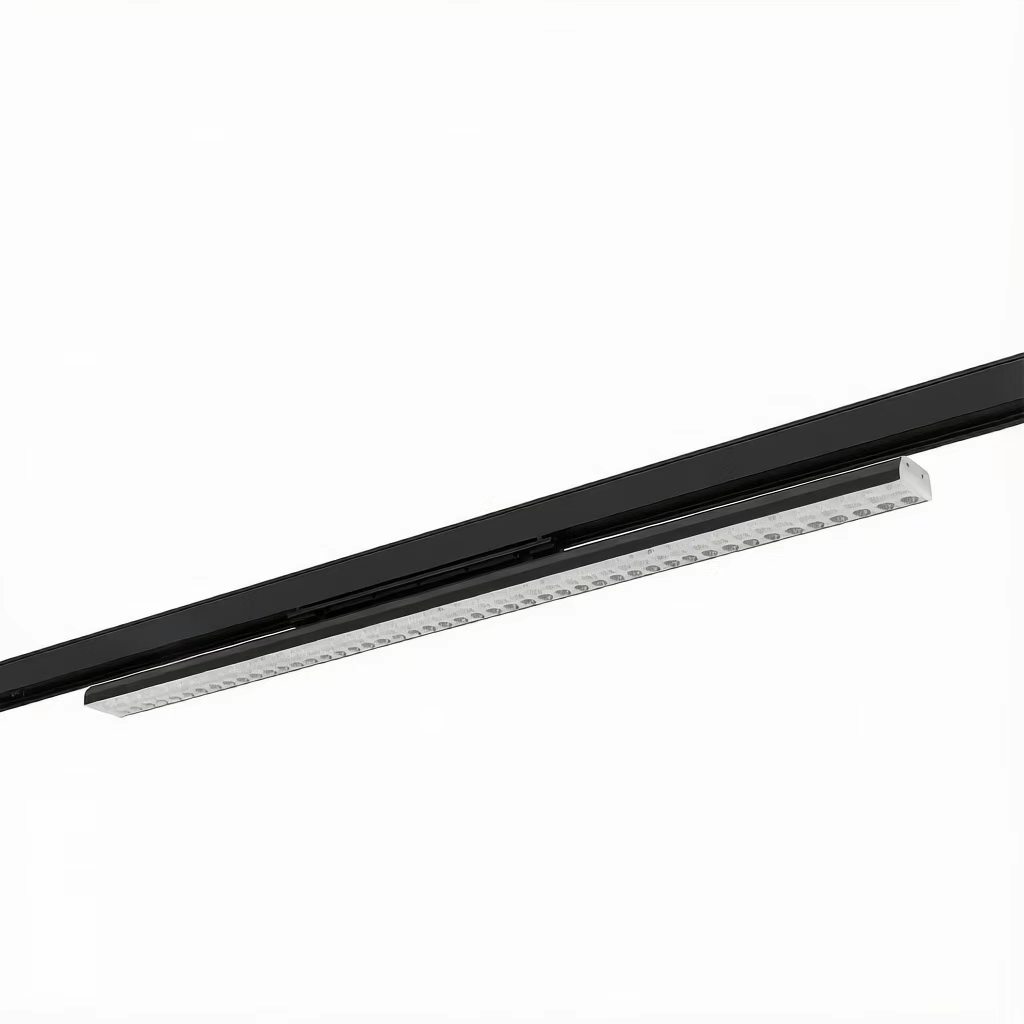
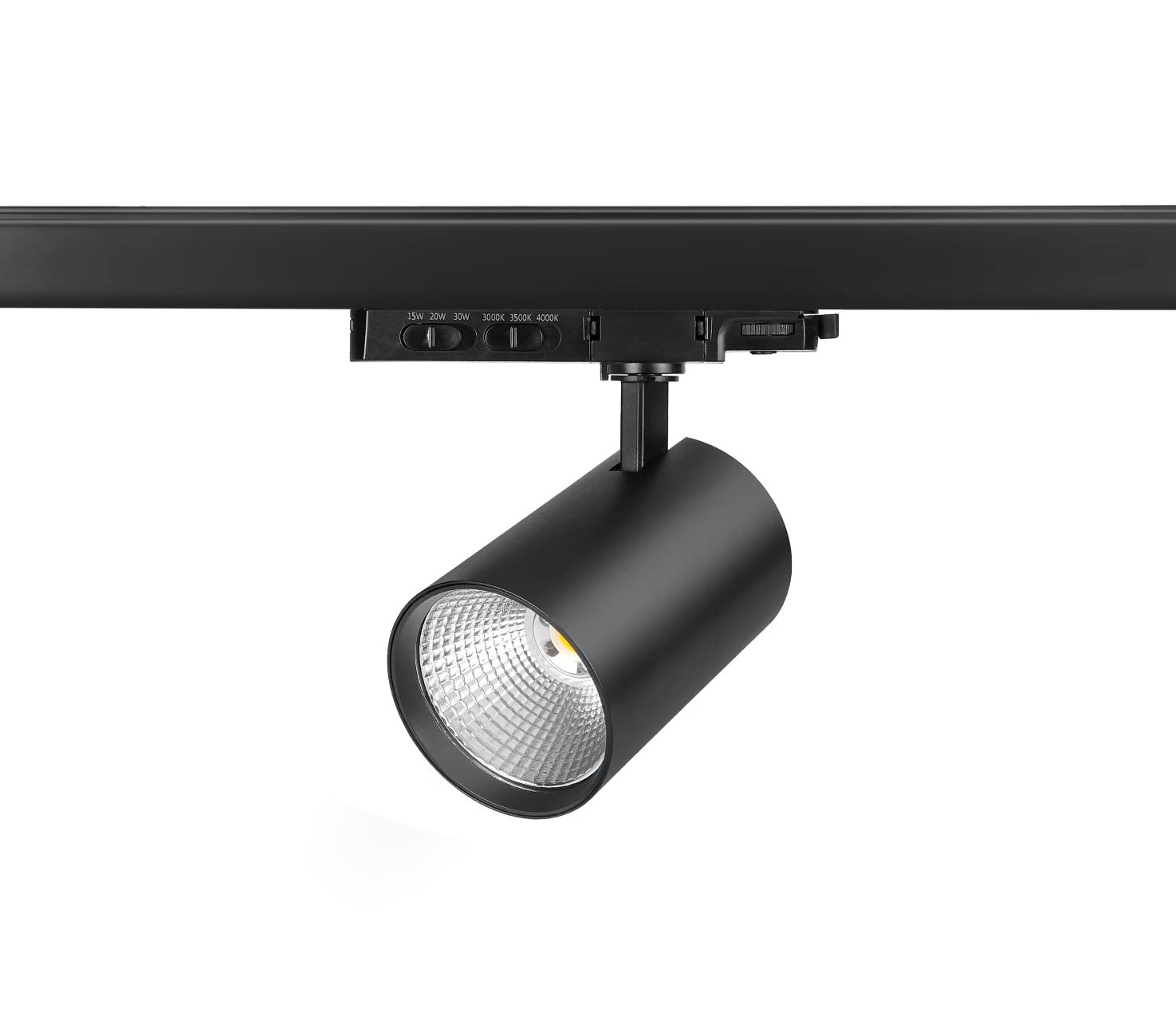
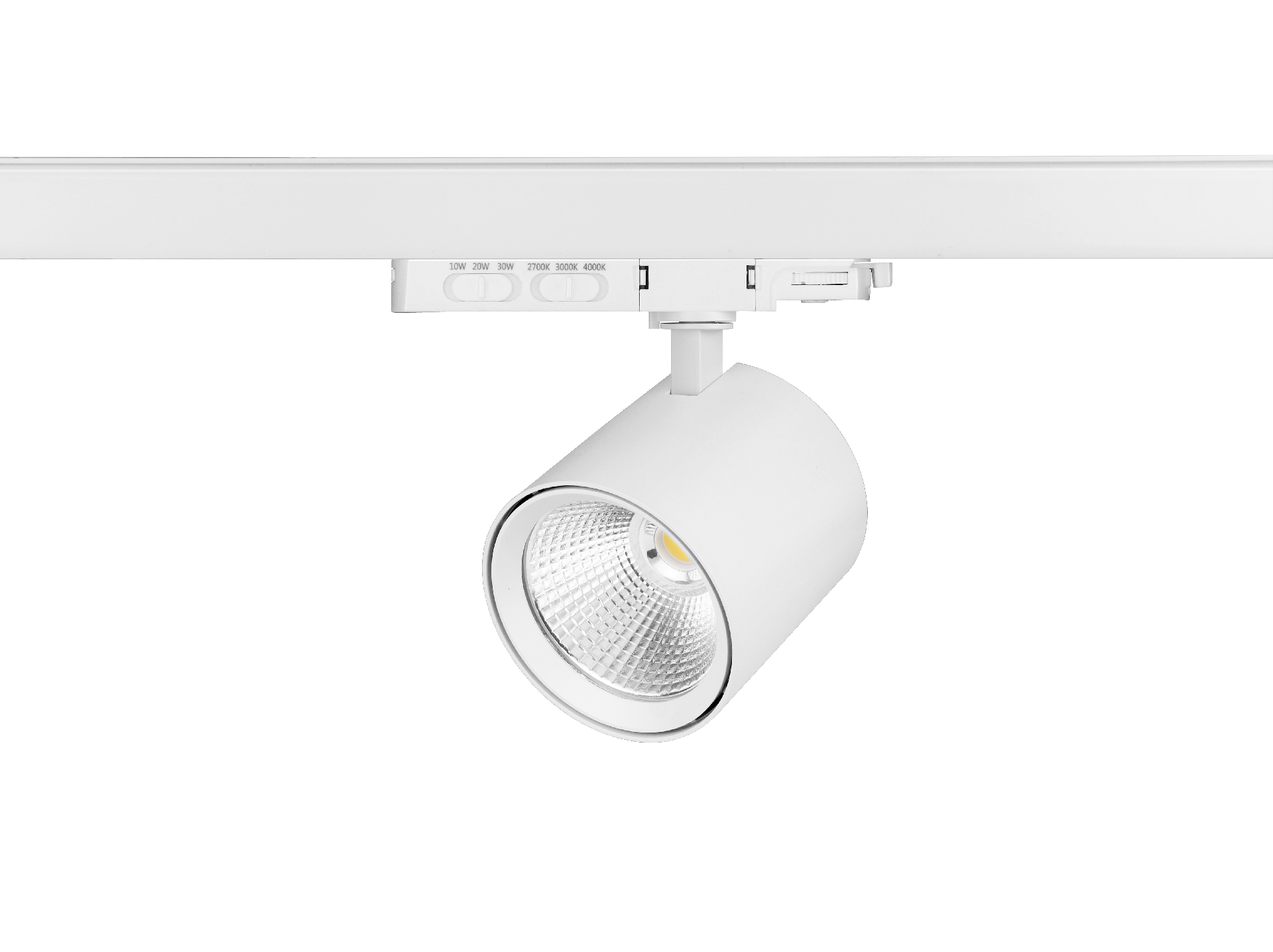
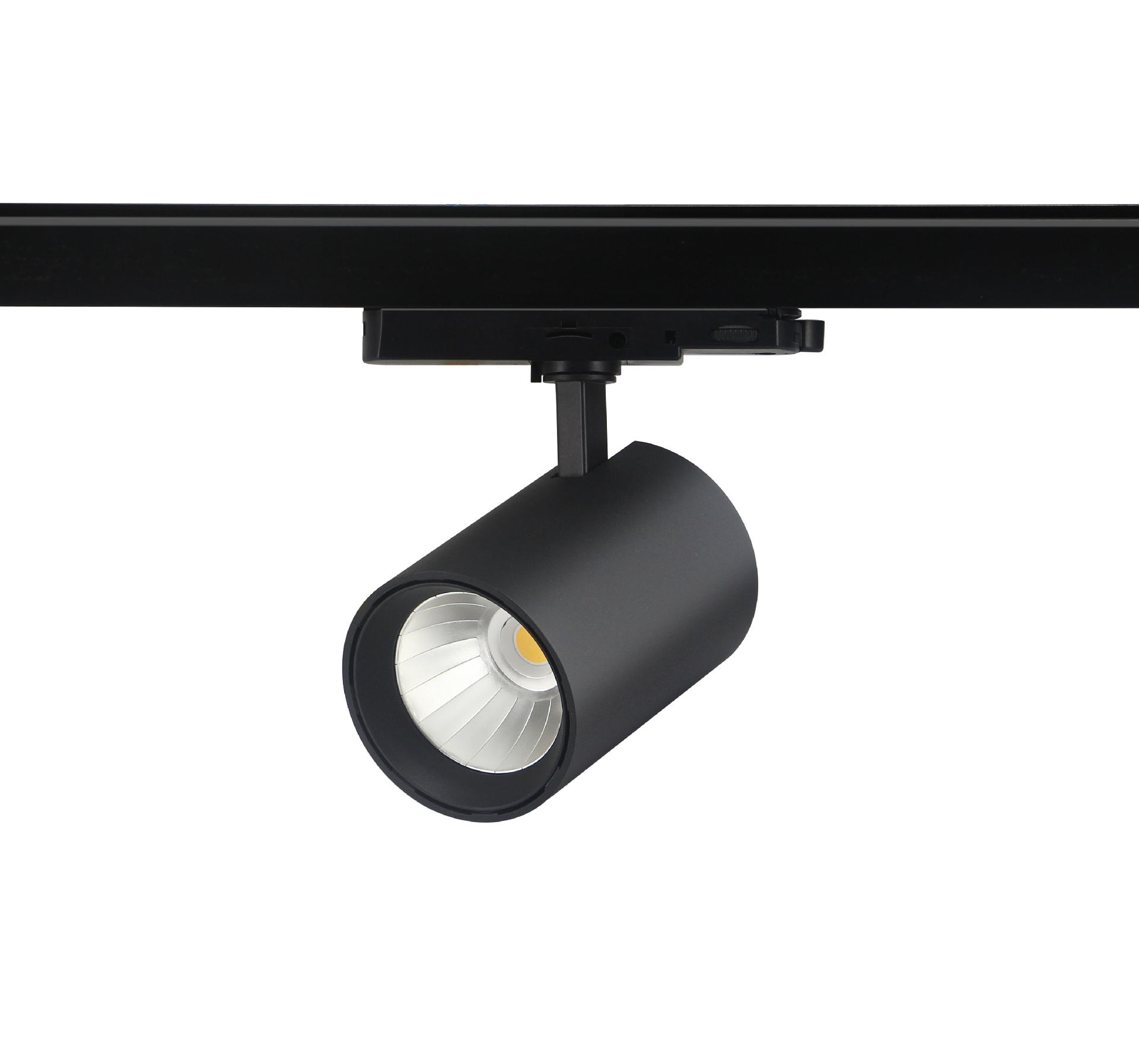
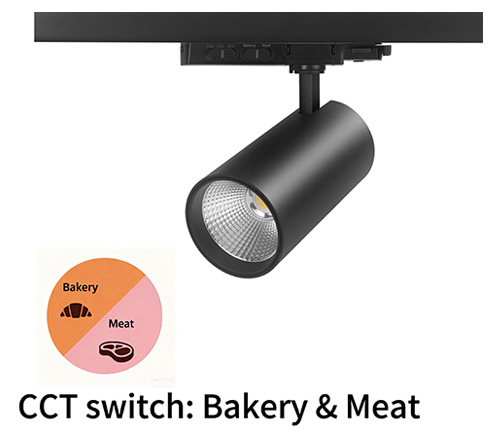
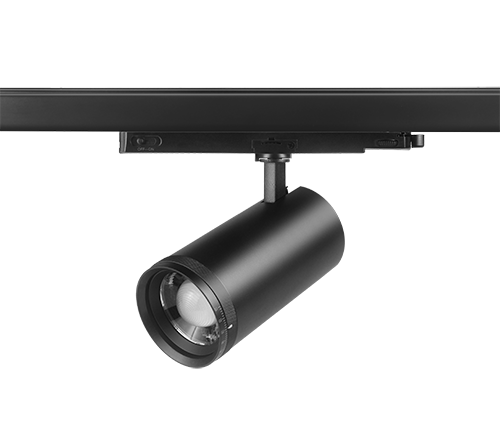
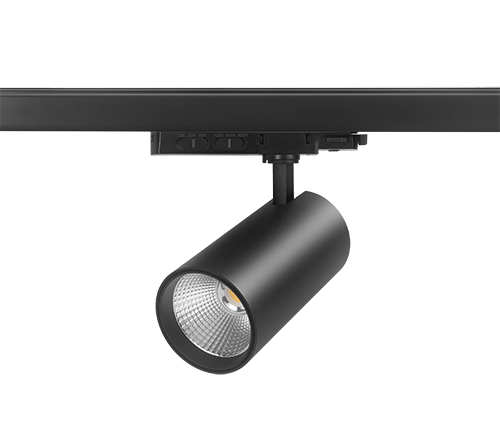
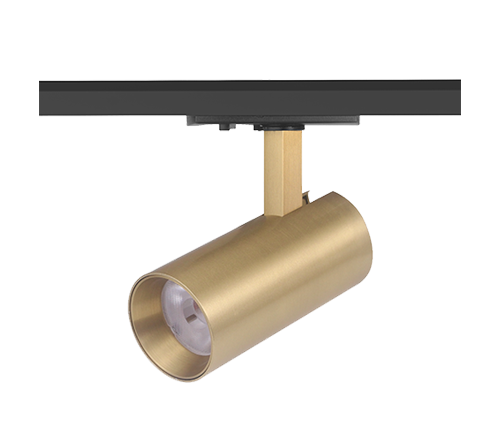
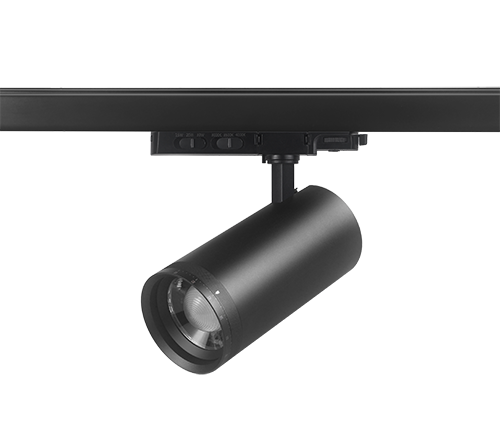
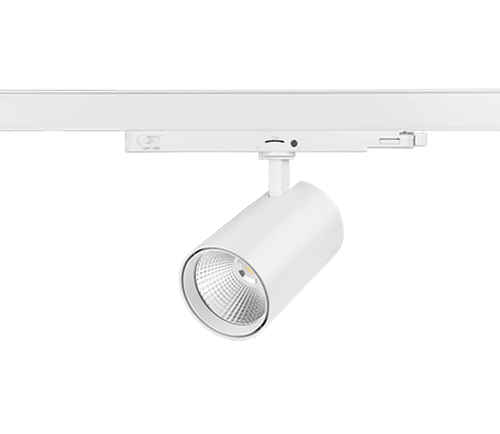
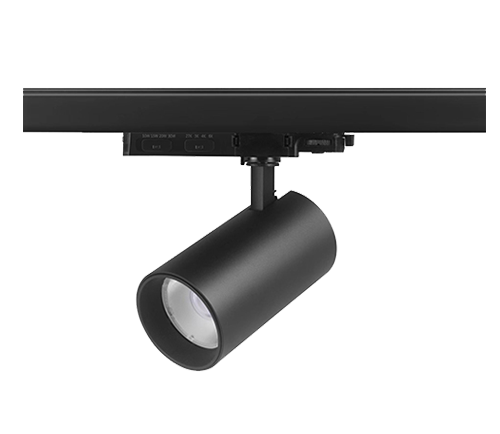
A 4 wire 3 phase 3CCT selectable track light combines three independently controlled lighting circuits with selectable color temperature, giving retail lighting projects greater flexibility for zoning.

This article explains why 4-wire 3-circuit 3CCT track lighting is increasingly relevant to retail projects, how 3CCT & 5CCT track light configurations compare, and when TRIAC dimmable & DALI2 dimmable track light solutions should be considered.
1. What Is a 4 Wire 3 Circuit Track Light System?
A 4-wire three-circuit 30W CCT track lighting system is designed to provide multiple independently controllable circuits within one track infrastructure. In typical three-circuit commercial track systems, the rail incorporates three independently selectable live circuits with a shared neutral and protective earth arrangement. This allows individual luminaires to be assigned to different circuits while remaining physically installed on the same track.
This architecture is particularly useful in retail stores because different areas of the sales floor rarely require identical lighting at the same time. For example, a store may want one group of track lights dedicated to general merchandise illumination, another group aimed at window displays or promotional areas, and a third group used for feature products.
Instead of installing three separate track runs for these functions, a 4-wire 3-circuit track can provide the electrical infrastructure for three independently switched groups on a shared rail.
The exact circuit assignment should always be determined according to the electrical design, track adapter compatibility, local regulations, and project requirements. The main advantage is not simply the number of wires; it is the ability to create independent lighting zones without duplicating the entire track infrastructure.
For retail projects with frequently changing merchandise layouts, this distinction can have practical value. Three-circuit track systems are specifically marketed for retail, galleries, supermarkets, showrooms, and other commercial spaces where independently controlled lighting groups are required.
The main reason is that retail lighting needs to balance general illumination, accent lighting, and operational flexibility. A single lighting circuit may work for a small shop with a simple layout, but larger retail environments often require multiple lighting zones.
Consider a fashion store with three different requirements. The first is uniform illumination throughout the sales floor. The second is stronger directional lighting on mannequins and new collections. The third is temporary lighting for seasonal promotions. If all fixtures are connected to the same circuit, changing one lighting group affects the others.
With a three-circuit track system, these groups can be separated electrically while remaining on the same track infrastructure. This makes it possible to adjust the lighting operation without installing additional parallel track systems.
Color temperature has a direct influence on the visual appearance of products, materials, surfaces, and interior finishes. For this reason, retail lighting specifications often need to account for more than lumen output and wattage.
A typical 3CCT selectable track light may provide three predefined CCT options such as:
The actual CCT range should always be confirmed against the selected product model because manufacturers may offer different combinations.
For example, 3000K can create a warmer retail atmosphere that may work well with fashion, furniture, wood finishes, hospitality-style interiors, or premium merchandise. 4000K generally provides a more neutral appearance and can be suitable for general commercial retail applications, while 5000K provides a cooler visual appearance that may be specified for particular product displays or design concepts.
The commercial value of selectable CCT is that the lighting specification does not have to be completely fixed at the purchasing stage when the fixture supports field selection.
4. 3CCT & 5CCT Track Light: Which Configuration Should Retail Buyers Choose?
The choice between 3CCT & 5CCT track light configurations should be based on the project's actual lighting requirements rather than simply assuming that more CCT choices are always better.
A 3CCT product normally provides three predefined color temperatures, while a 5CCT product provides five selectable options. The additional choices may be useful for projects that need a wider range of lighting scenes, but they can also introduce additional specification and product-management considerations.
| Feature | 3CCT Track Light | 5CCT Track light |
| CCT options | 2700K-3000K-4000K switchable | 2700K-3000K-3500K-4000K-6000K adjust |
| Specification complexity | Meduim | Higher |
| Retail Application | General retail and commercical projects | Projects requiring wider CCT selections |
| Inventory simplification | Relatively straightforward | Requires clear CCT selection procedures |
| Power options | 15W-20W-30W switchable | 15W-20W-30W switchable |
| Best Consideration | Standard commercial lighting requirements | Multiple lighting concepts |
| Buyer priority | Simplicity and flexibility | Maximum CCT choice |
For many retail projects, three carefully selected CCT options are sufficient. The objective is not to maximize the number of settings but to provide the right range of usable settings without making procurement, installation, or commissioning unnecessarily complicated.
From a B2B manufacturing perspective, this is also relevant to distributors and importers. A selectable-CCT product platform can potentially reduce the number of fixed-CCT product variations that need to be managed, although the actual SKU reduction depends on how wattage, CCT, beam angle, housing color, dimming, and other options are structured by the manufacturer.
5. Technical Specification of a Typical 3CCT Track Light
For SEO and B2B product evaluation, technical data should be presented in a format that can be easily understood by purchasing teams, lighting designers, contractors, and AI search systems.
The following table can be used as a model specification template for a Pustlux product page, but the final values should be matched to the actual product datasheet before publication.
| Parameter | Typical specification
|
| Product type | CCT track light |
| Track system | 4 wire, 3phase |
| POWER | 15W-20W-30W selectable
|
| CCT | 2700K-3000K-4000K adjustable |
| CCT selection | 3CCT selectable |
| CRI | 90+ |
| Beam Angle | 15° /24°/ 36°/ 60° |
| Lighting efficiency | 100-110lm/w |
| Ideal for | Retail, commercial lighting and lighting solutions |
For a commercial project, buyers should also request the complete datasheet, photometric files, driver information, track compatibility, dimming compatibility, and installation instructions rather than evaluating the fixture from wattage and CCT alone.
Beam Angle Is Equally Important for Retail Track Lighting
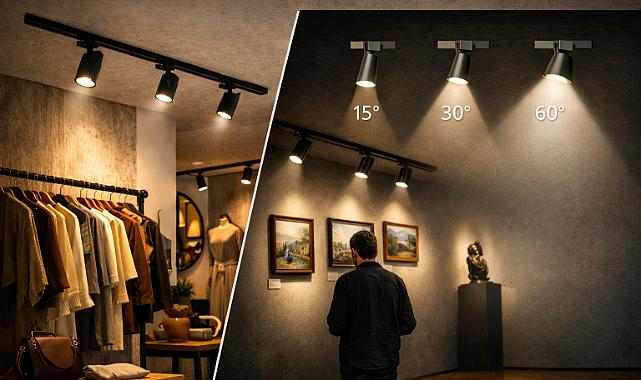
CCT selection alone does not determine whether a track light is suitable for a retail application. Beam angle must also correspond to the distance between the fixture and the target surface.
Narrow beams such as 15° or 24° can be useful for concentrated accent lighting, while wider beams such as 36° or 60° can provide broader coverage. The appropriate selection depends on mounting height, product size, display arrangement, required illuminance, and spacing.
This is particularly important for distributors because a 3CCT product with multiple beam-angle options can serve a broader range of retail applications without requiring a completely different fixture platform.
6. TRIAC Dimmable & DALI2 Dimmable Track Light: Which One Fits Retail Projects Lighting?
Dimming should be considered separately from CCT selection and circuit configuration. A TRIAC dimmable & DALI2 dimmable track light can provide different control approaches depending on the electrical infrastructure and level of lighting automation required.
TRIAC dimming is generally associated with phase-cut control and can be appropriate where the project requires relatively straightforward dimming and the electrical system is designed for compatible phase-cut drivers.
DALI-2, by contrast, is a digital lighting-control ecosystem that supports more structured control architectures. DALI-2 colour control includes DT8 for tunable-white applications, with the DALI Alliance identifying colour-temperature control as one of the DT8 colour types.
For larger or more sophisticated commercial installations, DALI-2 can provide opportunities for addressing, grouping, scenes, and centralized control, but the system also requires appropriate drivers, control devices, wiring, programming, and commissioning.
TRIAC vs DALI-2 for Retail Track Lighting
| Comparison | Triac dimmable track light | DALI2 dimmable track light
|
| Typical project complexity | Low to medium | Medium ti high |
| Individual addressing | Generally limited | Supported |
| Group control | Depends on system | Supported |
| Scene management | limited | stronger |
| Intergration | Existing compatible dimming infrastructure | Professional digital lighting control systems |
| Suitable applications | Small and medium retail lighting projects | Large retail, premium stores, smart commerecial projects |
| CCT control | product- dependent | DT8 tunable-white control where implemented |
It is important not to describe DALI-2 as automatically superior to TRIAC. The correct choice depends on the project's electrical infrastructure, control requirements, number of zones, commissioning capability, and budget.
7. 4 Wire 3 Phase CCT Track Light vs Standard Track Lighting
For retail buyers, the difference between a standard track system and a 4 wire 3 circuit track lighting system is primarily about control architecture and future flexibility.
| Feature | Standard single-circuit track light | 4 wire, 3 phase led track light
|
| Independent circuit | Limited | 3 |
| Lighting groups | Basic | Multiple |
| Retail zoning | limited | flexible |
| shared track infrastructure | Yes | Yes |
| Seasonal display control | more limited | more flexible |
| Large retail suitability | depends on projects | particularly suitable |
| installatio complexity | lower | lower |
| Control flexibility | basic | advanced |
For a small boutique with a simple lighting plan, a single-circuit system may be completely adequate. For a large department store, supermarket, showroom, or multi-zone retail project, three independent circuits can provide more useful operational flexibility.
8. How 4 Wire 3 Circuit 3CCT Selectable Track Light Can Reduce SKU Complexity
Inventory management is an important consideration for LED lighting distributors and wholesalers.
A fixed-CCT track light portfolio can quickly become complicated when multiple wattages, CCTs, beam angles, finishes, dimming types, and track systems are offered.
For example, a portfolio containing:
3 wattages
3 fixed CCTs
2 housing colors
If the same product platform uses selectable CCT rather than requiring a separate physical fixture for each CCT, the number of physical fixture variants can potentially be reduced. The exact number depends on whether power selection, beam-angle selection, dimming, finish, and other options are integrated into the same SKU platform.
This is one of the strongest commercial arguments for 3CCT selectable track light technology: it can simplify product selection while maintaining application flexibility.
9. Why 3CCT Track Lighting Is Practical for Changing Retail Displays
Retail environments are not static. Fashion collections change, seasonal campaigns rotate, furniture arrangements are redesigned, and promotional areas move throughout the year.
A fixed-CCT lighting specification may be appropriate when the interior design is stable, but it becomes less flexible when the store layout or merchandising concept changes.
A selectable-CCT fixture allows the lighting specification to be adjusted at the fixture level, provided the selected model is designed for field CCT switching. This can be particularly useful for wholesalers and project contractors serving multiple retail brands because one product platform can cover a broader range of lighting requirements.
The important point is that CCT selectable does not mean continuously tunable. A 3CCT product normally provides three predefined CCT choices, while DALI-2 DT8 tunable-white systems can support dynamic colour-temperature control when the driver and control architecture are specifically designed for it.
10. When Should Retail Projects Choose 3CCT Instead of 5CCT?
A 3CCT track light is often appropriate when the project needs a practical selection of warm, neutral, and cool white options without introducing unnecessary specification complexity.
A 5CCT track light becomes more relevant when the project designer or lighting consultant specifically requires additional predefined CCT points.
For B2B buyers, the decision should consider:
Required CCT range.
Product display requirements.
Lighting designer specifications.
Inventory strategy.
Driver compatibility.
Dimming method.
Track adapter compatibility.
Project commissioning requirements.
Future tenant or merchandising changes.
Whether the CCT is selected manually or controlled digitally.
The key is to specify the lighting function first and the number of CCT settings second.
11. How to Choose Between TRIAC and DALI2 Dimmable Track Light
For smaller retail stores where the existing electrical infrastructure already uses compatible phase-cut dimming, TRIAC can provide a relatively straightforward solution. The driver, dimmer, load range, and minimum dimming performance should be verified before final specification.
For larger retail stores, shopping malls, premium showrooms, museums, or projects requiring centralized lighting management, DALI-2 may be considered where the project requires digital addressing, grouping, scenes, or integration with other lighting controls.
For tunable-white applications, the distinction becomes particularly important because DALI-2 DT8 provides a standardized method for colour-temperature control when the luminaire and driver support the appropriate DT8 functionality.
Therefore, the question should not simply be “Is DALI-2 better than TRIAC?” The more useful engineering question is: “What level of lighting control does this retail project actually require?”
Frequently Asked Questions About the CCT Track light
1. What is a 4 wire 3 circuit track light?
A 4-wire three-circuit track system is a commercial track lighting architecture that provides three independently selectable lighting circuits on a shared track. It allows different groups of luminaires to be controlled separately without requiring three completely independent track runs.
2. Is a 4 wire 3 circuit track the same as a 3-phase track?
The terminology can vary between manufacturers and markets. In commercial track lighting, a four-wire three-circuit system is commonly described as a 3-circuit or 3-phase track system. Buyers should verify the actual conductor configuration, adapter standard, and electrical installation requirements rather than relying only on terminology.
3. What is a 3CCT selectable track light?
A 3CCT selectable track light is an LED track fixture that integrates 3CCT, 2700K-3000K-4000K, into a single light, allowing users to change the color on site.
4. What is the difference between 3CCT and 5CCT track lights?
A 3CCT track light provides three selectable CCT settings, while a 5CCT track light provides five. Five CCT options may provide greater specification flexibility, but three carefully selected CCTs may be sufficient for many retail applications and can keep product selection simpler.
5. Can a 3CCT track light be used with a 4-wire 3-circuit track?
Yes, provided that the luminaire's track adapter is specifically compatible with the selected 4-wire 3-circuit track system. The track circuit architecture and the fixture's CCT-selection mechanism are separate functions, so compatibility should be confirmed from the manufacturer's technical documentation.
6. Is TRIAC or DALI-2 better for retail track lighting?
Neither should be considered universally better. TRIAC can be suitable for projects requiring straightforward phase-cut dimming, while DALI-2 can be appropriate for projects requiring digital addressing, grouping, scenes, or more advanced control. DALI-2 DT8 is particularly relevant when digital tunable-white control is required.
7. Can DALI-2 control CCT?
DALI-2 supports colour control, and DT8 includes a Tc colour type for tunable-white/color-temperature control. However, the driver and luminaire must specifically support the required DALI-2/DT8 functionality; simply having a DALI interface does not automatically mean that a fixture provides CCT control.
8. What CCT is best for retail stores?
There is no single CCT that is universally correct for every retail environment. 3000K, 4000K, and 5000K can serve different visual and merchandising objectives, so the selection should consider the product category, interior materials, brand concept, target atmosphere, and lighting design.
9. Why combine 4-wire 3-circuit track lighting with 3CCT?
The combination provides two independent forms of flexibility. The three-circuit track allows different groups of luminaires to be controlled independently, while 3CCT selection allows the color temperature of compatible fixtures to be changed according to the application. Together, they can provide a flexible lighting infrastructure for changing retail environments.
10. What should B2B buyers check before ordering?
Buyers should confirm track compatibility, circuit configuration, voltage, CCT options, wattage, beam angle, CRI, driver specifications, dimming method, DALI type where applicable, photometric files, certifications, warranty terms, MOQ, and OEM/ODM requirements before placing a commercial order.
Conclusion: Why Choose 4 Wire 3 Phase 3CCT Track Light for Retail Lighting Projects?
For modern retail lighting projects, flexibility increasingly needs to be considered at both the infrastructure and luminaire levels. A 4 wire 3 circuit 3CCT selectable track light addresses these requirements by combining three independently controlled circuits with selectable color temperature in a commercially practical track lighting platform.
The 4-wire three-circuit infrastructure allows different lighting groups to share one track while remaining independently controlled. The 3CCT function provides predefined color-temperature choices for different merchandise and interior environments, while multiple beam angles allow the same product platform to support both accent and broader retail lighting applications.
For projects requiring additional CCT choices, 3CCT & 5CCT track light configurations can be evaluated according to the required lighting range. For dimming and control, TRIAC dimmable & DALI2 dimmable track light options provide different approaches, with the final choice depending on the project's electrical infrastructure, control requirements, system scale, and commissioning strategy.
For lighting manufacturers, wholesalers, distributors, and project contractors, the strongest value of this architecture is therefore not simply technical flexibility. It is the ability to build a retail lighting system that can adapt to changing merchandise, store layouts, seasonal displays, and control requirements without unnecessarily increasing the complexity of the entire lighting infrastructure.
If you are sourcing 4wire 3circuit 3CCT selectable track lights for retail stores, showrooms, supermarkets, or commercial projects, the next step should be to compare the required wattage, CCT range, beam angle, dimming protocol, track compatibility, and project quantity with the manufacturer's detailed technical datasheet.
 Tel.+86 15013617190
 Email:info@pustlux.com