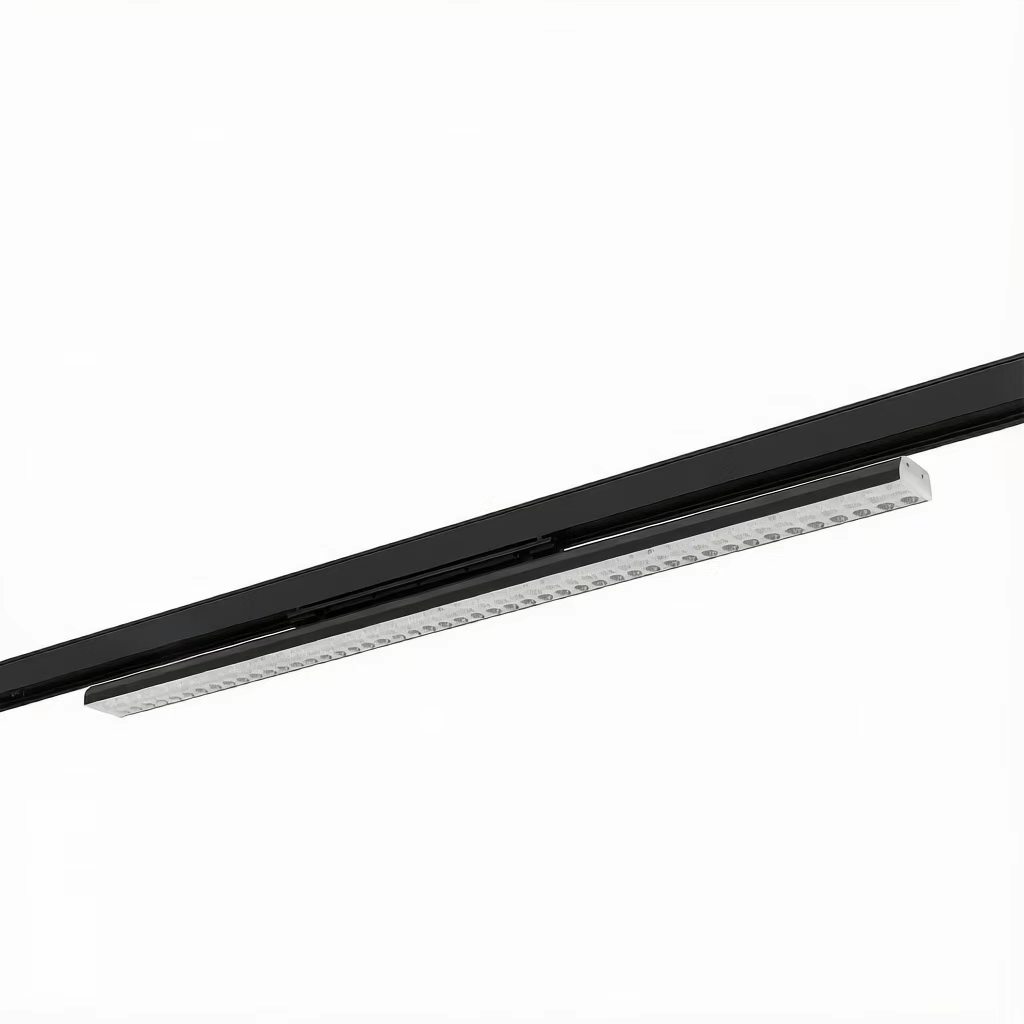
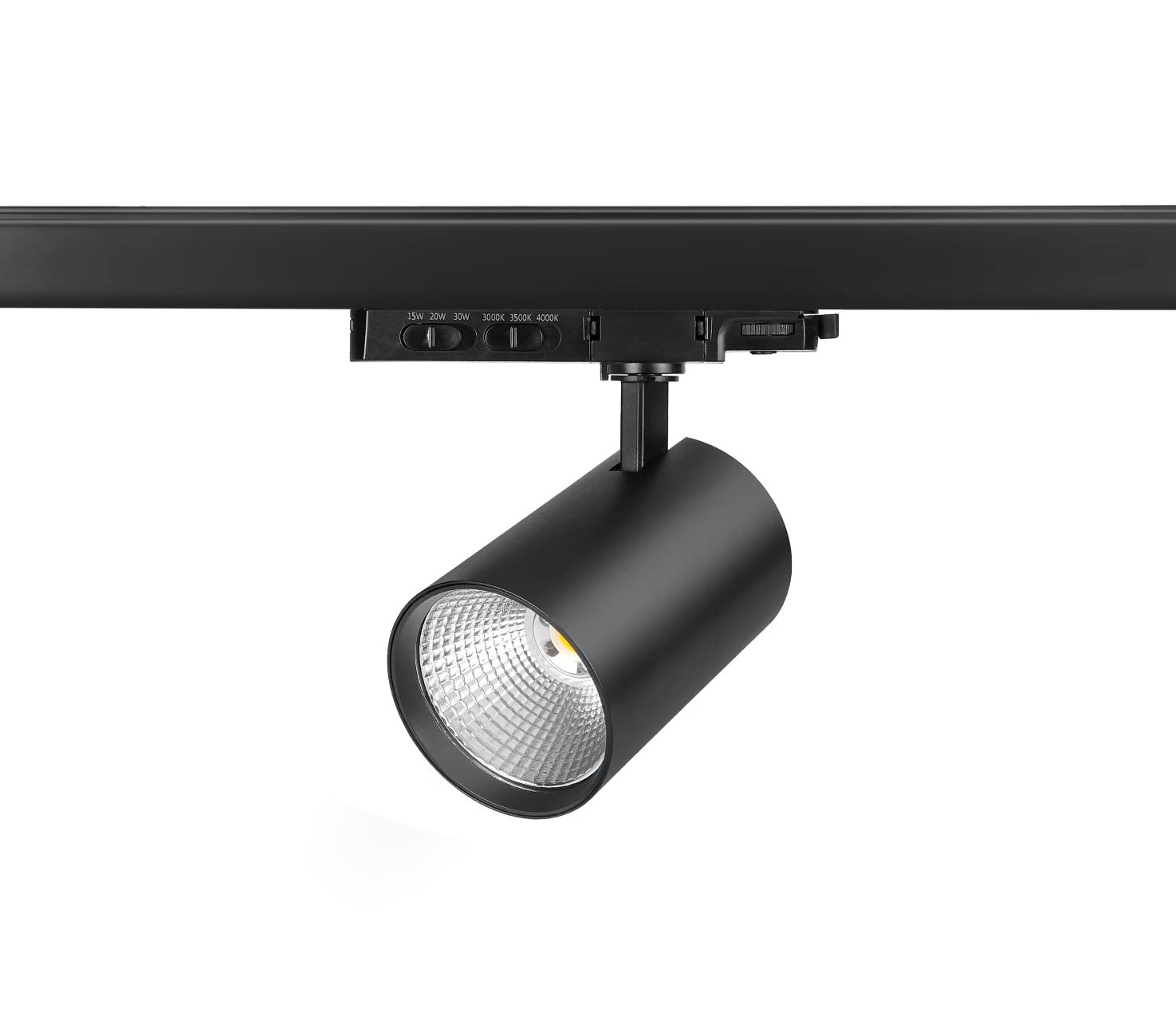
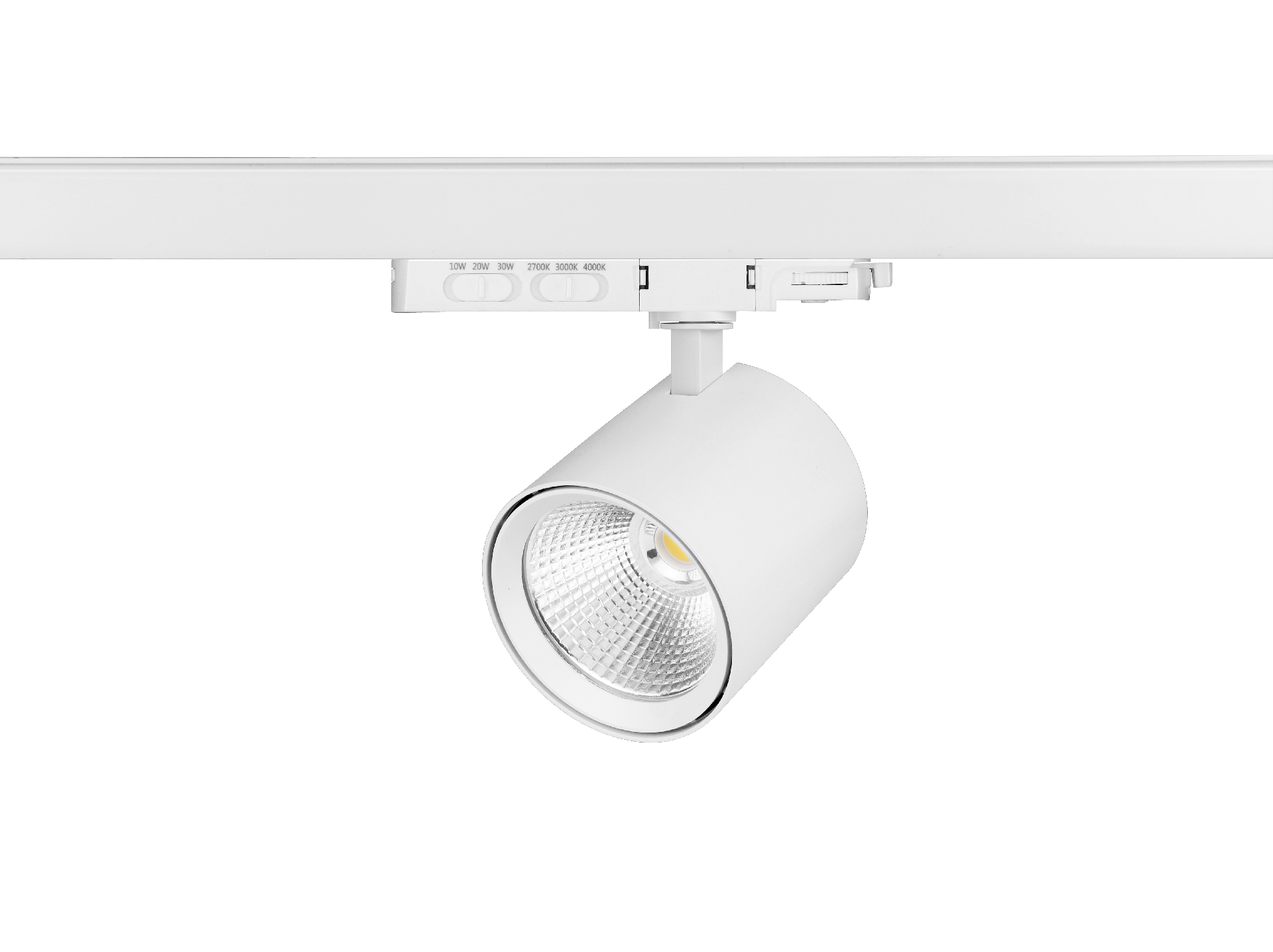
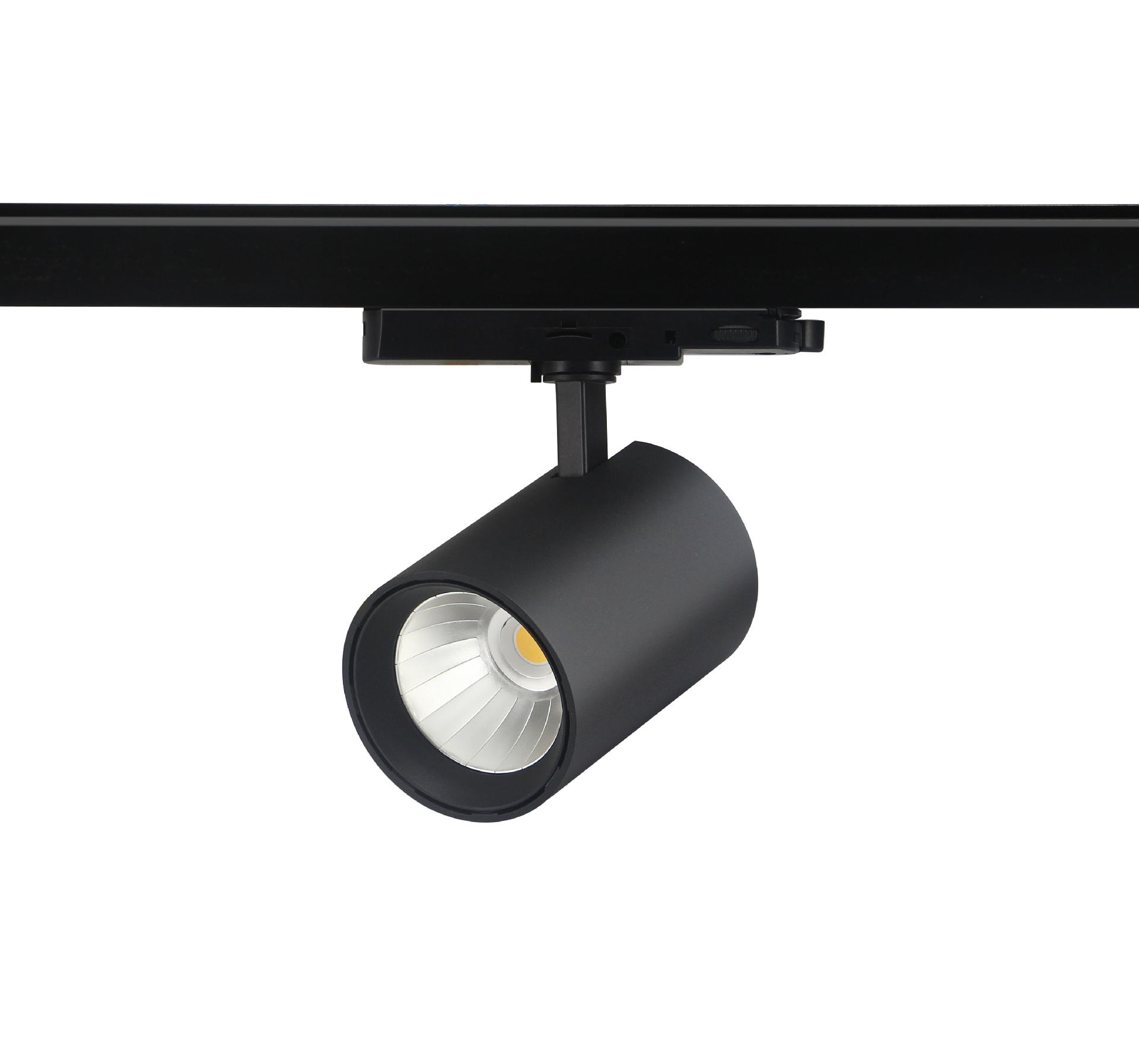
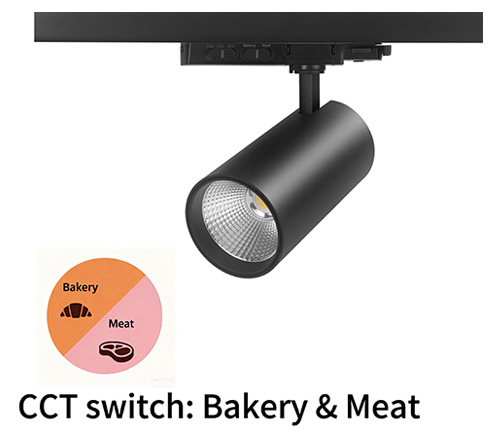
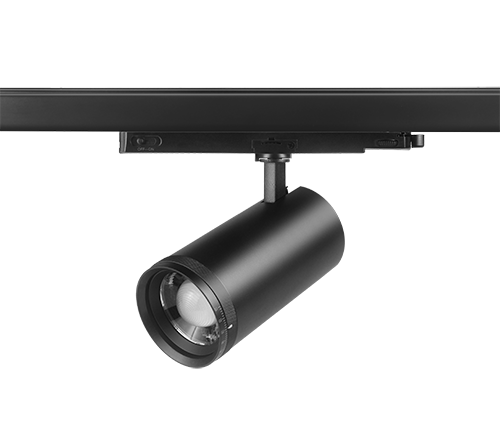
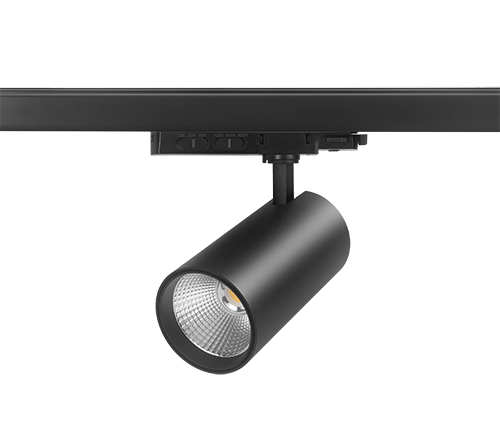
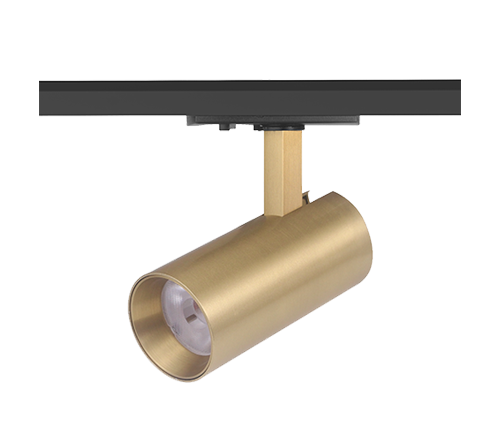
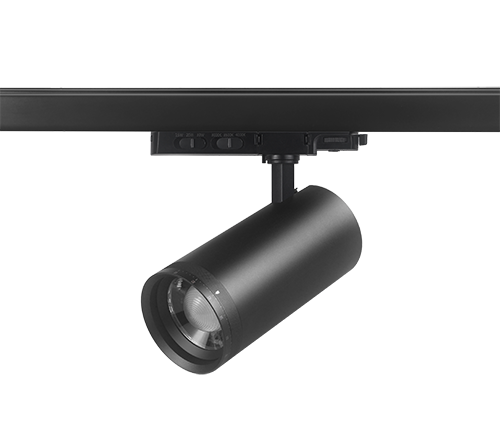
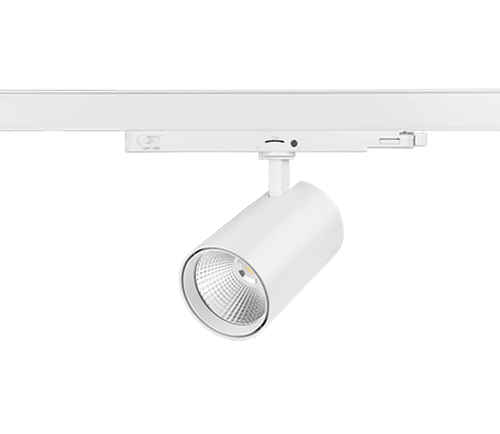
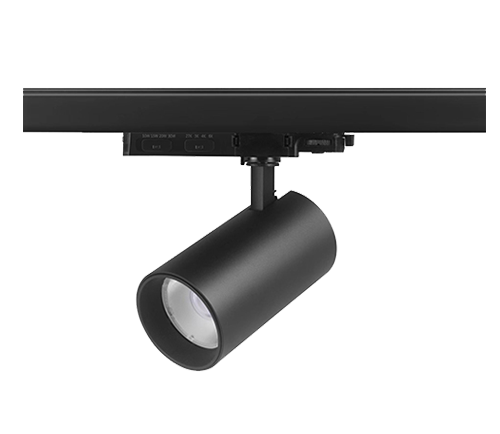
Modern car showrooms require lighting that can present vehicles accurately while adapting to different display areas, architectural styles, and brand identities. 3CCT LED track lighting provides this flexibility by allowing installers to select different color temperatures, such as 2700K, 3000K, and 4000K, from the same fixture. One track light can support multiple showroom applications while reducing product complexity for lighting contractors and distributors.
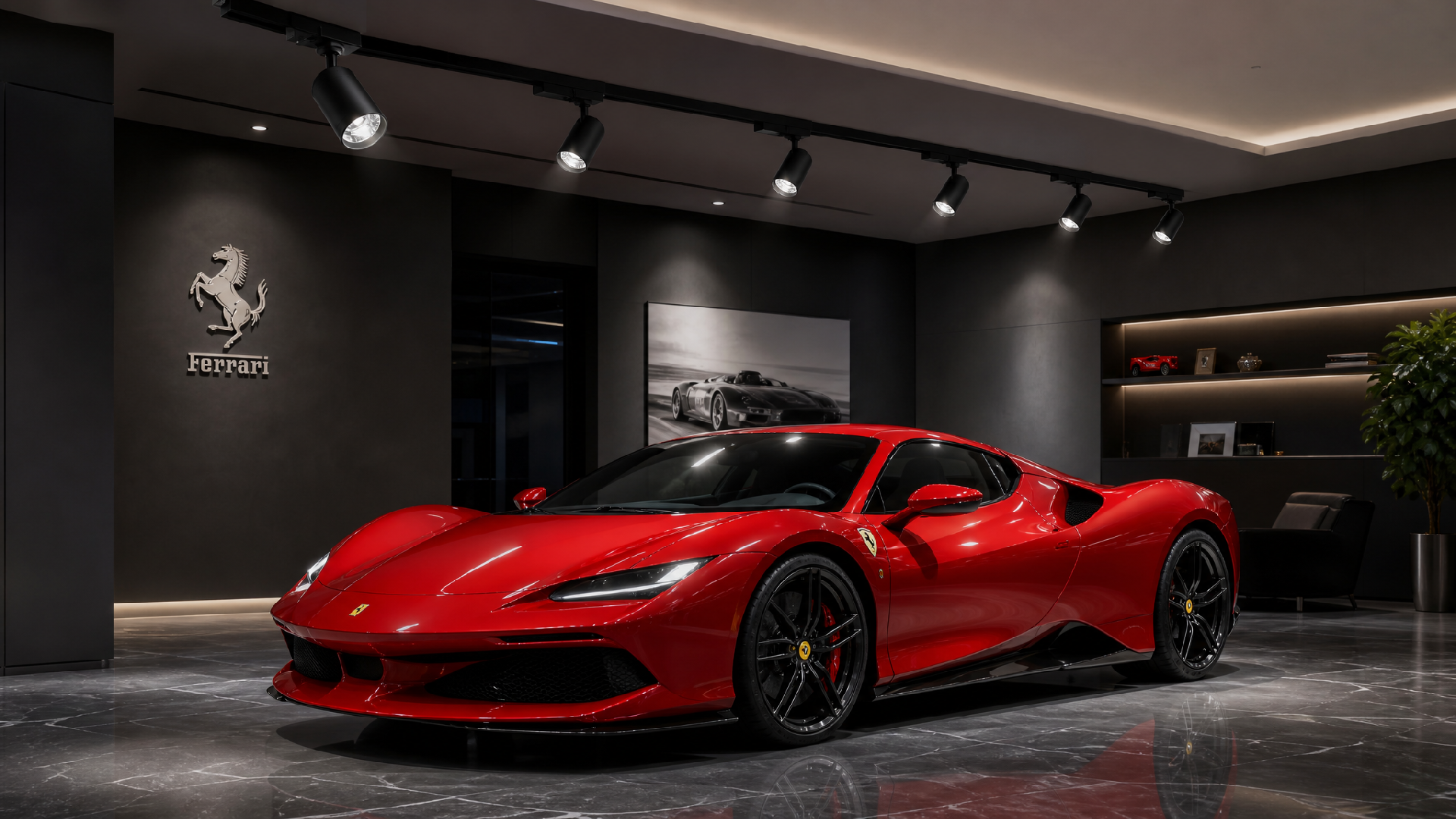
For B2B buyers, the value goes beyond lighting performance. A 3Power 3CCT switchable LED track light can combine 15W, 20W, and 30W power options with 2700K, 3000K, and 4000K three CCT settings, creating up to 9 lighting configurations from one fixture. This gives automotive lighting projects greater on-site flexibility while helping distributors reduce the number of fixed-specification SKUs they need to stock.
1. Why Automotive Showrooms Need More Flexible Lighting
A modern car showroom is fundamentally a visual sales environment. Customers evaluate vehicles through their appearance before they consider many of the technical specifications. Paint color, metallic finishes, body contours, leather, glass, and interior decorations all contribute to the customer's perception of vehicle quality. 3CCT track lighting therefore becomes part of the sales experience rather than simply an electrical installation.
This is where CCT and power selectable track lighting becomes commercially valuable. Instead of designing every area around a fixed fixture specification, contractors can adjust the lighting according to actual site conditions. This approach is particularly useful for dealerships, automotive brand stores, EV showrooms, and multi-purpose vehicle display centers.
2. 3CCT Track Light Selection and Its Impact on Vehicle Presentation
Color temperature directly affects how a showroom looks and how customers perceive the vehicles inside it. The most commonly considered CCT options for commercial automotive lighting are 2700K, 3000K, and 4000K.
| CCT | Visual Character | Typical Application |
| 2700K | Warm & Intimate | Luxury areas; premium customer spaces |
| 3000K | Warm-neutral | Premium vehicle display, reception areas |
| 4000K | Clean & contemporary | Modern showrooms; EV displays |
A 2700K track light creates a warm atmosphere and can work well in luxury-oriented spaces where the lighting design is intended to feel sophisticated and intimate. However, extremely warm lighting may not be the best choice for every vehicle finish.
3000K track light offers a useful middle ground. It provides a premium atmosphere while maintaining relatively natural product presentation, making it suitable for many luxury and lifestyle-oriented automotive environments.
4000K spotlight produces a cleaner, more neutral appearance and can complement contemporary architecture, glass, metal, and technology-focused interiors. It is particularly relevant to modern EV dealerships where the brand environment often emphasizes innovation and minimalism.
Rather than deciding on one CCT for the entire showroom, a flexible lighting- 3CCT track lighting system allows different zones to be tuned according to their function.
3. High CRI: The Foundation of Accurate Vehicle Color Rendering-Why CRI Is So Important for Showrooms
In the showrooms lighting, even though CCT determines the overall color appearance of the light, but CRI determines how accurately objects appear under that light. This distinction is important for automotive showrooms because vehicle paint can contain subtle shades and complex reflective finishes that are difficult to reproduce accurately with low-quality LEDs.
Therefore, for professional automotive applications, CRI 90+ is a practical specification target. Higher color-rendering performance can be particularly valuable for premium dealerships where customers need to see differences in paint, leather, wood, and interior materials clearly.
Also R9 should be considered alongside general CRI. Because red is an important color in automotive design and interior materials, stronger R9 performance can contribute to better rendering of red vehicle finishes and other saturated colors.
With all considered, lighting buyers should avoid evaluating a track spotlight purely according to lumen output. A fixture producing more lumens is not necessarily a better showroom fixture if its color rendering, optical control, or glare performance is poor. But it's still a good ideal to choose the 3CCT track light with CRI90+ for showrooms and retails lighting to hightlight the products more clearly.
4. Beam Angle Is Just as Important as Wattage-Why Beam Angle Is also Crucial in Showroom Lighting
One of the most common mistakes in showroom lighting is choosing a fixture based only on wattage. A 30W track light can produce very different visual results depending on its beam angle, installation height, distance from the vehicle, and optical design.
For automotive applications, several beam angles may be useful:
| Beam Angle | Recommended Application
|
| 15° | Logos, details & focused accent lighting |
| 24° | Vehicle body panels & concentrated displays |
| 36° | General vehicle highlighting |
| 60° | Larger areas & higher mounting positions.
|
A narrow beam concentrates light into a small area and creates stronger visual emphasis. It can be useful for highlighting a specific vehicle feature or brand element in the showroom. A 24° or 36° beam provides a broader distribution and can be more practical for illuminating the main body of a vehicle.
While a wide 60° beam is more suitable when the mounting distance is greater or when a larger surface needs to be covered to attract visitors. The important principle is that beam angle should be selected according to the application rather than simply choosing the widest or narrowest option available.
5. Recommended CCT LED Track Light Specification for Car Showrooms-What's the Details of 3CCT Track Light
For lighting contractors, distributors, and automotive project procurement teams, the following specification provides a useful starting point for evaluating products before making a purchasing decision.
| Technical Parameter | Recommended Specification
|
| Product Type | LED track light / track spotlight /3CCT track light |
| Selectable Power | 15W-20W-30W switchable |
| Selectable CCT | 2700K-3000K-4000K switchable |
| CRI | >90 |
| Beam Angle | 15 / 24 / 36 / 60 degree |
| Efficiency | 100-110lm/w |
| Dimming | Triac dimming / Dali2 dimming options |
| Flicker | Flicker-free |
Track Compatibility
| 3-Phase track options |
| Housing | Cold-forging aluminum |
The exact specification should ultimately be confirmed through a professional lighting calculation and the requirements of the individual project. However, this specification framework can help B2B buyers compare suppliers more effectively and to see what kind of products you are actually looking for.
6. The Commercial Advantage of 3Power 3CCT Technology-How to Choose 3CCT Track Light
For distributors and wholesalers, the most important advantage of switchable track lighting may not be the lighting specification itself. It is the ability to consolidate multiple product configurations into a single SKU. Consider a conventional product portfolio with three wattages and three CCT options:
3 wattages × 3 CCT options = 9 fixed single fixtures.
A distributor could therefore need to stock a lot SKUs:
15W 2700K
15W 3000K
15W 4000K
20W 2700K
20W 3000K
20W 4000K
30W 2700K
30W 3000K
30W 4000K
With a properly designed 3Power 3CCT switchable track light, these functions can be consolidated into one single product. This does not mean every distributor will eliminate all nine SKUs in practice, because stocking strategies depend on sales volume, project requirements, and customer preferences. However, the technology provides a clear opportunity to simplify inventory and reduce the risk of holding the wrong specification and dead-stocks.
7. Why On-Site Adjustability Matters to Contractors-What Is the Advantage of 3CCT Track Light Bringing
Construction projects rarely remain completely unchanged from the original specification to final commissioning. Vehicle layouts can change, ceiling conditions may differ from the initial drawings, and brand teams may request a different lighting atmosphere after seeing the completed space. But with fixed-specification track lights, these changes can result in additional procurement, replacing & rearragement and labor.
But with a 3CCT switchable track light fixture, the installer can select the required CCT(2700K-3000K-4000K) & wattages (15W-20W-30W) during commissioning and even after installation without replacing, just needing to select the settings according to the products dispaly requirements and environment needs.
This is a relatively simple feature, but it addresses a very real project-management problem: the gap between the original lighting specification and the final site requirement. Which means you need to choose correct POWER & CCT range when purchasing.
8. CCT Track Lighting for Different Automotive Showroom Zones -How 3CCT Track Light can Differ in various areas
A modern dealership rarely consists of one uniform space. Different areas have different visual requirements. The main vehicle display zone may require carefully controlled accent lighting to emphasize the vehicles. A reception area may benefit from warmer, more comfortable illumination. A customer lounge may prioritize visual comfort, while a technology or EV display area may use a cleaner neutral-white environment. Therefore, different lighting atmospheres are needed in a showroom. This means a single fixed CCT throughout the entire building is not always the most flexible approach.
A 3CCT-selectable track light system allows the same product family to serve multiple areas while maintaining a consistent fixture appearance. For contractors, this simplifies specification. For distributors, it simplifies product stocking. For the dealership, it creates greater flexibility when the showroom layout changes in the future and various lighting moods needed.

9. Dimming: From Basic Lighting to Flexible Showroom Control-Which kind of Dimming is better for Showroom
Modern automotive dealerships increasingly need lighting scenes rather than one fixed brightness level throughout the day. During opening hours, the showroom may require strong, visually engaging illumination. Adn during cleaning or maintenance, higher general illumination may be appropriate. While in the evening, lower lighting levels can create a more sophisticated atmosphere while reducing energy consumption. This is where dimmable track lighting becomes valuable.
Triac dimming can be suitable for compatible conventional dimming systems, while DALI-2 dimming provides a more advanced digital control option for larger commercial projects. And also DALI-2 can allow lighting designers to create different groups and scenes, making it particularly useful for large dealerships where lighting requirements vary across display areas. Choosing the suitable dimming 3CCT track light for showrooms is a great importance things.
10. Glare Control Is Critical Around Reflective Vehicles
Automobiles contain many highly reflective surfaces, including windshields, windows, glossy paint, screens, and polished interior materials. Poorly controlled lighting can therefore create distracting reflections even when the overall illuminance is acceptable.
A professional automotive track spotlight should use appropriate optical design to control the direction and intensity of the light. Deep reflectors, anti-glare optics, accurate beam control, and adjustable fixture positioning can all contribute to better visual comfort.
The objective should not be to illuminate every surface as brightly as possible. Instead, the lighting should guide attention toward the vehicle while minimizing distracting reflections and direct glare.
This is particularly important in premium showrooms, where the quality of the visual environment contributes directly to the perception of the brand.
11. Energy Efficiency and Long-Term Operating Costs
Car dealerships can operate lighting for extended periods every day, making energy efficiency an important part of total operating cost. When comparing LED track lights, buyers should evaluate luminous efficacy together with actual power consumption, driver efficiency, thermal management, and dimming capability.
A fixture delivering 100-110 lm/W can provide an effective balance between energy consumption and commercial lighting performance for many applications. However, efficiency should never be considered independently from CRI and optical quality.
A high-efficiency 3CCT track light that produces poor color rendering or uncontrolled glare may not provide the required result for a premium vehicle showroom. After all, all the functions needed to be considered when purchasing track lights.
12. Why Flicker-Free Performance 3CCT Track Light Matters for Automotive Retail
Showrooms are no longer used only for physical product displays. Dealers increasingly use them as content-generation environments for websites, social media, and digital advertising. Vehicles are frequently photographed and filmed inside dealerships.
Poor-quality LED drivers can create visible or camera-detectable flicker, which can negatively affect photography and video.
A flicker-free LED track light provides a more stable lighting environment and can support both the customer's visual experience and the dealership's digital content production. In modern environment, digital visual experience is also important to attract potential customers. For modern automotive retailers, this makes driver quality an increasingly relevant purchasing criterion.
13. What Lighting Distributors Should Look for in a CCT Track Light Manufacturer
For B2B buyers, product specifications are only one part of supplier evaluation. The manufacturer should also demonstrate the ability to maintain consistent production quality across different batches and project phases.
Key areas to evaluate include optical engineering, LED and driver quality, thermal management, CCT consistency, electrical safety, dimming compatibility, OEM capability, testing procedures, and production capacity.
For distributors serving multiple European or international markets, documentation is equally important. Technical datasheets, photometric files, certifications, installation instructions, and warranty information can make project specification and customer support considerably easier.
An experienced OEM lighting manufacturer in China should also be able to provide customized housing finishes, packaging, logos, CCT combinations, wattage configurations, beam angles, and control options when required.
14. Fixed CCT vs 3CCT Track Lighting for Automotive Projects- What is The Difference Between Fixed CCT & 3CCT Track Light
| Factor | Fixed CCT track light | 3CCT Track Light |
| CCT Options | One | 3 selectable settings |
| On-site adjustment | Limited | Yes |
| Project Flexibility | Lower | Higher |
| SKU Complexity | Higher | Lower |
| Risk of wrong CCT | Higher | Lower |
| Layout Changes | Required replacement | Can be adjusted |
| Stocks | More complicated | Simplified |
| Application Range | More specfic | Broader |
For projects with highly standardized requirements, fixed-CCT fixtures can still be an appropriate choice. However, where showroom layouts, brand requirements, or customer preferences may change, switchable CCT provides a more adaptable solution.
15. How to Choose the Right CCT LED Track Lighting Solution
A professional purchasing decision should evaluate the complete system rather than focusing on one specification.
First, determining the required illuminance and mounting height, then selecting an appropriate wattage ranges, CCT ranges and beam angle. After that, evaluate CRI and color consistency to ensure vehicles and interior materials are presented accurately.
The next consideration should be flexibility. If the project may require different lighting atmospheres or future layout changes, a 3CCT switchable track light fixture can provide significant practical value. If different display areas have different power requirements, combining CCT selection with 3Power technology can further simplify the lighting system.
Finally, consider the control system. For smaller projects, Triac dimming may be sufficient. For large automotive dealerships or smart commercial buildings, DALI-2 can provide more advanced control and scene management. Taking all details into consideration, purchasing suitable track lights for showrooms.
Frequently Asked Questions About CCT Track Light
What CCT is best for a car showroom?
3000K-4000K is generally a practical range for modern automotive display areas, although the ideal setting depends on the brand identity, architecture, vehicle finishes, and surrounding daylight. 3000K creates a warmer premium atmosphere, while 4000K provides a cleaner contemporary appearance. A 3CCT fixture allows the lighting team to select the most appropriate setting during commissioning.
What CRI should automotive showroom track lights have?
CRI 90+ is recommended for professional automotive showrooms, particularly where accurate vehicle paint and interior material appearance are important.
Why use 3Power 3CCT track lights instead of fixed track lights?
A 3Power 3CCT track light combines three wattage settings with three CCT settings, potentially replacing about 9pcs fixed functions track lights. This provides greater on-site flexibility and can simplify inventory management for distributors. It is especially useful for projects where lighting requirements may change during installation or future showroom renovations.
Are DALI-2 track lights suitable for car dealerships?
Yes. DALI-2 track lighting is well suited to larger automotive dealerships that require digital lighting control, including dimming, grouping, and scene management. It can allow different areas of the showroom to operate at different lighting levels according to opening hours, vehicle displays, customer areas, and evening presentation requirements.
 Tel.+86 15013617190
 Email:info@pustlux.com