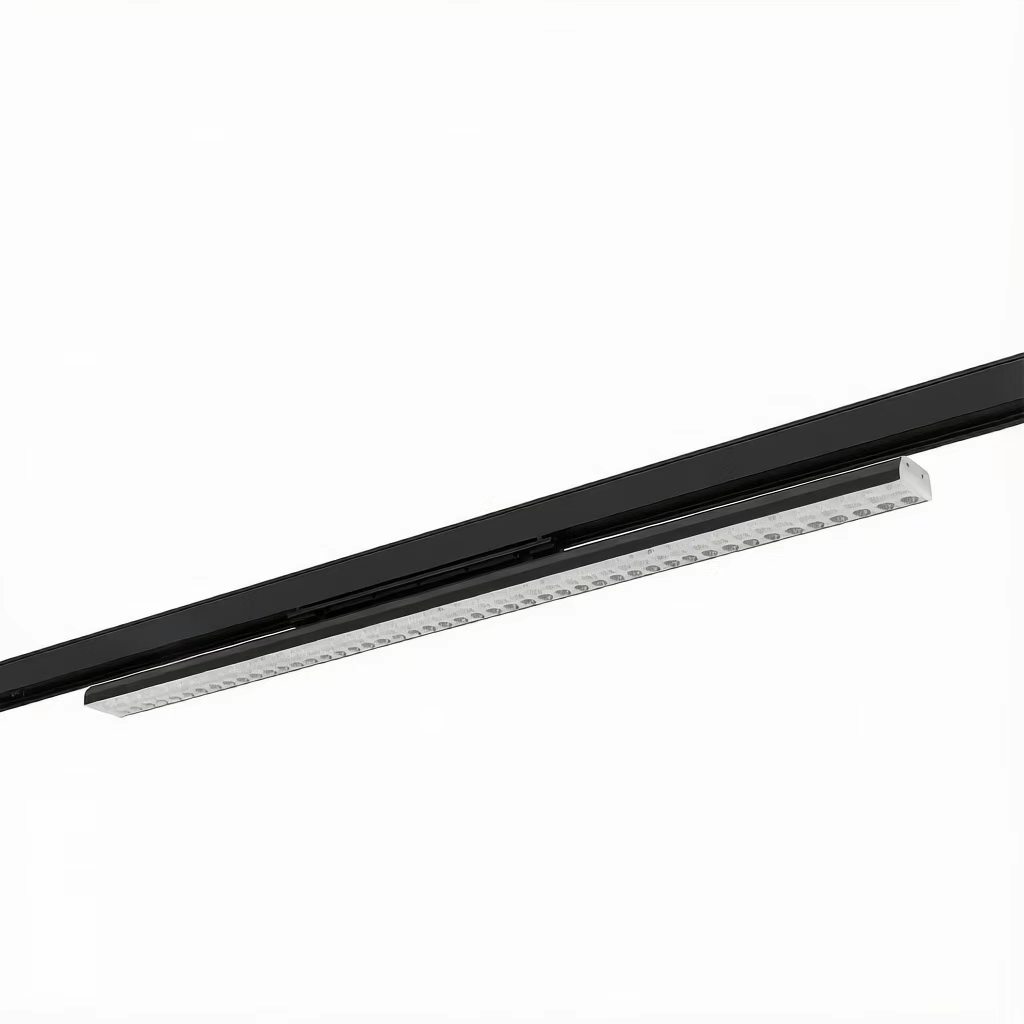
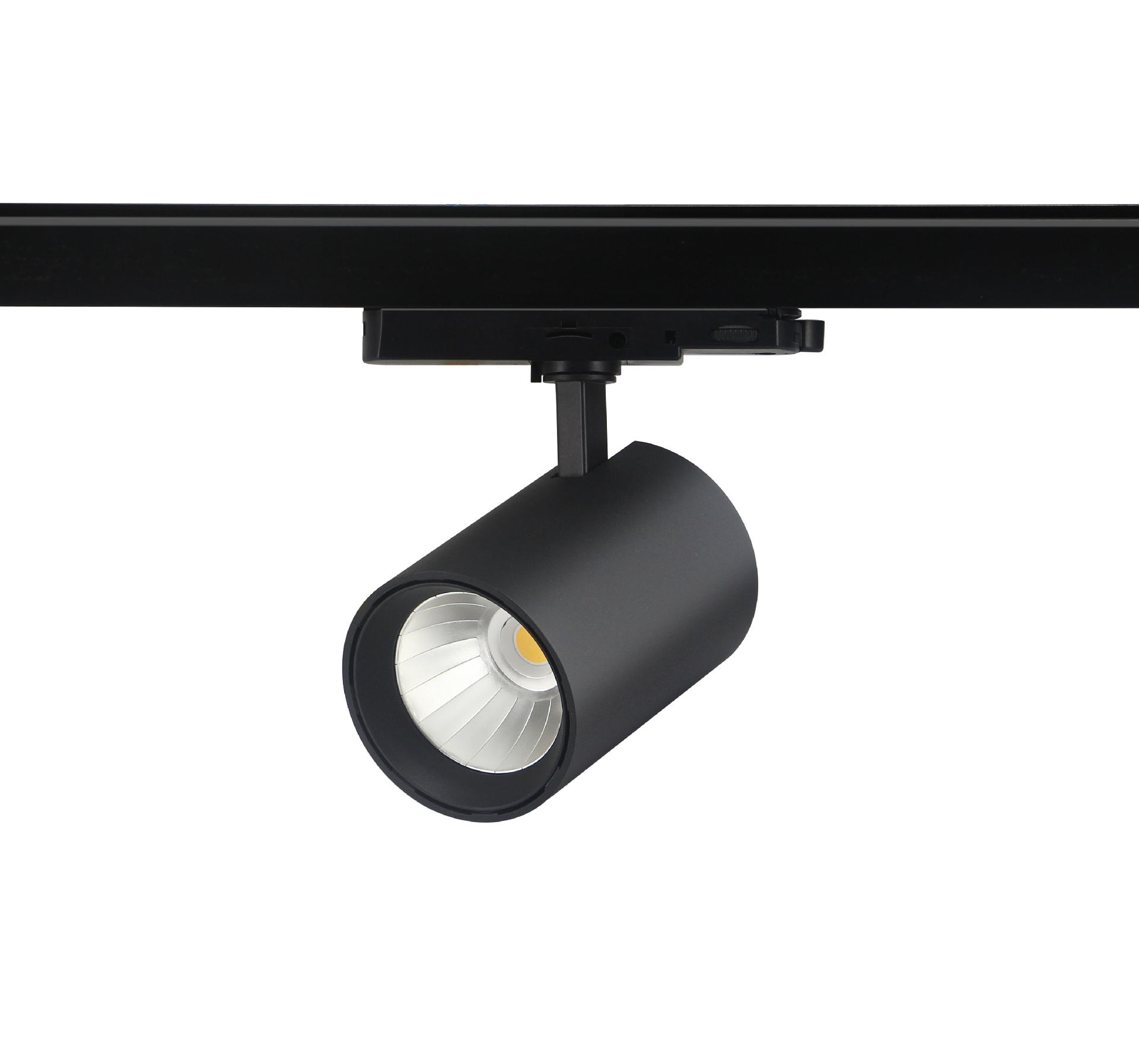
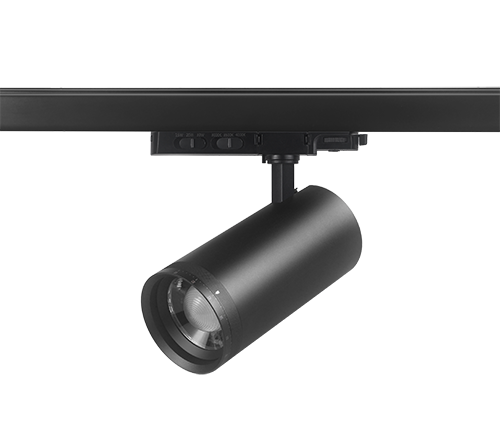
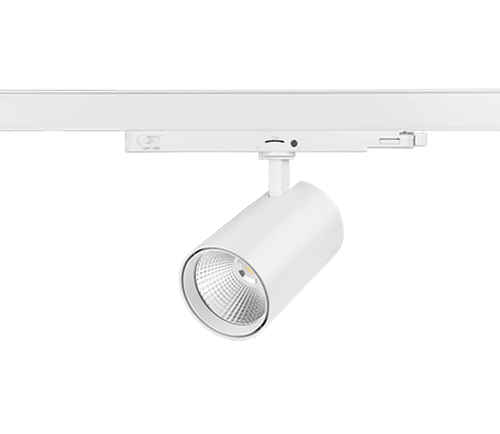
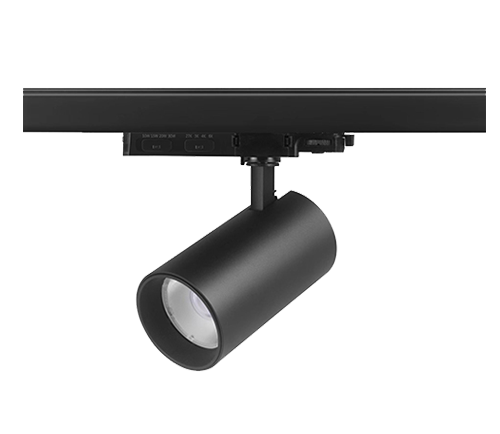
For retailers, the objective should be to create a balanced lighting environment in which ambient illumination provides comfortable visibility while accent lighting directs attention toward the products that matter most. Dimmable CCT LED track lighting provides an additional level of control due to the intensity of the light can be adjusted according to the product category, time of day, display strategy, and desired atmosphere.
For lighting distributors, contractors, and commercial lighting projects, this flexibility also makes LED track lighting a practical solution for projects that require adaptable specifications and long-term usability.
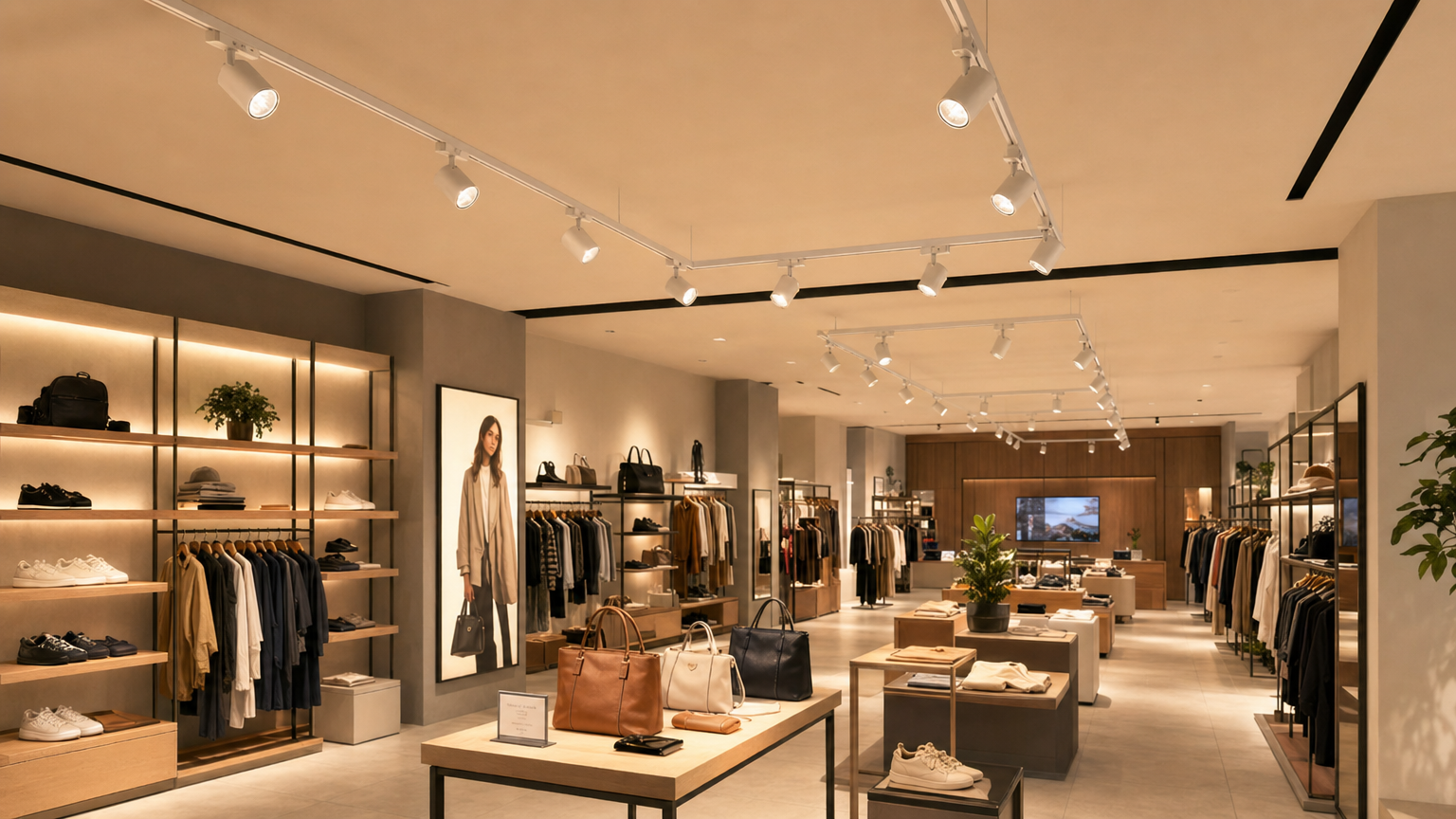
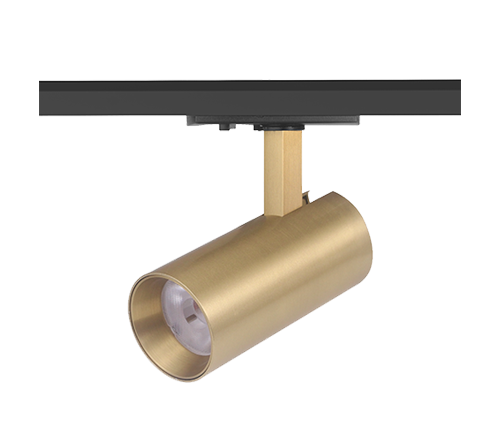
The core advantage of LED track lighting is its ability to combine directional control with installation flexibility. A conventional recessed luminaire generally illuminates the area directly below it, whereas a track-mounted spotlight can be rotated and tilted toward a specific product or display.
This distinction is particularly important in retail lighting environments because merchandise is rarely distributed evenly across the floor. A store may have a new collection positioned at the entrance, premium products displayed along one wall, promotional products placed on tables, and seasonal merchandise concentrated in another area. A lighting system that can be redirected as the merchandising strategy changes provides a practical advantage.
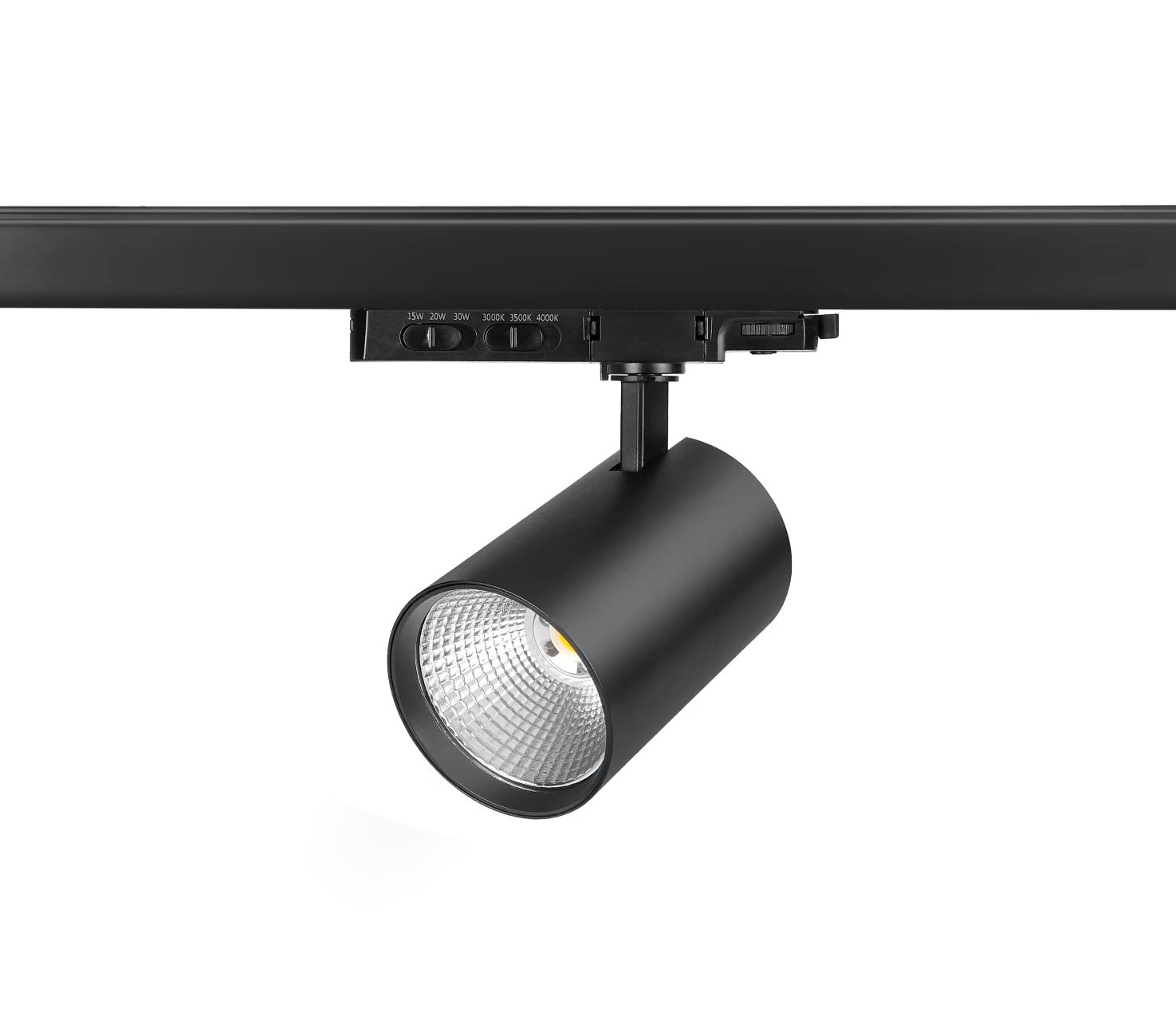
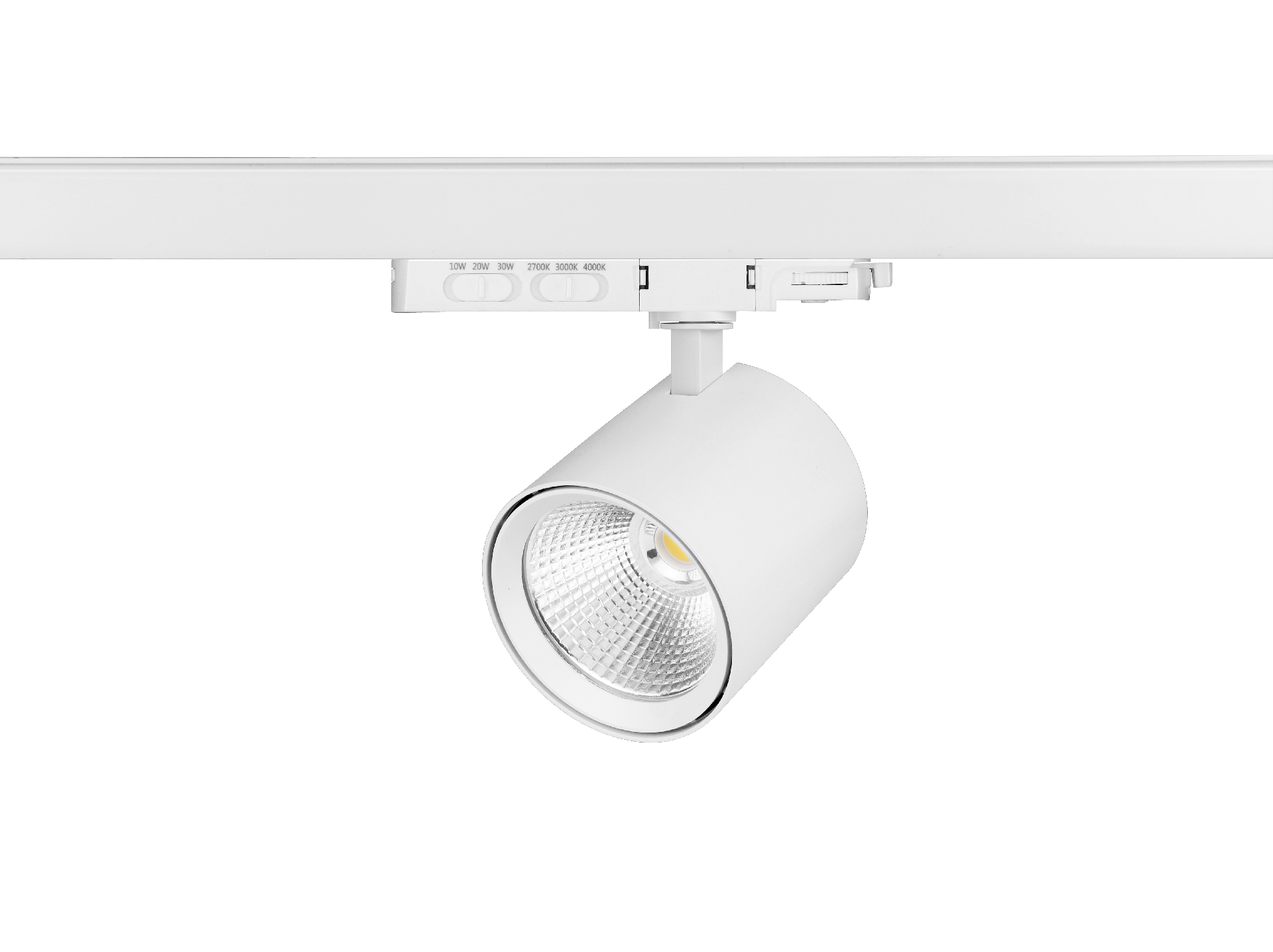
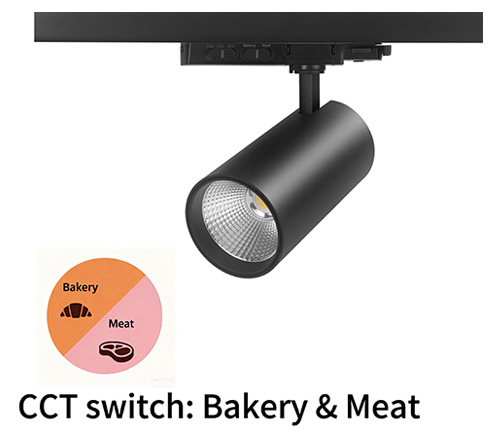
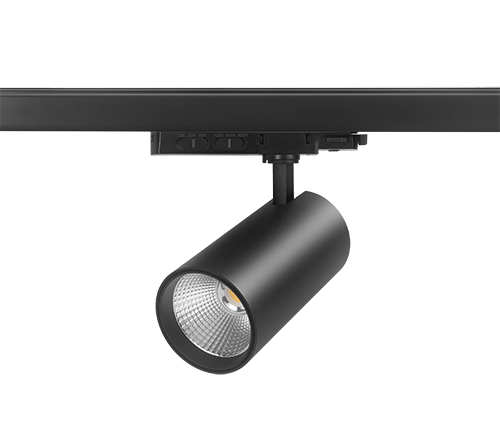
This versatile CCT LED track lights also offer benefits beyond directional control. Depending on the product specification, retailers can select different wattage ranges, 3CCT adjustable, beam angles, dimming methods, and color rendering levels. This allows one 3CCT track lighting system to support multiple visual requirements within the same commercial space.
The best retail lighting design therefore does not treat every square meter equally. Instead, it considers the relationship between ambient lighting, accent lighting, product importance, and customer movement.
A successful retail lighting strategy starts by identifying which products deserve the greatest visual emphasis. Instead of increasing the brightness of the entire store, designers can use track-mounted accent track lighting to create a clear hierarchy.
The strongest lighting should generally be reserved for feature products, new collections, promotional displays, and merchandise with a high visual or commercial value. Secondary products can receive moderate accent lighting, while aisles and circulation areas should maintain comfortable ambient illumination.
This approach creates contrast between different areas of the store. When every product receives the same intensity, the space can appear visually flat, making it more difficult for customers to identify what deserves their attention.
With adjustable 3CCT LED track lighting, individual heads can be aimed toward specific merchandise without changing the entire ceiling installation. This is particularly useful for retailers that frequently change their product layouts.
Also if the manager wants to re-arrange or change the style of the store to create a certain lighting atmosphere, then they just need to change the wattage and CCT on the track adapter to the desired one, no need to replace new lighting products.
This adaptability can reduce the need for repeated electrical modifications and makes the lighting system more suitable for long-term retail use. This 3CCT adjustable track light suits multiple uses and installation.
3. Choosing the Right Color Temperature (CCT) for Retail Product Displays
Color temperature is one of the most important specifications when selecting LED track lighting for a retail store. Measured in Kelvin (K), CCT influences the visual atmosphere of the space and can affect how customers perceive colors and materials. But why the CCT of led track light is so important for retial lighting and product displays?
Warm white lighting around 2700K–3000K can create a more intimate and premium atmosphere. It is often suitable for fashion boutiques, luxury retail, furniture stores, hotels, and lifestyle-oriented environments where warmth and visual comfort are important to make the products look more stunning and attractive for visitors.
Neutral white lighting around 3500K–4000K provides a more balanced appearance and is widely applicable to modern retail environments. It can work well for clothing, supermarkets, showrooms, electronics, and general commercial spaces where product visibility and color balance are both important.
Cooler color temperatures around 5000K may be suitable for certain technology, industrial, or task-oriented environments, although they should be selected carefully in customer-facing retail spaces because excessive coolness can make an environment feel less comfortable.
For projects where the final CCT requirement may vary between product categories or locations, a CCT switchable LED track light can provide greater flexibility. For distributors and contractors, switchable CCT products can also simplify inventory management because one fixture can support multiple project requirements. And the CCT of the CCT adjuatable led track light can be changed according to the demands of the product displays.
4. Why CRI Matters in Retail Lighting When Comes to CCT Led Track Lighting
Color rendering is particularly important when lighting merchandise whose appearance influences purchasing decisions. The Color Rendering Index, or CRI, is commonly used to describe how accurately a light source reveals colors compared with a reference light source.
For general commercial lighting, CRI 80 may be sufficient for basic visibility. However, retail environments involving fashion, cosmetics, artwork, furniture finishes, leather, jewelry, or other color-sensitive products can benefit from higher color rendering performance.
A high-CRI LED track light can help fabrics appear more natural, skin tones look more realistic, and product colors remain closer to their intended appearance. This is especially relevant in fashion retail because customers often make purchasing decisions based on how a garment actually looks under store lighting. What CRI is suitable for retial lighting or what CRI makes the products look more natural and attractive?
For premium retail applications, specifications such as CRI 90+ can therefore be an important purchasing consideration. When even more accurate color reproduction is required, buyers should also examine R9 performance because strong red rendering can be particularly relevant to skin tones, wood, leather, food, and other warm-colored materials.
However, CRI should not be evaluated independently. A professional retail lighting specification should consider CRI together with CCT, R9, optical performance, flicker characteristics, glare control, and actual product samples. Choosing the appropriate technical products for your stores, projects and other lightings according to your lighting demands.
5. Dimmable LED Track Lighting: Better Control for Retail Environments
One of the most useful features for modern retail applications is dimming capability. Dimmable LED track lighting allows retailers to adjust illumination levels rather than operating every fixture at a fixed output.
This provides several advantages. During daytime hours, a store may require a stronger lighting level because of customer traffic and merchandising requirements. During evening hours, the lighting can be reduced to create a more comfortable and premium atmosphere.
Dimming can also help create visual hierarchy. A featured product can receive a higher lighting level while surrounding areas remain slightly darker. This creates contrast without requiring excessive overall illumination.
For retailers with changing displays, dimming is also useful because different products may require different light levels. Reflective products, glossy surfaces, dark merchandise, and highly textured materials can all respond differently to the same lighting intensity.
However, compatibility must be verified before installation. Retailers and contractors should confirm whether the LED driver is compatible with the intended control system, such as phase-cut/TRIAC dimming, DALI-2, or another control protocol.
For distributors, clearly specifying dimming compatibility on product datasheets can reduce installation problems and help contractors select the correct fixture for a project.
6. Beam Angle: The Key to Better Product Highlighting
What's the Beam Angle's role and what impact the beam angle can bring in reatil lighting? Beam angle determines how widely light spreads from the fixture. It is one of the most important optical specifications when designing CCT LED track lighting for product displays.
A narrow beam can concentrate light on a small product or feature area. This can work particularly well for jewelry, sculptures, mannequins, artwork, and premium display objects.
A medium beam provides a broader distribution and can be suitable for tables, shelving, clothing racks, and medium-sized displays.
A wide beam creates softer and broader illumination and can be used where larger areas require accent or supplementary lighting.
Rather than selecting one beam angle for every application, professional retail lighting designs often use different optical distributions according to the size and distance of the display.
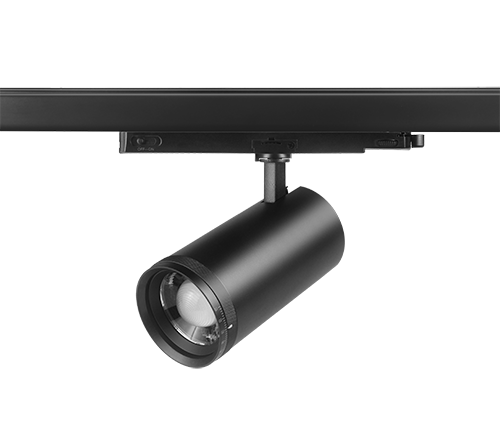
Zoomable LED track lights can provide additional flexibility because the beam angle can be adjusted according to the application. For distributors and contractors, this can reduce the number of optical variations required for certain projects.
7. LED Track Lighting vs. Recessed Lighting for Retail Stores
Retail projects frequently compare LED track lighting with recessed lighting. Neither solution is universally better; the appropriate choice depends on the store layout, ceiling design, product strategy, and required flexibility.
| Feature | CCT led track lighting | Recessed led lighting |
| Directional control | Excellent | Limited |
| Re-aiming flexibility | High | Low |
| Product Highlighting | Excellent | Moderate |
| Layout Changes | Easy to adapt | difficult |
| Ceiling appearance | visible track system | Minimal hardware |
| Accent lighting | Excellent | Moderate |
| Suitable for changing display | Excellent | Limited |
| Installation flexibility | High | Lower |
| Best Application | Retail, showroom, gallery, fashion | General ambinet lighting |
For many commercial projects, the most effective approach is not choosing one system exclusively but combining both. Recessed fixtures can provide general illumination while track-mounted spotlights create focused accents.
This layered strategy allows designers to maintain comfortable ambient brightness while directing additional light toward important merchandise.
8. How to Position Track Lights for Better Product Displays
The physical placement and aiming of track lights can significantly influence the final result. Installing high-quality fixtures is not enough if the optical layout is poorly designed.
Track runs should generally follow the main architectural or merchandising axes of the store. Fixtures should then be positioned so that their beam can reach display surfaces without creating excessive glare.
Wall displays require particular attention. Illuminating vertical surfaces can make the store appear brighter and help products stand out without requiring excessive illumination across the entire floor.
For clothing displays, track heads can be aimed toward mannequins, hanging garments, or feature walls. For jewelry, tighter beams and careful glare control can create visual highlights without causing uncomfortable reflections.
The exact aiming angle should be determined according to ceiling height, display position, fixture optics, and customer viewing direction rather than applying a single universal angle to every project.
8.1 Glare Control Should Be Part of the Initial Design
High brightness does not automatically mean high-quality retail lighting. Excessive glare can reduce visual comfort and negatively affect the appearance of products.
When selecting commercial LED track lighting, buyers should therefore consider optical shielding, reflectors, anti-glare accessories, honeycomb louvers, and fixture positioning.
Glare becomes particularly important when lighting glossy surfaces such as glass, polished furniture, electronics, jewelry, and automotive finishes. A poorly positioned spotlight can produce reflections that make the product more difficult to examine.
The objective is to illuminate the merchandise rather than the customer's eyes.
For this reason, professional lighting design should evaluate both the quantity and direction of light. Fixture specifications such as UGR, optical design, shielding angle, and beam distribution can provide useful information during product selection.
9. Why Switchable LED Track Lights Are Valuable for Retailers and Distributors
Retail environments change continuously. Seasonal collections, promotional campaigns, store renovations, and new merchandising strategies can all affect lighting requirements.
A switchable LED track light can address some of these challenges by allowing certain parameters to be changed after installation. Depending on the model, these may include wattage and color temperature.
For example, a 3Power 3CCT LED track light can provide three selectable wattage levels and three selectable color temperatures within one fixture. A 15W/20W/30W configuration combined with 2700K/3000K/4000K CCT settings provides multiple combinations without requiring separate fixed-specification fixtures.
From a distributor's perspective, this can simplify inventory management. Instead of stocking separate products for every wattage and CCT combination, one multi-function product platform can cover a broader range of commercial requirements.
This is particularly relevant for B2B lighting suppliers serving multiple retail customers because project specifications can vary considerably between locations.
10. How Retailers Can Avoid Overlighting
One of the most common mistakes in retail lighting is assuming that brighter always means better. Excessive ambient illumination can reduce contrast and make accent lighting less effective.
A more efficient approach is to establish an appropriate ambient level and then use accent lighting strategically.
For example, rather than increasing the brightness of the entire floor to highlight a new collection, designers can use adjustable track spotlights to concentrate additional light on the relevant display.
This approach can improve visual hierarchy while avoiding unnecessary energy consumption.
The use of dimmable LED track lighting can further support this strategy because lighting levels can be adjusted according to actual requirements instead of operating every fixture at maximum output.
11. A Practical Specification Checklist for Retail LED Track Lighting
For lighting distributors, contractors, and procurement teams, the following specifications should be reviewed before selecting an LED track light for a retail project:
| Specification | Recommended Consideration |
| Wattage | 15W-20W-30W adjustable, match fixture output to mounting height and application |
| CCT | 2700K-3000K-4000K switchable, ideal for many retail applications |
| CRI | CRI 90+ for color-sensitive merchandise |
| Beam Angle | 15/24/36/60 degree available; selecting suitable one according to products layout |
| Dimming | DALI-2, Triac dimmable compatible |
| Flicker | Flicker-free, designed with quality driver with controlled flicker-free |
| Lifespan | 50,000h+ |
| Track compatibility | The 3CCT adjustable led track light is compatible with 3-phase 4-wire track rails |
| Warranty | 5 YEARS |
This checklist allows buyers to evaluate the entire lighting system rather than selecting fixtures based only on wattage or lumen output when purchasing.
12. Why CCT LED Track Lighting Is a Flexible Commercial Lighting Solution
The strongest argument for LED track lighting in retail environments is not simply energy efficiency. Its real value comes from flexibility.
A retail store is a constantly changing commercial environment. Product ranges change, displays move, seasonal campaigns replace existing collections, and brands update their visual identity. A lighting system designed for one fixed layout can quickly become inefficient when the space changes.
Track lighting provides a more adaptable infrastructure. Fixtures can be repositioned, redirected, dimmed, and, in some product families, adjusted in terms of wattage and CCT.
This makes the technology suitable not only for traditional retail stores but also for fashion boutiques, supermarkets, furniture stores, electronics shops, jewelry stores, showrooms, galleries, and other commercial environments where product presentation matters.
For distributors, this flexibility also creates a broader product proposition. Instead of selling a fixture for one narrow application, a configurable LED track light can potentially serve multiple project categories.
13. What Should Lighting Distributors Look for When Sourcing Retail Track Lights?
For B2B buyers, product performance is only one part of the sourcing decision. A reliable commercial lighting supplier should also provide consistent quality, technical documentation, customization capability, production capacity, and after-sales support.
European distributors should pay particular attention to:
Product certifications and market compliance
Driver quality and dimming compatibility
LED performance consistency
CRI and color consistency
CCT and wattage options
Track compatibility
Beam angle availability
OEM/ODM capability
MOQ requirements
Packaging and labeling
Warranty policy
Production lead time
Sample availability
For distributors serving multiple retail customers, multi-function products can be particularly useful because one platform can support multiple applications and reduce the complexity of product selection.
FAQ: LED Track Lighting for Retail Stores
Is LED track lighting good for retail stores?
Yes. LED track lighting is particularly suitable for retail stores because fixtures can be aimed toward products, displays, walls, and promotional areas. It provides greater flexibility than many fixed ceiling luminaires and can be combined with different CCTs, beam angles, CRI levels, and dimming systems to create a layered retail lighting environment.
What is dimmable LED track lighting?
Dimmable LED track lighting allows the light output of the fixture to be adjusted according to the lighting requirements of the space. It can be used to create different lighting scenes, increase emphasis on feature products, improve visual comfort, and adapt illumination throughout the day. Buyers should verify compatibility between the LED driver and the intended dimming system.
What CCT is best for retail lighting?
There is no single CCT that is ideal for every retail store. 2700K–3000K can create a warmer premium atmosphere, while 3500K–4000K provides a more neutral appearance suitable for many modern retail environments. A switchable CCT LED track light allows retailers to test and adjust the color temperature according to merchandise and brand identity.
What CRI should LED track lights have for retail?
For general retail applications, CRI 80 may be acceptable, but CRI 90 or higher is generally preferable for color-sensitive merchandise such as fashion, cosmetics, furniture, artwork, jewelry, and food. Buyers should also consider R9 performance, CCT consistency, optical quality, and the actual appearance of products under the selected light source.
Are switchable LED track lights suitable for different retail applications?
Yes. Multi-function track lights can be used across different commercial environments when their specifications are appropriately selected. For example, a fixture offering multiple wattage and CCT settings can support retail stores, showrooms, supermarkets, fashion stores, and other applications without requiring a completely different fixture platform for each environment.
Conclusion: Build Better Retail Displays with Flexible LED Track Lighting
Effective retail lighting is ultimately about controlling how customers see products rather than simply making the store brighter. LED track lighting provides the directional flexibility required to highlight merchandise, create visual hierarchy, adapt to changing displays, and support different retail environments.
The best results come from combining appropriate ambient illumination with carefully positioned accent lighting, suitable CCT, high color rendering, controlled beam angles, and effective glare management. For projects that require even greater flexibility, dimmable LED track lighting and switchable CCT or wattage technologies can provide additional control throughout the life of the installation.
For lighting distributors, wholesalers, contractors, and commercial procurement teams, the ability to offer flexible track lighting solutions can also simplify product selection and support a wider range of retail projects. A well-designed LED track light is therefore not simply a source of illumination; it is a practical commercial lighting tool that can adapt to merchandising requirements while helping retailers present their products more effectively.
If you are sourcing commercial LED track lighting for retail stores, showrooms, supermarkets, fashion stores, or other commercial projects, consider working with a manufacturer that can provide multiple wattage and CCT configurations, dimming options, high-CRI solutions, optical choices, OEM/ODM customization, and reliable B2B supply support.
 Tel.+86 15013617190
 Email:info@pustlux.com