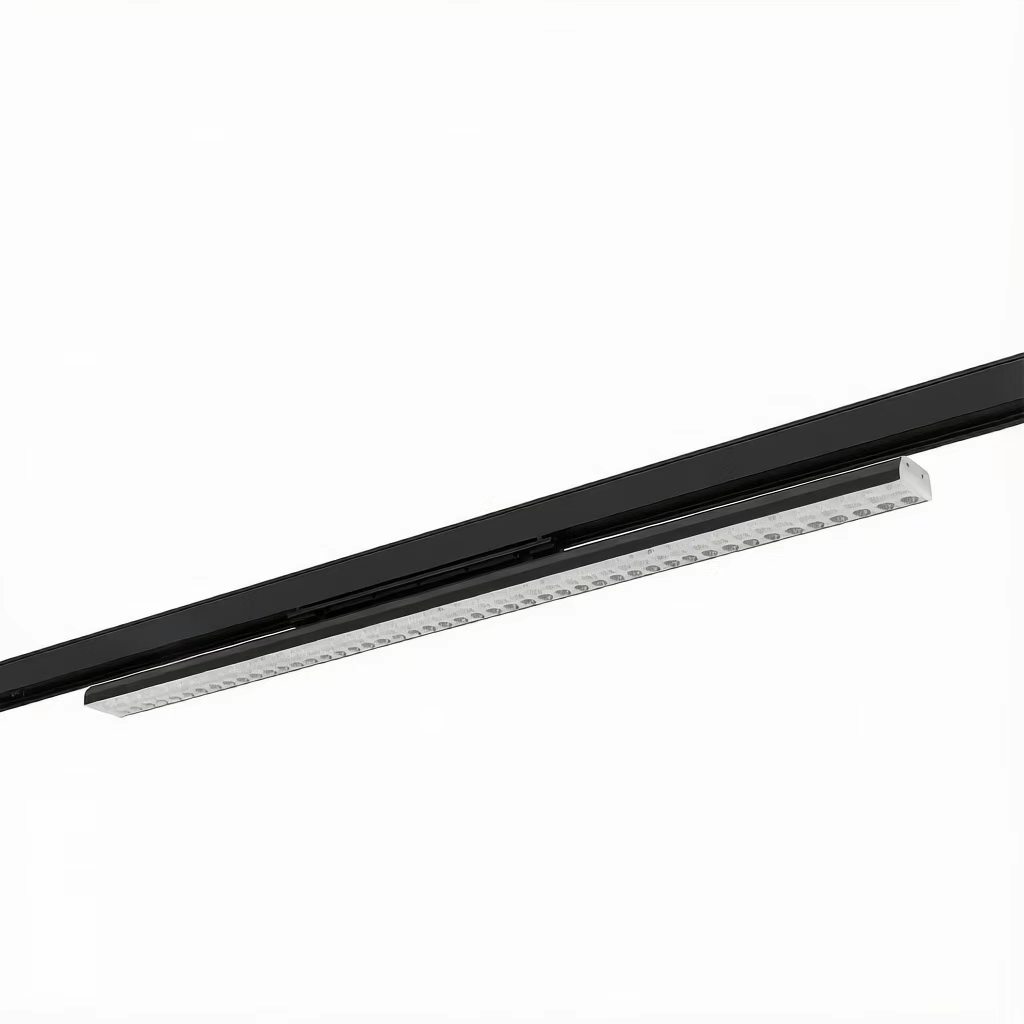
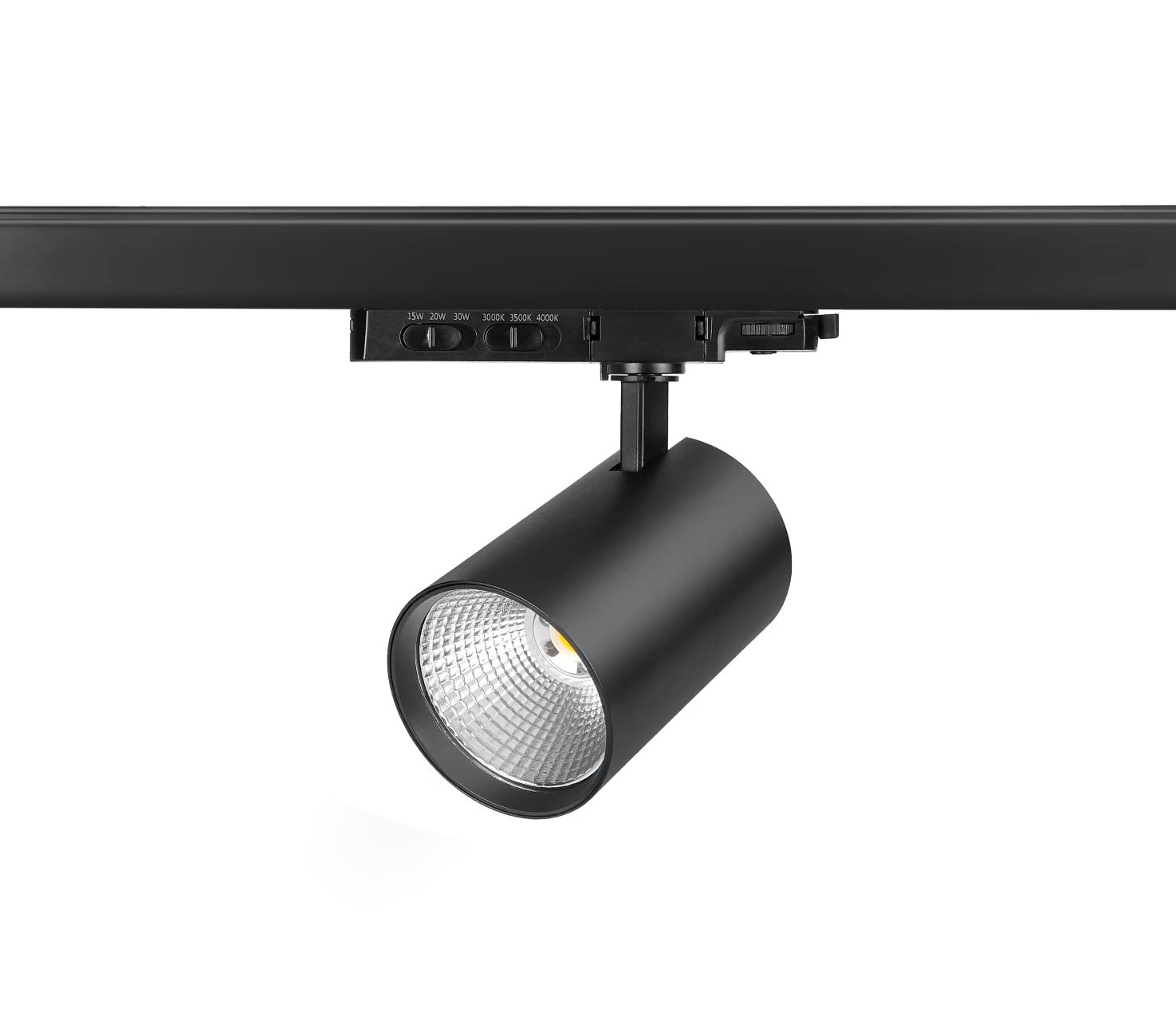
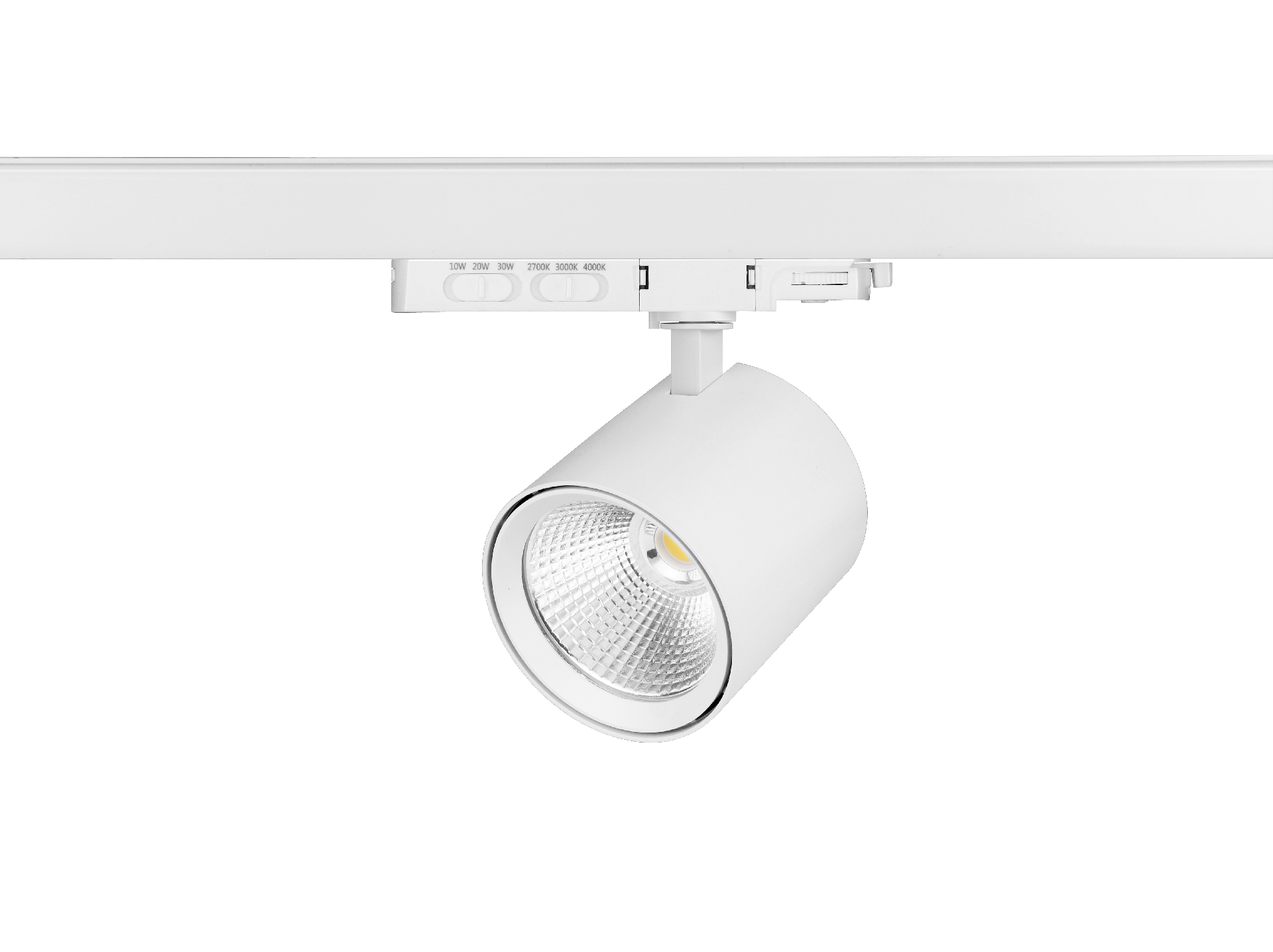
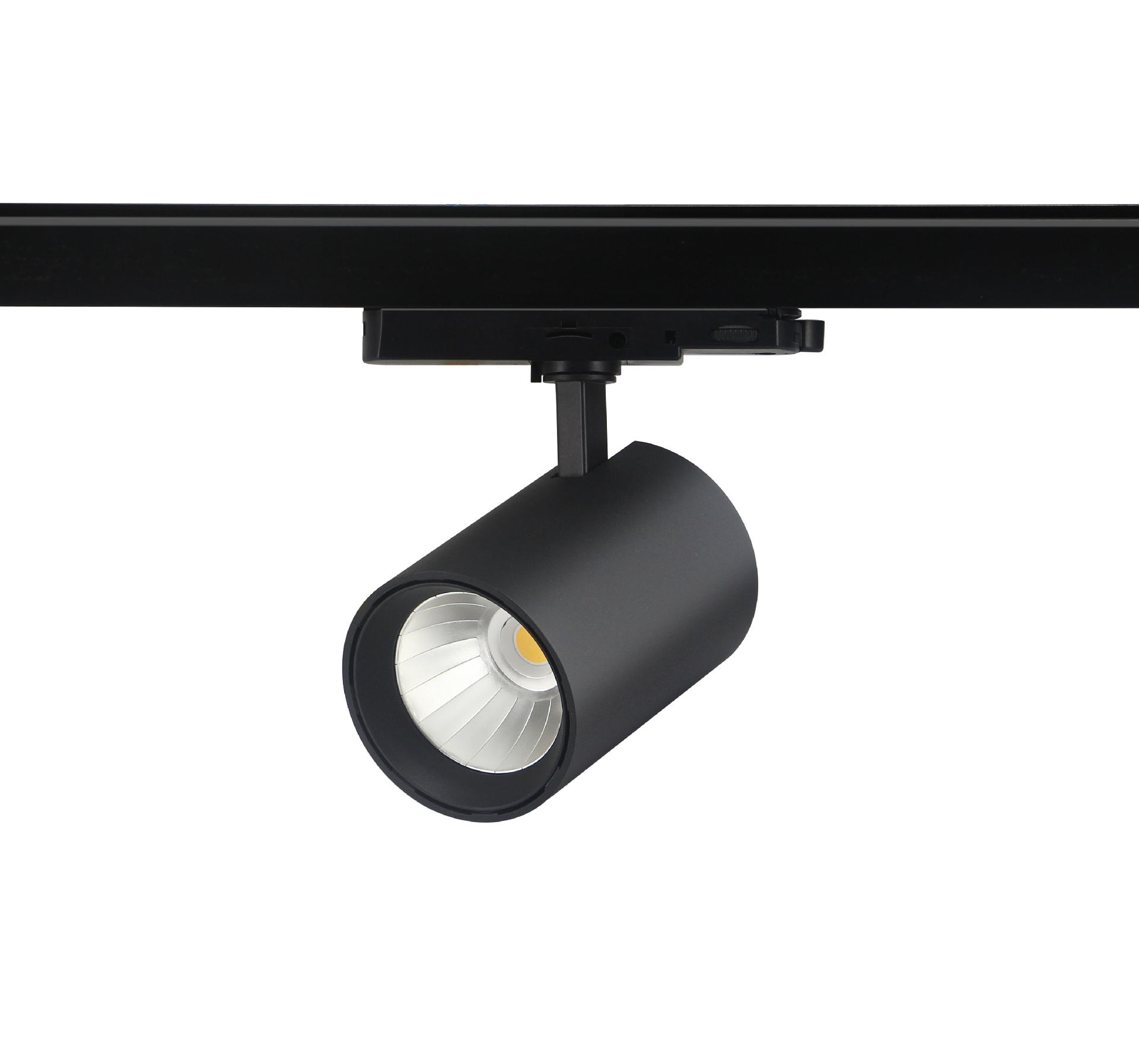
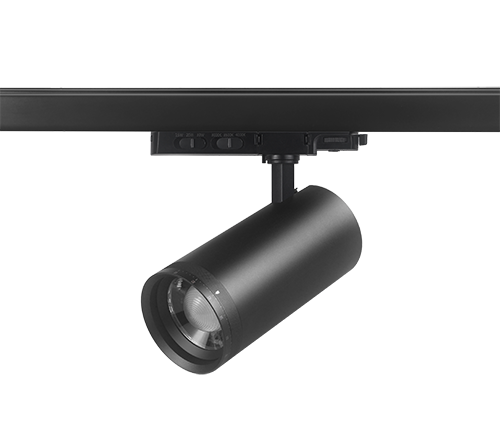
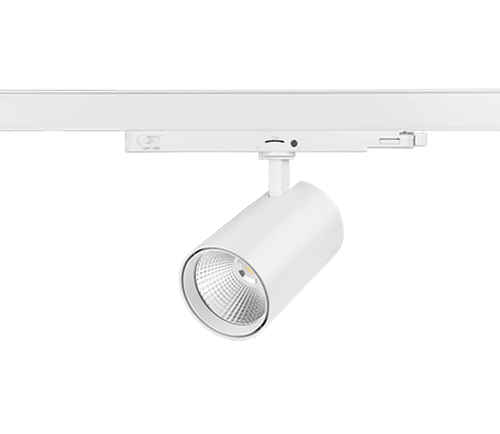
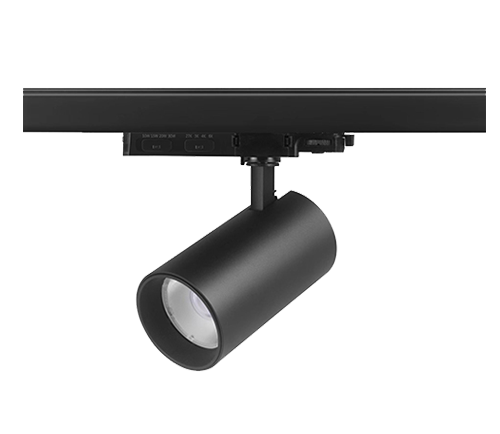
How to Reduce LED Track Light SKUs with 3POWER 3CCT Switchable Technology: A Guide to 3CCT Track Light, CCT Track Lighting, Dimmable Spot Lighting & Track Spotlighting
For B2B buyers, choosing a corrent track light for makerts leads to a more important question than “Which LED track light has the lowest unit price?” The better question is:
How many project requirements can one reliable fixture platform cover without creating unnecessary inventory?
That is where 3POWER 3CCT technology becomes commercially relevant.

The Hidden Cost of Managing Too Many LED Track Light SKUs
The cost of a 3CCT LED track light is not limited to its factory purchase price. For importers and distributors, the real cost continues after the goods arrive at the warehouse. Every additional specification can create another SKU that must be purchased, forecast, stored, counted, marketed, and eventually sold.
This is particularly important in commercial CCT track lighting, where customers frequently request different combinations of wattage, color temperature, beam angle, finish, track adapter, and dimming method. A distributor may therefore have a technically strong product portfolio but still face inefficient inventory because the same basic track-light housing is split into too many fixed variants.
Why Fixed-Spec Track Lights Create More SKUs
The simplest way to understand the problem is to separate the two most common variables: wattage and CCT.
Assume a distributor needs three power levels:
And three CCT options:
A fixed-specification product strategy can result in the following inventory structure:
Wattage
| 2700K | 3000K | 4000K | Potential SKUs |
| 15W | 1SKU | 1 SKU | 1 SKU | 3 |
| 20W | 1 SKU | 2 SKU | 1 SKU | 3 |
| 30W | 1 SKU | 1 SKU | 1 SKU | 3 |
| Total | 3 | 3 | 3 | 9 SKUs |
This does not mean that every distributor must physically hold exactly nine products in equal quantities. Actual inventory depends on sales history, project demand, minimum order quantities, safety-stock policy, and regional preferences. However, the example demonstrates the structural problem: every fixed combination creates another forecasting and inventory variable.
While a 3POWER 3CCT configuration takes a different approach: One fixture platform → 3 selectable wattages × 3 selectable CCTs → 9 configuration possibilities This is the central 9-in-1 concept behind the product.
The commercial advantage is not that nine physical products magically disappear from every supply chain. The advantage is that the distributor can stock a configurable fixture rather than having to pre-commit all demand to separate fixed combinations.
How Excessive SKUs Increase Warehouse and Working Capital Costs
SKU proliferation creates several layers of cost that are easy to underestimate.
First, every SKU needs its own purchasing and sales history. A distributor must estimate how many units of each wattage and CCT combination will be required. If the forecast is inaccurate, one variant can sell out while another remains in storage.
Second, multiple SKUs require additional warehouse organization. Different product codes may need separate shelf locations, labels, cartons, inventory records, and picking processes. This increases operational complexity even when the physical products are very similar.
Third, capital becomes distributed across multiple specifications. Instead of concentrating purchasing power on a smaller number of versatile products, the buyer may have money tied up in variants that move more slowly.
A simplified inventory model illustrates the difference:
| Inventory | Fixed-spec track lights | 3POWER 3CCT track light |
| Wattage Options | 3 SKUs | 1 SKU with 3POWER selections |
| CCT options | 3 SKUs | 1 SKU with 3CCT adjustable |
| Configuration combinations | 9 | 9 |
| Product requirements | 9 SKUs | 1 SKU with all functions |
| Forecasting complexity | Higher | Lower |
| Stock allocation | Split across varitants | More concentrated |
| Risk of slow-moving varitants | Higher | Lower |
The key phrase is potentially lower. A switchable product does not automatically guarantee a specific percentage of inventory savings. The actual financial result depends on the distributor's sales mix and inventory policy. What it does provide is a mechanism for reducing the number of separate product platforms that need to be stocked.
This distinction is important for professional procurement teams. Instead of making an unsupported claim such as “3POWER reduces inventory costs by exactly 80%,” a better commercial calculation should be based on actual sales data.
The Problem of Wrong CCT and Wattage Orders when purchasing 3CCT led track lights
Another hidden cost appears when project specifications change after the purchase order has already been placed.
Imagine a retail contractor initially specifies 4000K track lights for a store project. After a mock-up, the lighting designer decides that 3000K creates a better visual environment for the merchandise. With a fixed-CCT product, the change may require a replacement order, additional logistics, or an exchange between the contractor and distributor.
The same problem can occur with wattage. A 20W fixture may appear suitable during the initial specification stage, but after installation, the contractor may discover that a feature wall requires higher output. A fixed 20W product cannot become a 30W fixture simply because the project requirement changed.
A properly designed 3CCT track light with selectable power can provide additional flexibility before installation and, depending on the product design and installation procedure, during commissioning.
For B2B buyers, that flexibility can reduce the commercial consequences of specification uncertainty.
Instead of maintaining separate products for every possible requirement, the buyer can work with a configurable platform.
What Technical Specifications Should B2B Buyers Check?
SKU reduction should never come at the expense of lighting performance. A switchable track light still needs to meet the project's optical, electrical, thermal, and reliability requirements.
Before placing a bulk order, procurement teams should evaluate at least the following:
| Specification | Consideration |
| System efficacy | Perfect 100-110lm/w for many commercial applications |
| CRI | CRI90+ for costomer-facing retail; higher for premium applications |
| CCT | Common retail range: 2700-3000-4000K; 5000K for specific applications |
Beam Angle
| 15-24 degree accent; 24-36 defree medium; 36-60 degree wider coverage |
| Dimming | Verify Triac, DALI-2, 0-10V or other project requirements |
| Driver | Evaluate termal performance, flicker characteristics and compatibility |
| Lifetime | Review declared L70/B10 @50,000H |
Photomertric data
| request IES/LTD files for projects calculations |
| Certifications | Verify CE/ROHS are available for EU projects |
For example, EU Ecodesign requirements include parameters such as color rendering, lumen maintenance, color consistency, flicker, and stroboscopic effects for covered light sources. This is why a professional European buyer should evaluate documented performance rather than relying only on a headline lumen or CRI number.

For a manufacturer, the ability to provide supporting technical documentation is therefore part of the product value. Our factory supplies commercial LED lighting solutions with CE and RoHS certification support, offers OEM/ODM customization, and provides a 5-year warranty for applicable products according to the agreed product warranty terms. This gives distributors and project buyers a clearer framework for evaluating both product performance and long-term supply risk.
The objective is not simply to reduce the number printed on an SKU list.
The objective is to create a more efficient commercial lighting supply chain without compromising optical quality, electrical reliability, or project performance.
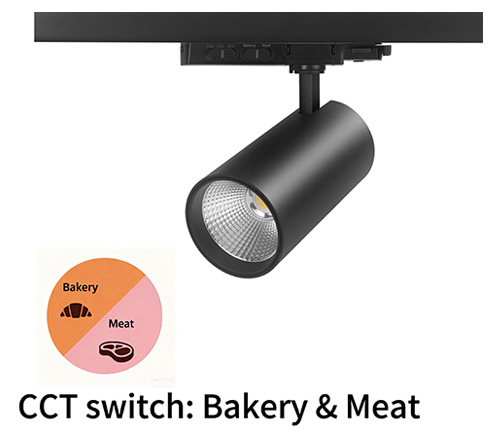
A 3POWER 3CCT switchable track light is a configurable LED track fixture that allows the installer or project team to select both the power level and correlated color temperature (CCT) from predefined options. In a typical configuration, the three power settings may be 15W, 20W, and 30W, while the three CCT settings may be 2700K, 3000K, and 4000K.
The important distinction is that the fixture is not simply “dimmable.” Dimming controls the amount of light emitted during operation, while selectable power changes the designed operating output of the fixture, and selectable CCT changes the color appearance of the emitted light.
These are three different functions.
Power selection determines the available output level.
CCT selection determines the color appearance.
Dimming adjusts brightness during operation.
When these functions are properly engineered into one fixture, they can provide a useful combination for commercial projects.
What Does 3POWER Mean?
In a 3POWER design, the driver or internal configuration system provides three defined power settings. A representative example is:
15W → 20W → 30W
This allows the same fixture platform to serve different lighting requirements.
For example:
15W: lower-output accent applications or smaller displays
20W: general retail accent lighting and medium displays
30W: stronger accent requirements, larger displays or higher mounting conditions
The correct selection should always be based on the actual photometric design rather than wattage alone. A 30W fixture does not automatically provide better lighting if the beam angle, mounting height, optics, and target illuminance are inappropriate.
This is why professional buyers should compare lumens, lm/W, beam angle, CRI, CCT, and photometric files, rather than selecting a fixture only because it has a higher wattage.
For example, if a 30W track light produces 3,300 lumens, its nominal efficacy is:
3,300 lm ÷ 30W = 110 lm/W
That figure is much more meaningful for procurement than simply stating “30W high-power track light.”
What Does 3CCT Mean?
3CCT refers to three selectable correlated color temperature settings.
A typical commercial configuration is:
| CCT | Visual character | Typical Applications |
| 2700K | Warm, intimate | Luxury retail, hospitality-style spaces, premium interiors |
| 3000K | Warm-netural | Fashion, boutiques, general premium retail |
| 4000K | Meutral, clean | Supermarkets, showrooms, modern commercial spaces |
The difference between 4000K and 5000K is particularly important when specifying commercial lighting. Both appear relatively cool compared with 2700K or 3000K, but they do not create the same visual environment. 4000K is generally neutral white and is widely used where a clean, balanced appearance is required. 5000K moves toward a cooler daylight-like appearance and can feel more clinical or visually intense in some retail environments.
For this reason, 5000K should not automatically be treated as an “upgrade” from 4000K. The correct CCT depends on the merchandise, brand identity, surrounding finishes, ambient lighting, and customer experience.
In many retail projects, 3000K and 4000K are more practical default choices, while 2700K is useful where a warmer premium atmosphere is desired. Commercial lighting buying guides similarly identify approximately 3000K–4000K as a common range for retail and showroom applications.
Why CRI 90+ Should Be a Commercial Baseline
CCT determines how warm or cool the light appears, but it does not tell you how accurately products will be rendered.
That is the role of CRI.
For customer-facing commercial environments, CRI 90+ is a sensible specification baseline. For fashion, cosmetics, jewelry, art, premium furniture, and other color-sensitive merchandise, buyers may choose CRI 95+ to achieve a higher level of color fidelity. Current commercial track-lighting guidance commonly recommends CRI 90+ for retail and higher levels for premium merchandise.
Procurement teams should also avoid evaluating CRI in isolation. If color quality is commercially important, ask the manufacturer for:
CRI/Ra
R9 value
R1–R15 data where available
SDCM
LM-79 or equivalent photometric documentation
Actual CCT measurement
IES/LDT photometric files
This is particularly important because two fixtures with the same nominal CRI can still produce visibly different color rendering characteristics.
How 3POWER + 3CCT Creates a 9-in-1 Product Configuration
The commercial logic behind the technology is straightforward.
A fixed-specification inventory can require:
3 wattages × 3 CCTs = 9 configurations
With a 3POWER 3CCT fixture, the same fixture platform can provide:
15W / 20W / 30W
combined with:
2700K / 3000K / 4000K
The result is:
3 × 3 = 9 selectable combinations
This does not mean that every distributor will eliminate nine physical SKUs from its warehouse. Rather, it means the manufacturer has engineered multiple commonly requested specifications into one configurable product family.
For a distributor, that changes the purchasing strategy.
Instead of asking:
“How many fixed variants do we need to stock?”
the procurement team can ask:
“How much demand can one configurable fixture platform cover?”
That is a fundamentally different inventory-management approach.
Why This Matters for Commercial Track Lighting
Commercial projects often change during the specification and installation process. A lighting designer may change the CCT after reviewing samples. A contractor may discover that a display zone needs more output. A retailer may request a warmer appearance for a premium product section.
A fixed-specification fixture has limited ability to respond to those changes.
A properly designed switchable platform provides more flexibility.
For CCT commercial lighting, this means one product can potentially support multiple visual environments. For dimmable CCT track lighting, the project can combine CCT selection with brightness control. For track spotlighting, the same fixture platform can be specified with different output levels according to the display requirement.
The result is not simply a more feature-rich LED track light.
It is a product designed around the way commercial lighting projects are actually purchased, installed, adjusted, and maintained.
For distributors, that can mean fewer product platforms to manage. For contractors, it can mean greater on-site adaptability. For lighting engineers, it can simplify the specification process. And for OEM/ODM buyers, it creates a flexible base platform that can be customized for different regional or project requirements.
That is the fundamental commercial value of 3POWER 3CCT switchable technology: more lighting configurations without requiring the same number of fixed-specification product platforms.
The objective is to create a more efficient commercial lighting supply chain without compromising optical quality, electrical reliability, or project performance.
1. How does a 3POWER 3CCT track light reduce the number of SKUs?
A 3POWER 3CCT track light combines three selectable wattages and three selectable color temperatures in one fixture platform. For example, a single model can offer 15W, 20W, and 30W with 2700K, 3000K, and 4000K options. Instead of stocking separate fixed-specification products for every combination, distributors can use one configurable product to cover multiple project requirements, helping simplify inventory management and reduce SKU complexity.
2. Is a 3CCT track light suitable for commercial and retail lighting projects?
Yes. A 3CCT track light is particularly suitable for retail stores, showrooms, supermarkets, fashion stores, galleries, boutiques, and other commercial environments where lighting requirements may vary between areas. The selectable CCT allows installers to choose a warmer or more neutral appearance according to the merchandise and interior design. When combined with selectable power and dimming, one fixture can provide greater flexibility throughout a commercial lighting project.
3. Does switchable power or CCT affect LED track light reliability?
A properly engineered switchable LED track light should be designed with a suitable LED module, driver, thermal management system, and switching components for its specified operating conditions. B2B buyers should evaluate the complete fixture rather than the switchable function alone. Before purchasing, request technical datasheets, lifetime information, driver specifications, test reports, warranty terms, and relevant CE and RoHS documentation to verify product quality and compliance.
4. Can 3POWER 3CCT track lights be dimmable?
Yes, depending on the specific product configuration. A 3POWER 3CCT track light can be engineered with dimming functionality such as Triac dimming, allowing users to adjust brightness after selecting the required wattage and CCT. However, compatibility should always be confirmed between the fixture driver and the project's dimmer or control system. For European commercial projects, buyers should specify the required dimming protocol before placing a bulk order.
5. What CRI should distributors look for when purchasing commercial track lighting?
For most customer-facing commercial applications, CRI 90+ is a practical specification target, particularly for fashion, cosmetics, furniture, retail, and showroom applications where accurate product appearance matters. Premium projects may require higher CRI levels and stronger red rendering performance. Buyers should also consider R9, SDCM, flicker performance, optical quality, and photometric data rather than judging color quality from CRI alone.
6. Why is 30W a useful option in a multi-power LED track light?
A 30W CCT track light can provide higher output for applications such as larger product displays, higher mounting heights, feature walls, and areas requiring stronger accent illumination. When combined with lower selectable power levels such as 15W and 20W, the same fixture platform can cover different lighting requirements without requiring separate fixed-power product families. The final wattage should still be selected according to mounting height, beam angle, target illuminance, and photometric calculations.
7. Is a switchable track light more expensive than a fixed-specification fixture?
The unit purchase price may be somewhat different because a switchable fixture incorporates additional configuration capability. However, B2B buyers should evaluate the total cost of ownership and inventory economics, not only the unit price. If one product platform can cover multiple commonly requested wattage and CCT combinations, distributors may reduce SKU complexity, improve purchasing concentration, simplify warehouse management, and potentially reduce slow-moving inventory.
8. Can manufacturers customize 3POWER 3CCT track lights for OEM/ODM projects?
Yes. OEM/ODM customization can be particularly valuable for distributors and regional lighting brands that require specific power combinations, CCT ranges, beam angles, housing colors, track adapters, logos, packaging, drivers, or dimming systems. When evaluating an OEM/ODM manufacturer, buyers should confirm minimum order quantities, sample development, technical documentation, certification requirements, production lead times, warranty conditions, and long-term component availability.
Conclusion: Reduce SKU Complexity with One Flexible Commercial Lighting Platform
For LED lighting distributors, wholesalers, electrical contractors, and commercial procurement teams, the value of 3POWER 3CCT switchable track lighting goes beyond having more functions in a single fixture. The technology addresses a practical supply-chain problem: commercial lighting projects frequently require different wattages and color temperatures, while stocking every fixed combination can increase SKU complexity, inventory value, warehouse requirements, and the risk of slow-moving products.
The basic commercial model is straightforward. Three power options combined with three CCT options create nine selectable lighting configurations from one fixture platform. A typical configuration such as 15W/20W/30W combined with 2700K/3000K/4000K can support a broad range of retail, showroom, supermarket, boutique, gallery, and other commercial lighting applications.
For distributors, the potential benefits include:
Fewer separate product platforms to manage
Simpler inventory forecasting
Lower risk of overstocking unpopular CCT or wattage variants
More flexibility when customer requirements change
Better utilization of warehouse space
More concentrated purchasing and stock planning
Greater flexibility for OEM/ODM product strategies
However, SKU reduction should never be achieved by compromising lighting performance. A professional 3CCT track light should still be evaluated for system efficacy, CRI, CCT consistency, beam angle, driver quality, flicker performance, thermal management, dimming compatibility, lifetime, and applicable certifications.
For many commercial projects, buyers can use 100–110 lm/W or higher as a practical efficiency benchmark, while CRI 90+ is a useful starting point for customer-facing retail environments. CCT should be selected according to the application, with 2700K–3000K generally creating a warmer atmosphere and 4000K providing a cleaner, more neutral appearance. Beam angles should be matched to the size and distance of the target display rather than selected solely according to wattage.
If you are a lighting distributor, wholesaler, electrical contractor, project buyer, or regional lighting brand looking to simplify your commercial track lighting portfolio, a configurable 3POWER 3CCT switchable LED track light can be evaluated as an alternative to multiple fixed-specification models.
Our factory supports OEM/ODM customization, provides CE and RoHS certification support, and offers a 5-year warranty for applicable products according to agreed product terms. We can also discuss different wattage combinations, CCT options, beam angles, dimming solutions, housing finishes, packaging, and project-specific requirements.
Contact our factory sales team to request the latest LED track light catalog, product datasheets, OEM/ODM options, samples, or bulk pricing.
One fixture platform. Multiple configurations. Simpler inventory. Greater project flexibility.
 Tel.+86 15013617190
 Email:info@pustlux.com