Showroom Track Lighting Guide: How to Choose Switchable LED Track Lights for showrooms lighting
For B2B lighting buyers, this flexibility is particularly relevant because showroom lighting projects rarely have identical requirements. Different products may require different lighting intensities, different brands may prefer different color temperatures, and the layout can change after installation. A configurable LED track light therefore provides not only lighting performance but also greater adaptability throughout the project lifecycle.
1. What Is Showroom Track Lighting and Why Is It Important?
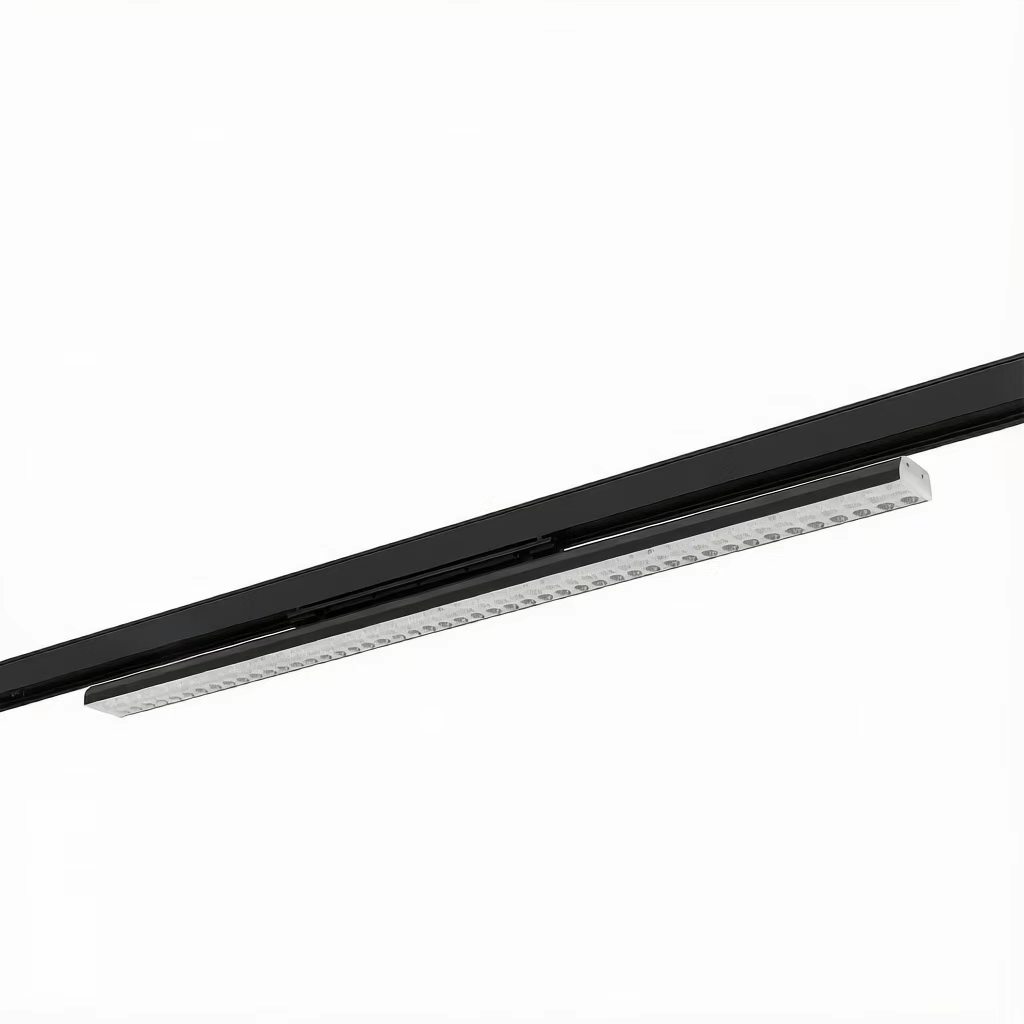
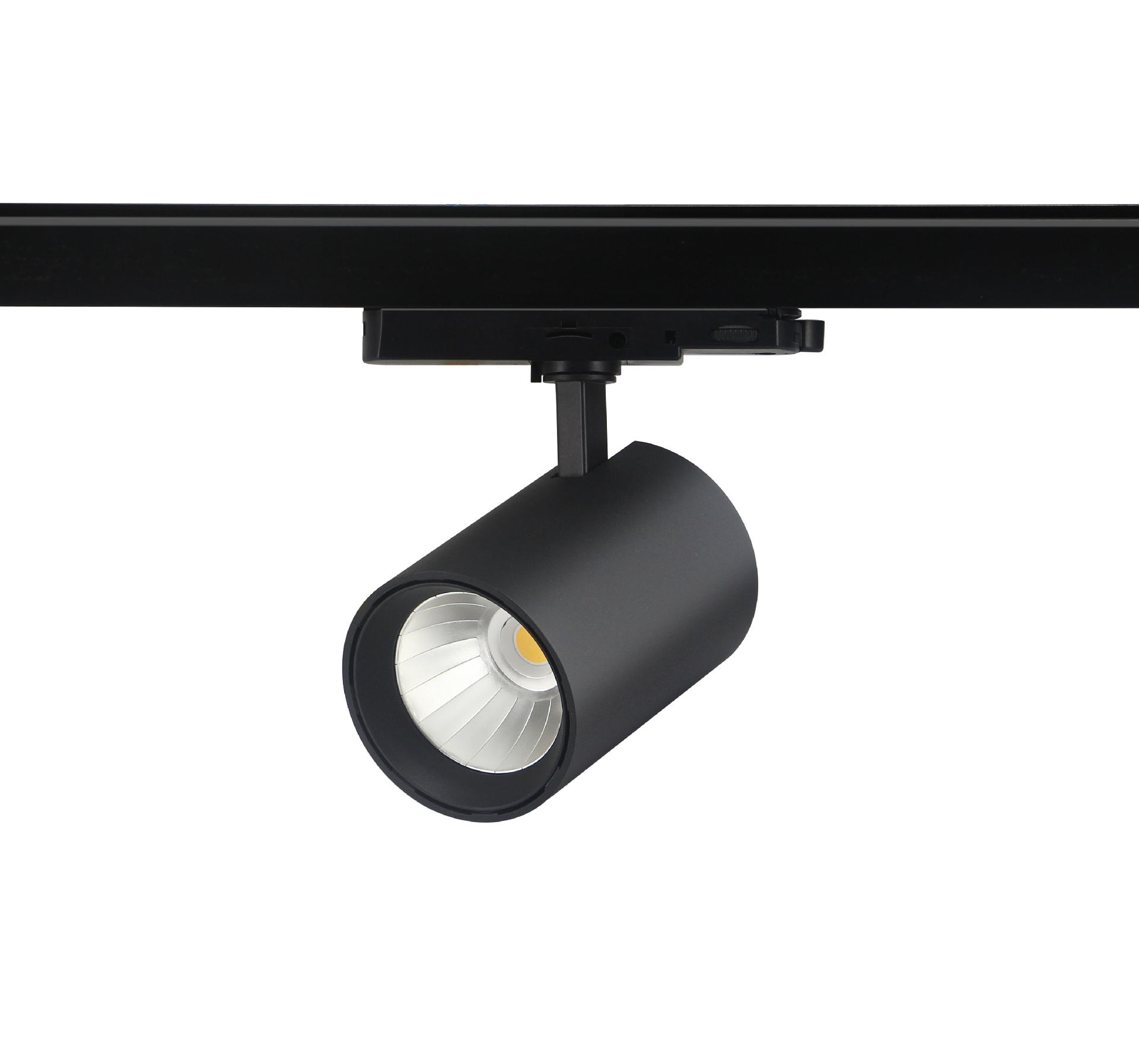
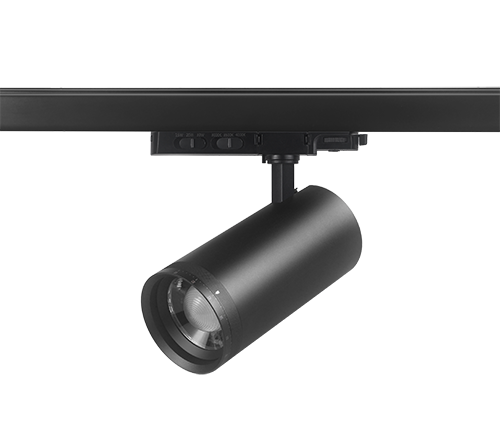
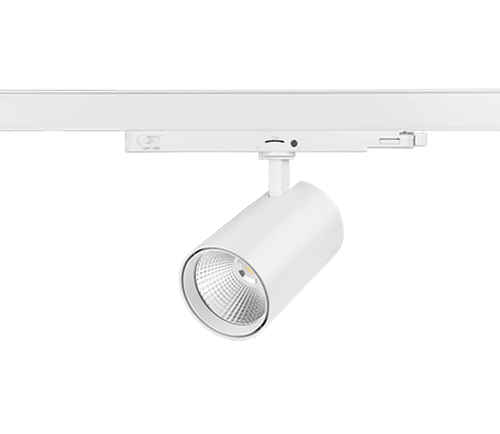
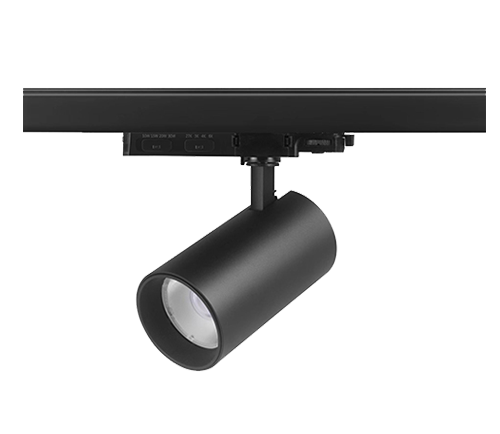
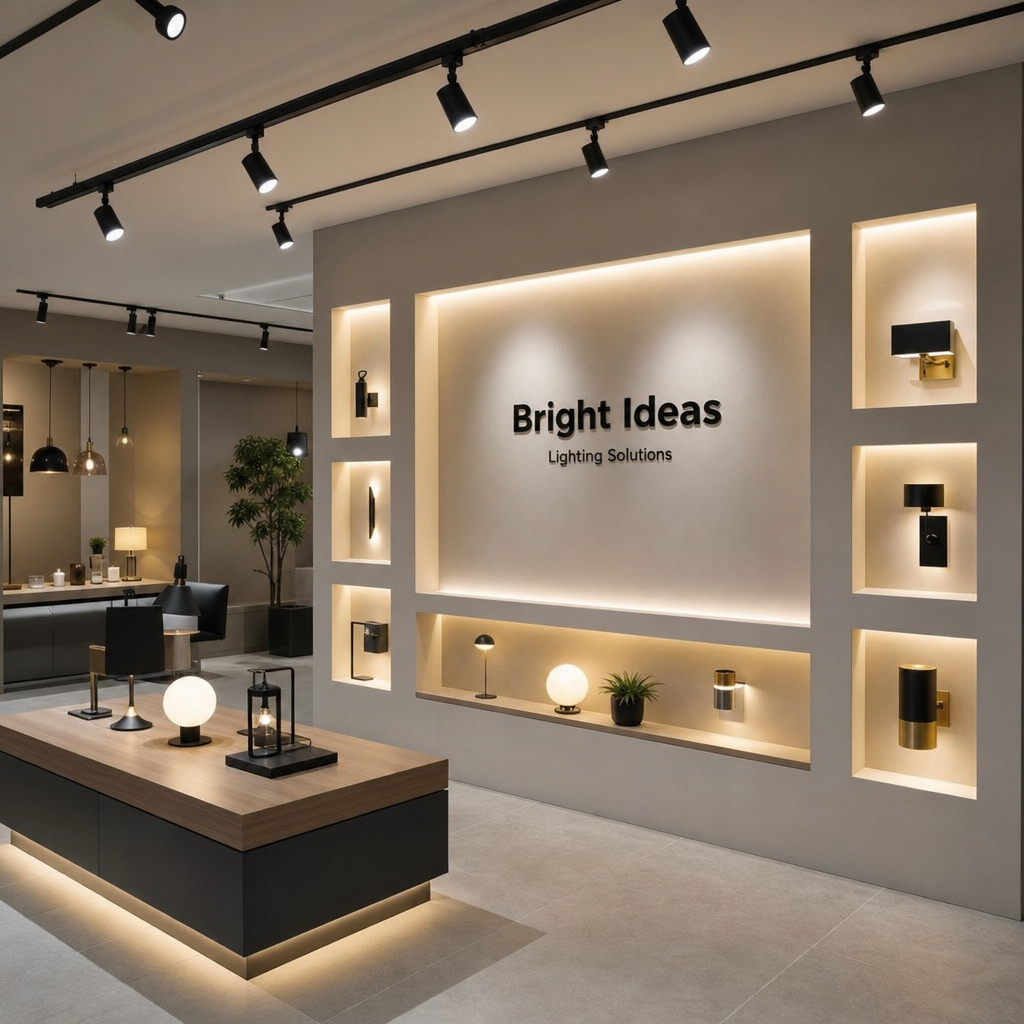
Showroom track lighting is a directional lighting system in which LED fixtures are installed on an electrical track and can be adjusted to illuminate specific products, walls, shelves or architectural elements. Its primary advantage is that the lighting direction is not permanently fixed. When the showroom layout changes, the fixtures can generally be re-aimed without replacing the entire lighting system.
This flexibility makes track lighting particularly suitable for commercial ligihting environments where visual merchandising plays an important role. A fashion retailer may change its seasonal displays several times a year, while a furniture showroom may reorganize room settings according to new collections. Automotive dealers may introduce new vehicle models and change promotional areas separately. In each of these situations, a fixed lighting layout can become less effective over time because the products are no longer positioned directly beneath the original light sources.
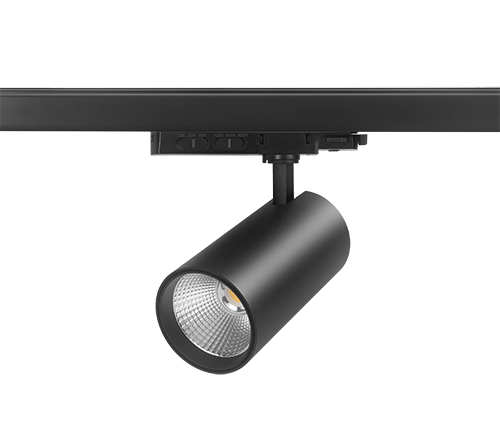
An LED track light solves part of this problem by allowing the lighting direction to follow the merchandise. The track provides the infrastructure, while the adjustable heads provide directional illumination. When combined with appropriate beam angles, color rendering and dimming capabilities, this creates a lighting system that can support both general showroom illumination and more focused accent lighting.
However, products showroom lighting should not be based on track lighting alone. The most effective commercial lighting solutions normally combine ambient illumination with controlled accent lighting. Ambient lighting provides a comfortable level of general visibility, while track-mounted spotlights create contrast and direct attention toward important products. The objective is not to make every part of the showroom equally bright, but to establish a visual hierarchy in which key products naturally attract attention.
2. How to Create the Ideal Lighting Environment for a Showroom with the track lighting systems
The concept of ideal showroom lighting should not be interpreted as simply using the highest possible lumen output. Excessive brightness can make a space uncomfortable and can reduce the visual impact of individual products because everything becomes equally prominent. A more effective approach is to establish a suitable ambient level and then use accent lighting strategically to emphasize selected areas.
The first step is to divide the showroom into functional zones. Entrance areas, circulation paths, display walls, product shelves, feature displays, consultation areas and promotional zones may require different lighting strategies. Once these zones are identified, the lighting designer can determine where general illumination is required and where stronger directional lighting will provide additional visual impact.
The second consideration is the relationship between ambient and accent lighting. Ambient lighting should provide enough illumination for customers to move comfortably through the showroom and examine products, while accent lighting should create sufficient contrast to distinguish important displays. Track-mounted LED spotlights are particularly useful for this purpose because their direction and, depending on the model, beam angle can be adjusted according to the size and location of the merchandise.
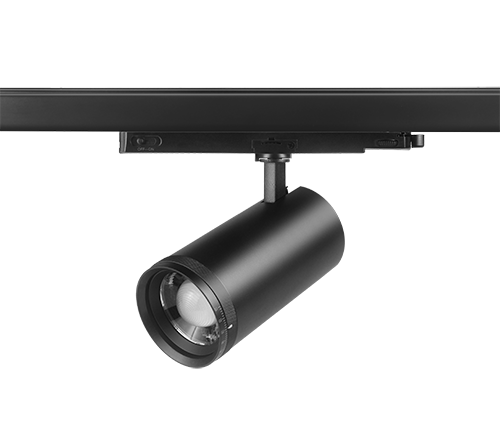
For example, a narrow beam can be appropriate for jewelry, artwork or small premium products, while a medium beam can work well for mannequins, furniture and display tables. Larger merchandise or wall displays may benefit from a wider beam. Adjustable or zoomable LED track lights can provide even greater flexibility because the beam can be modified when the display requirements change.
This approach also helps avoid a common showroom lighting problem over-lighting. Increasing the number or wattage of fixtures is not always the best solution when a showroom appears visually dull. In many cases, the issue is insufficient contrast rather than insufficient overall brightness. A better strategy is to maintain a comfortable ambient level and increase the intensity of selected accent areas.
3. Choosing led track lighting with right CCT and CRI for Showroom LED Lighting
Color temperature is one of the most visible characteristics of a lighting system because it influences the overall atmosphere of the showroom as well as the appearance of merchandise. For commercial applications, 2700K, 3000K and 4000K are commonly considered useful options, although the most appropriate selection depends on the brand identity, product category and architectural environment.
A 2700K track spotlight produces a warmer visual appearance and can work particularly well in luxury retail, furniture, hospitality-inspired interiors and showrooms featuring natural wood or warm-colored materials. While a 3000K spotlight option provides a balanced warm-white environment and is widely applicable to fashion, lifestyle, furniture and general retail spaces. A 4000K track lighting setting creates a cleaner and more neutral appearance that can be appropriate for automotive, technology and contemporary commercial environments.
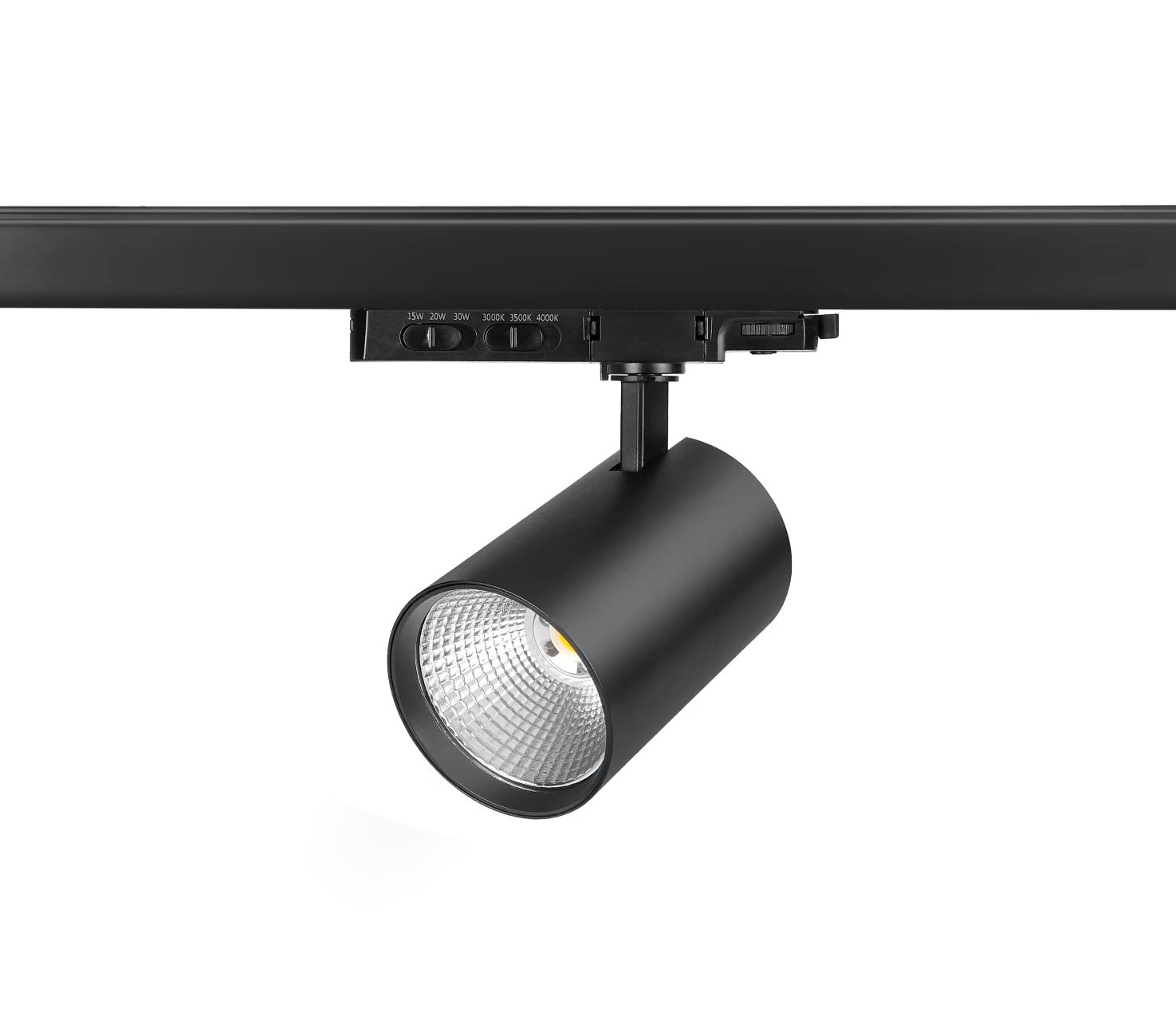
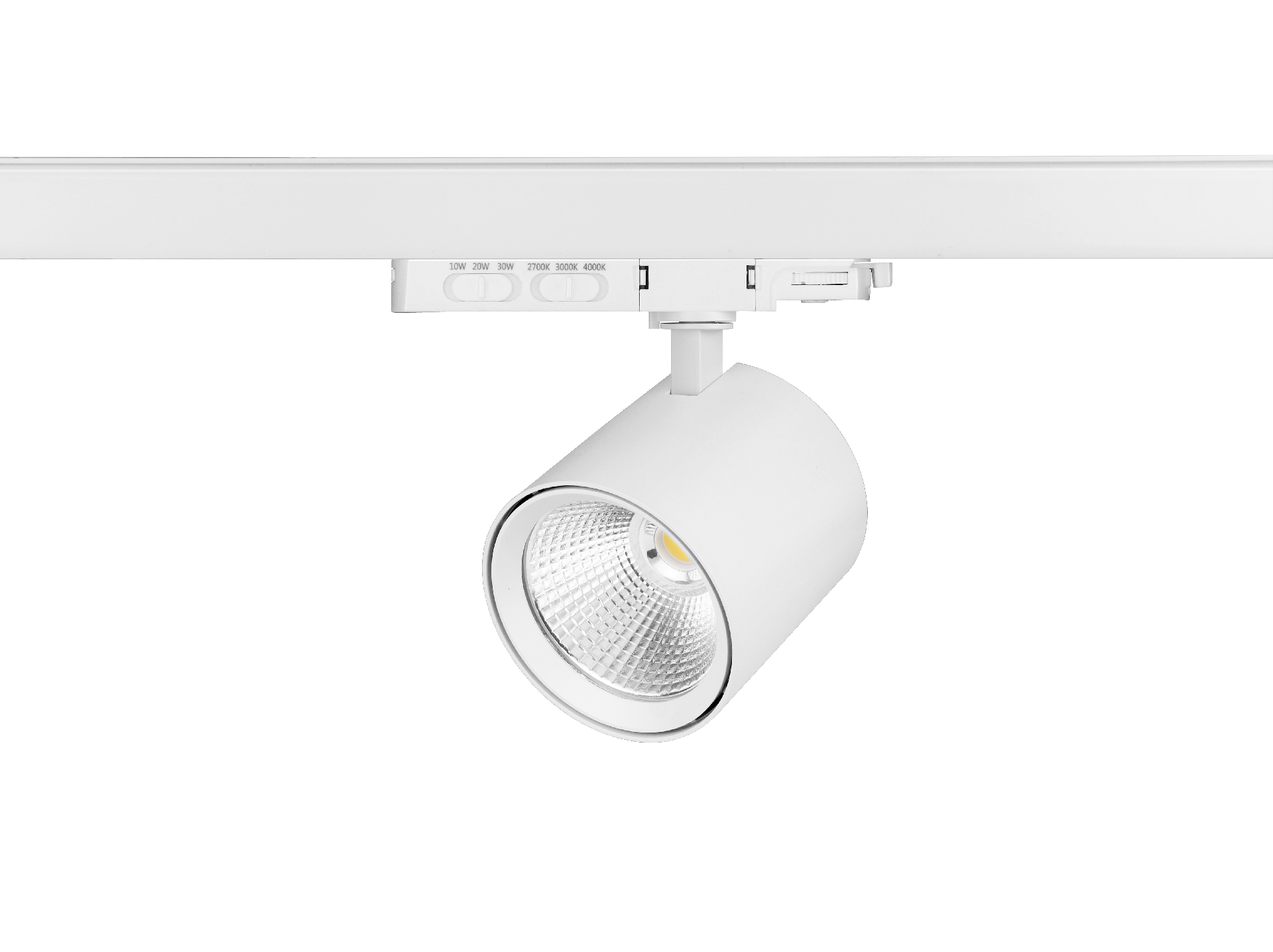
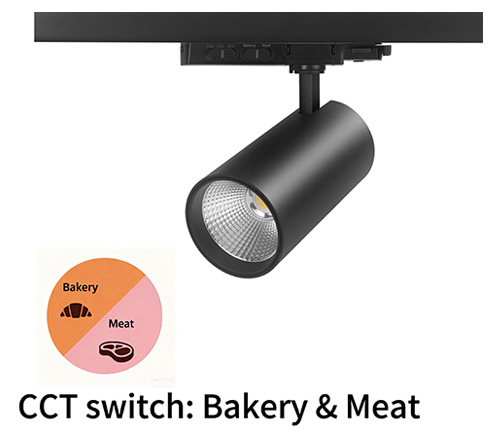
The challenge for distributors and contractors is that different projects may require different CCT specifications. A fixed 3000K track spotlight may be perfectly suitable for one customer but unsuitable for another. This is where CCT LED track lighting becomes commercially valuable. A switchable fixture allows the installer or project team to select the appropriate color temperature according to the actual application rather than committing to a fixed specification before the project is fully understood.
Color rendering should also be considered carefully. CRI is particularly important when the showroom displays products whose appearance depends heavily on accurate color representation, including clothing, cosmetics, furniture finishes, leather, textiles and decorative materials. Premium commercial lighting projects should therefore evaluate both overall CRI 90+ and, where relevant, the quality of red rendering and the spectrum of the light source rather than focusing only on wattage or lumen output.
For B2B buyers, this is an important distinction. A high-output LED fixture is not automatically a high-quality showroom light. The combination of optical design, color rendering, CCT, thermal management and driver performance ultimately determines how effectively the fixture presents the merchandise.
4. What Wattage LED Track Light Is Best for a Showroom Lighting?
There is no single wattage that can be considered universally suitable for showroom applications. The appropriate power depends on mounting height, beam angle, product size, background reflectance, required accent level and the amount of ambient lighting already present.
Nevertheless, selectable-power LED track lighting can significantly simplify this decision. A fixture offering 15W, 20W and 30W settings can cover a wider range of applications than a fixed 20W or 30W model. Smaller displays may require a lower output, while larger products, higher ceilings or feature areas may require more light. But with this POWER adjustable track spotlight, it can meet all those lighting requirements.
Power Setting
| Typically Application | Recommended Lighting Approach |
| 15W | Small products, decotative displays & accent lighting | Controlled accent |
| 20W | Clothing, general merchandise | Medium accent |
| 30W | Large display and feature areas | Strong accent |
A 30W LED track light can be particularly useful in larger commercial spaces because it provides a higher power option for applications where a 15W or 20W fixture may not provide sufficient accent intensity. Automotive showrooms, large furniture displays, feature walls and high-ceiling commercial areas are examples where the flexible setting may be advantageous.
However, 30W should not automatically be selected for every application. If a small display is illuminated from a short distance using a narrow beam, excessive output could create unwanted brightness or glare. The correct approach is to evaluate wattage together with beam angle, mounting height and the desired lighting contrast.
This is one of the main reasons multi-power track lighting(POWER switchable) can be more practical than fixed-output fixtures. The installer can select the appropriate output according to the actual application rather than replacing the entire fixture when the lighting requirement changes.
5. Why 3Power 3CCT LED Track Lights Provide Greater Flexibility for Commercial Showroom Lighting
The combination of selectable power and selectable color temperature creates an important advantage for commercial lighting projects. Consider a conventional product range that includes three wattages and three CCT options. A distributor may need to manage nine separate specifications:
15W 2700K, 15W 3000K, 15W 4000K, 20W 2700K, 20W 3000K, 20W 4000K, 30W 2700K, 30W 3000K and 30W 4000K.
A 3Power 3CCT LED track light can combine these requirements into one configurable fixture platform.
| Power/CCT | 2700K | 3000K | 4000K |
| 15W | √ | √ | √ |
| 20W | √ | √ | √ |
| 30W | √ | √ | √ |
The result is: 3 Power Options × 3 CCT Options = 9 Configurations. Which means just one piece of CCT switchable track light can meet at least 9 different lighting requirements.
From a project perspective, this means the same CCT track spotlight can be adapted to different areas within a showroom. From a distribution perspective, it can potentially reduce the number of fixed-specification SKUs that need to be forecast and stocked.
This does not mean that every distributor will automatically reduce inventory by a fixed percentage, because actual inventory requirements depend on sales patterns, MOQ, project volume and regional demand. However, consolidating several fixed configurations into a configurable product can make inventory planning considerably more straightforward.
For European distributors and wholesalers serving multiple customers, this flexibility can be particularly valuable because one customer may require 3000K for a fashion store while another may prefer 4000K for an automotive showroom. A configurable fixture provides greater room to accommodate these differences.
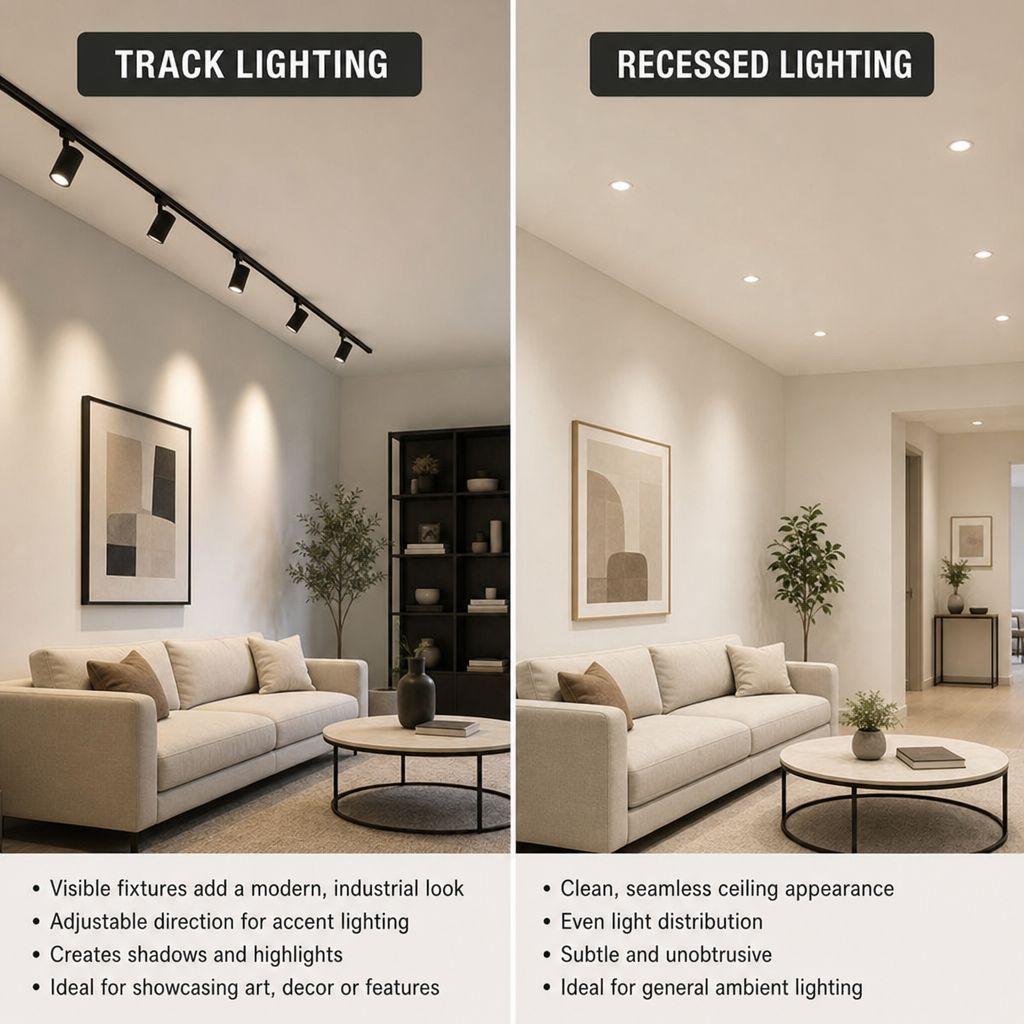
6. LED Track Lights vs Recessed Lighting for Showrooms
The choice between LED track lights and recessed downlights is often presented as an either-or decision, but commercial projects can successfully use both. Recessed fixtures can provide a clean and visually discreet ambient lighting layer, while track lighting can provide the directional flexibility required for product displays.
| Feature | LED track light | Recessed downlight |
| Directional adjustment | Excellent | Limited |
| Re-aiming after installation | Easy | Difficult |
| Product dispaly flexibility | High | Moderate |
Accent lighting
| excellent | Moderate |
| Ceiling Appearance | Visible fixture and track | More discreet |
| Changing showroom layouts | High adaptable | Less adaptable |
| Product Highlighting | Excellent | Moderate |
| Suitable for fixed layouts | Yes | Excellent |
| Suitable for dynamic | Excellent | Limited |
For a showroom that frequently changes its merchandise layout, track lighting generally offers greater flexibility. For a showroom with a highly fixed architectural plan where a clean ceiling appearance is the priority, recessed lighting may be more appropriate.
In many cases, combining both systems produces the best result. Recessed lighting can establish a comfortable ambient layer, while showroom track lighting creates the focused illumination required for hero products and feature displays.
7. Showroom Track Lighting for Different Commercial Applications
One of the strongest characteristics of a flexible LED track lighting platform is that the same basic technology can serve multiple commercial applications.
In automotive showrooms, directional track lights can be used to emphasize vehicle bodywork, interiors, wheels and promotional areas. A higher-output 30W setting may be appropriate for larger displays or higher mounting positions, while careful beam control helps prevent unwanted reflections from glossy vehicle surfaces.
In fashion and clothing stores, high-quality LED track lights can provide focused illumination for mannequins, clothing racks and feature displays. High CRI performance is particularly important because customers need to evaluate colors and materials accurately. A selectable CCT system also allows retailers to create warmer or more neutral environments according to their brand identity.
Furniture showrooms present another strong application. Large products such as sofas, tables and wardrobes require different lighting distances and beam sizes compared with small retail products. Adjustable track heads and multiple power settings allow the lighting system to accommodate these differences without requiring a completely different fixture family.
In supermarkets and food retail environments, different areas can have different visual requirements. General merchandise, promotional displays and specialized product counters may benefit from different lighting strategies. A configurable track lighting platform can provide greater flexibility when multiple lighting requirements exist within the same commercial project.
For jewelry and premium retail, optical precision becomes particularly important. Narrow or controlled beams can create visual contrast and highlight reflective materials, while glare control becomes essential because glass, metal and gemstones can produce strong reflections.
This cross-application flexibility is one of the reasons switchable LED track lights can be positioned as a broader commercial lighting solution rather than a fixture designed for only one type of showroom.
8. What Should B2B Buyers Look for in a Commercial LED CCT Track Light?
For importers, wholesalers, distributors and contractors, product selection should extend beyond the basic question of wattage and price. The technical specifications need to match the requirements of the projects that the product will serve.
| Specification | What buyers should evaluate |
| Power | Fixed & selectable output: 15W-20W-30W options |
| CCT | 2700K/3000K/4000K suitability |
| CRI | 90+ Appropriate color rendering for application |
Beam Angle
| 15/24/36/60 degree, suitable for product size and mounting distances |
| Dimming | Triac dimming & DALI-2 dimming options |
| Driver | Reliability, flicker-free |
| Track adapter | 3 phase 4 wire/6 wire |
| Certification | CE, RoHs and others for target markets |
| OEM/ODM | Custom housing, packaging or branding |
For European importers in particular, documentation and market compliance should be verified before ordering. The exact requirements depend on the product, destination market and project specification, so buyers should request the relevant technical and compliance documentation from the manufacturer.
9. Why Switchable LED Track Lighting Can Simplify Inventory Management in Showroom lightig
The commercial value of switchable technology is not limited to the end user. It can also address a significant problem for lighting distributors: SKU complexity. With conventional fixed-specification products, each combination of power and CCT may become a different SKU. When a distributor serves multiple markets, the number of product variants can increase rapidly.
A 3Power 3CCT product changes this model by combining multiple specifications into one fixture platform.
Instead of planning inventory around nine fixed combinations, the distributor can potentially stock one configurable product and configure it according to project requirements.
This can make several business processes easier, including quotation preparation, product training, sample management, forecasting and warehouse organization. It can also reduce the risk of having the wrong fixed CCT or wattage available when a project specification changes.
The actual financial benefit will vary by company, but the underlying principle is straightforward: fewer fixed configurations generally mean simpler SKU management.
For B2B lighting companies, that operational flexibility can be just as important as the lighting performance itself.
Dimming and Control Compatibility-Commercial showrooms lighting often require lighting scenes that change according to the time of day, customer activity or event schedule. For this reason, dimming compatibility should be evaluated during product selection rather than treated as an optional feature after installation.
A Triac dimmable LED track light can be suitable for projects using compatible phase-cut dimming systems, while DALI-2 versions can be considered for projects requiring more advanced digital lighting control.
The important point is compatibility. A dimmable LED track light is not automatically compatible with every dimmer. The driver, dimming protocol, load characteristics and control equipment need to be evaluated together.
For B2B projects, manufacturers should therefore provide clear driver and dimming information so contractors can verify compatibility before installation.
10. How to Select the Right Showroom LED Light Supplier
For B2B buyers, selecting the led lighting manufacturer is an important part of the overall sourcing decision. A supplier should be able to provide more than a product photograph and basic wattage information.
Before placing an order, importers and distributors should evaluate technical specifications, driver options, CCT selection, beam-angle information, dimming compatibility, warranty conditions and available certifications.
Lighting OEM and ODM capability can also be valuable for distributors developing their own commercial lighting ranges. A lighting manufacturer capable of modifying housing colors, product specifications, packaging, branding or performance parameters can help distributors create a more differentiated product offering.
For project-based contractors, reliable sample support and technical communication are equally important. A sample installation can help verify CCT, beam distribution, glare, color rendering and overall appearance before a larger project is ordered.
11. Recommended Specification for a Showroom lighting Track Light
The following table provides a practical framework for evaluating a configurable commercial LED track light.
| Specification | Factor |
| Porduct Type | LED track light |
| Power adjustable | 15W-20W-30W/10W-20W-30W switchable |
CCT adjustable | 2700K-3000K-4000K |
CRI
| 90+, depending on model |
| Beam Angle | 15/24/36/60 degree fixed; 15-55 degree zoomable |
| Dimming | Triac dimming & DALI-2 dimming options |
| Application | Showroom, retail, supermarket and more others |
| Installation | Track mounted |
| Customization | OEM/ODM |
Exact product specifications should always be confirmed using the manufacturer's current datasheet before a project is specified or ordered.
Frequently Asked Questions About Showroom Track Lighting
What is the best lighting for a showroom?
The best showroom lighting normally combines comfortable ambient illumination with controlled accent lighting. LED track lights are particularly effective because they can be aimed toward specific products and adjusted when the showroom layout changes. The final specification should consider CCT, CRI, beam angle, glare, mounting height, dimming compatibility and the type of products being displayed.
Are LED track lights suitable for commercial showrooms lighting?
Yes. LED track lights are particularly suitable for commercial showrooms because they provide directional control and allow fixtures to be repositioned when displays change. They can be used for automotive, fashion, furniture, supermarket and general retail applications, making them a flexible option for many commercial lighting projects.
What wattage should I choose for a showroom track light?
The appropriate wattage depends on mounting height, beam angle, display size and the required accent level. A selectable 15W/20W/30W LED track light provides greater flexibility because the output can be adjusted for different applications. A 30W setting may be appropriate for larger or higher-mounted displays, while 15W or 20W may be sufficient for smaller areas.
Is a 30W LED track light suitable for retail and showroom applications?
Yes, a 30W LED track light can be suitable for larger displays, feature products, higher mounting positions and areas requiring stronger accent illumination. However, wattage should not be evaluated independently. Beam angle, mounting height, optical efficiency and ambient lighting all influence the final lighting result.
What CCT should be used for showroom lighting?
2700K creates a warm and intimate environment, 3000K provides a balanced warm-white appearance, and 4000K creates a cleaner and more neutral environment. The best option depends on the showroom's product category and brand identity. A 3CCT switchable LED track light allows the lighting team to select between these options according to the project.
What is the advantage of a 3Power 3CCT LED track light?
A 3Power 3CCT LED track light combines three wattage settings and three CCT settings in one fixture. For example, 15W, 20W and 30W can be combined with 2700K, 3000K and 4000K, providing nine selectable configurations. This can simplify project specification and reduce SKU complexity for lighting distributors and wholesalers.
Conclusion
A successful showroom lighting system should balance product visibility, visual comfort, brand atmosphere and long-term flexibility. Showroom track lighting is particularly effective because it allows lighting to be directed toward products and adjusted as merchandising layouts evolve. When combined with high-quality LED technology, suitable CRI, appropriate beam angles and compatible dimming systems, it can provide a flexible foundation for a wide range of commercial applications.
The introduction of selectable power and CCT takes this flexibility further. A 3Power 3CCT LED track light can combine 15W, 20W and 30W output with 2700K, 3000K and 4000K CCT, creating nine selectable configurations from one fixture platform. This makes the technology particularly relevant to distributors, wholesalers, contractors and commercial lighting buyers who need one product family capable of serving multiple project requirements.
For end users, the benefit is the ability to adapt lighting to different products and showroom layouts. For B2B buyers, the same technology can simplify product selection, reduce fixed-specification complexity and make inventory planning more manageable.
Whether the project involves an automotive showroom, fashion retailer, furniture store, supermarket or another commercial environment, the right LED track light should be selected according to the actual lighting requirement rather than simply choosing the highest wattage available. By combining adjustable lighting direction with selectable power and CCT, modern track lighting can provide a more adaptable and commercially practical solution for today's changing showroom environments.
For distributors, wholesalers, contractors and commercial lighting buyers looking for flexible showroom LED lighting, a 3Power 3CCT track light can be evaluated as a single product platform for multiple applications. Request the latest product catalog, technical datasheet, samples and OEM/ODM options to determine the most suitable configuration for your market and projects.
 Tel.+86 15013617190
 Email:info@pustlux.com