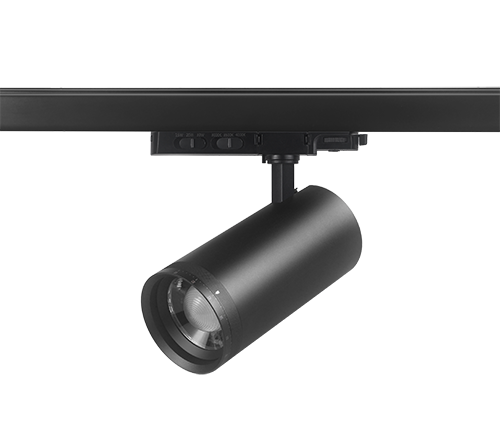
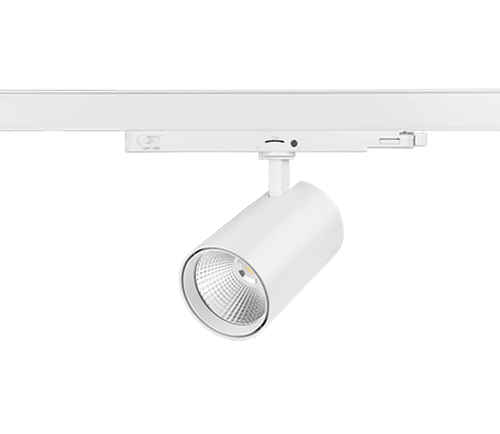
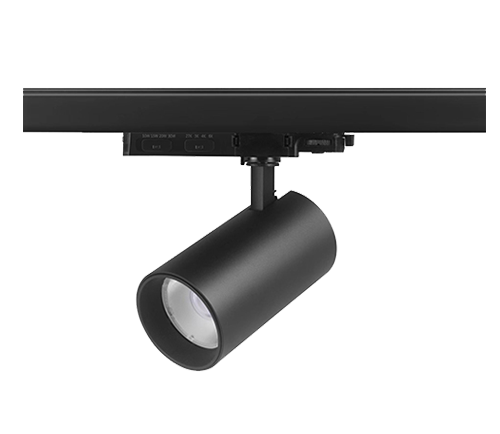
15W vs 20W vs 30W LED Track Lights: How to Choose the Right Wattage for Retail Stores
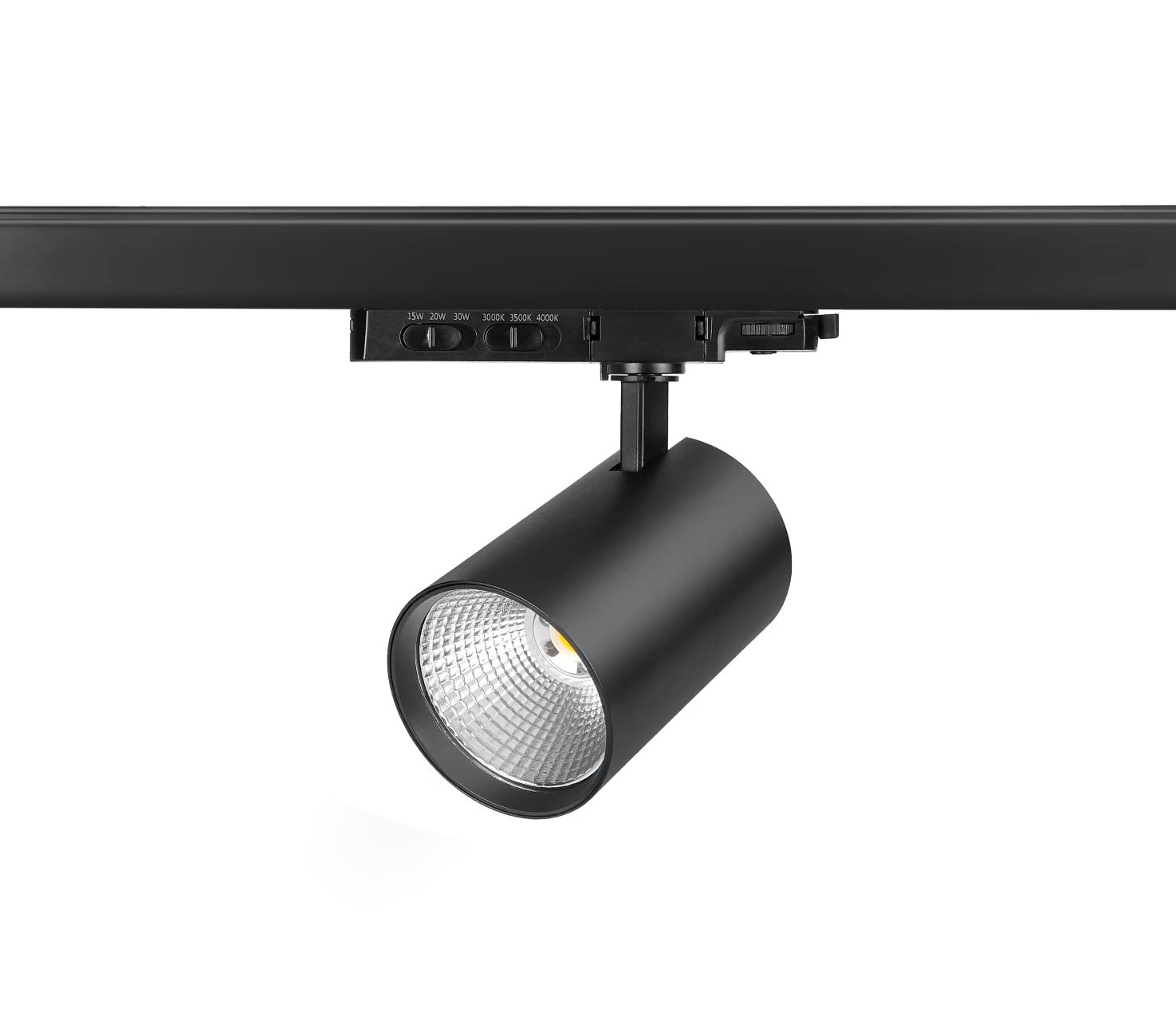
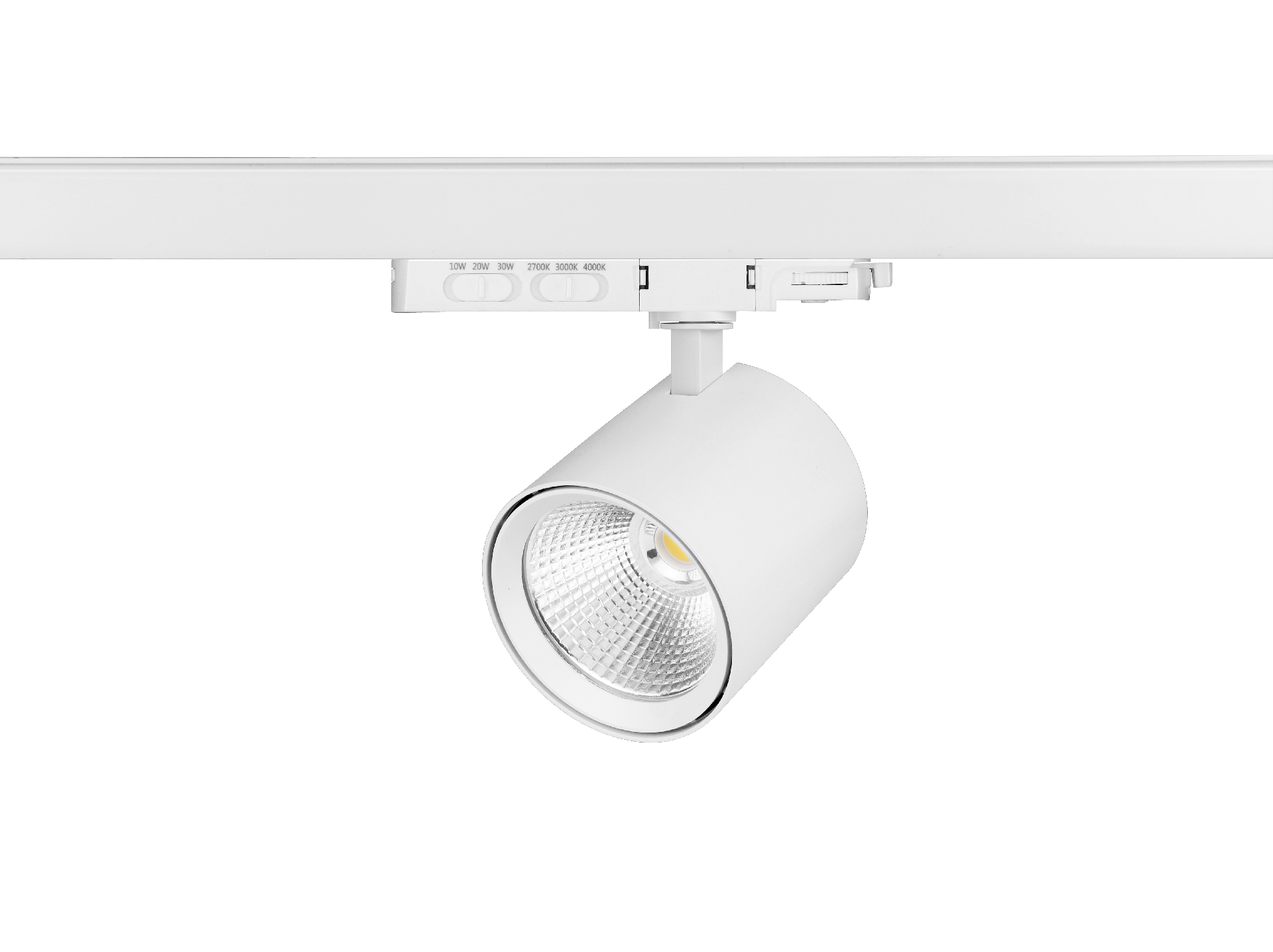
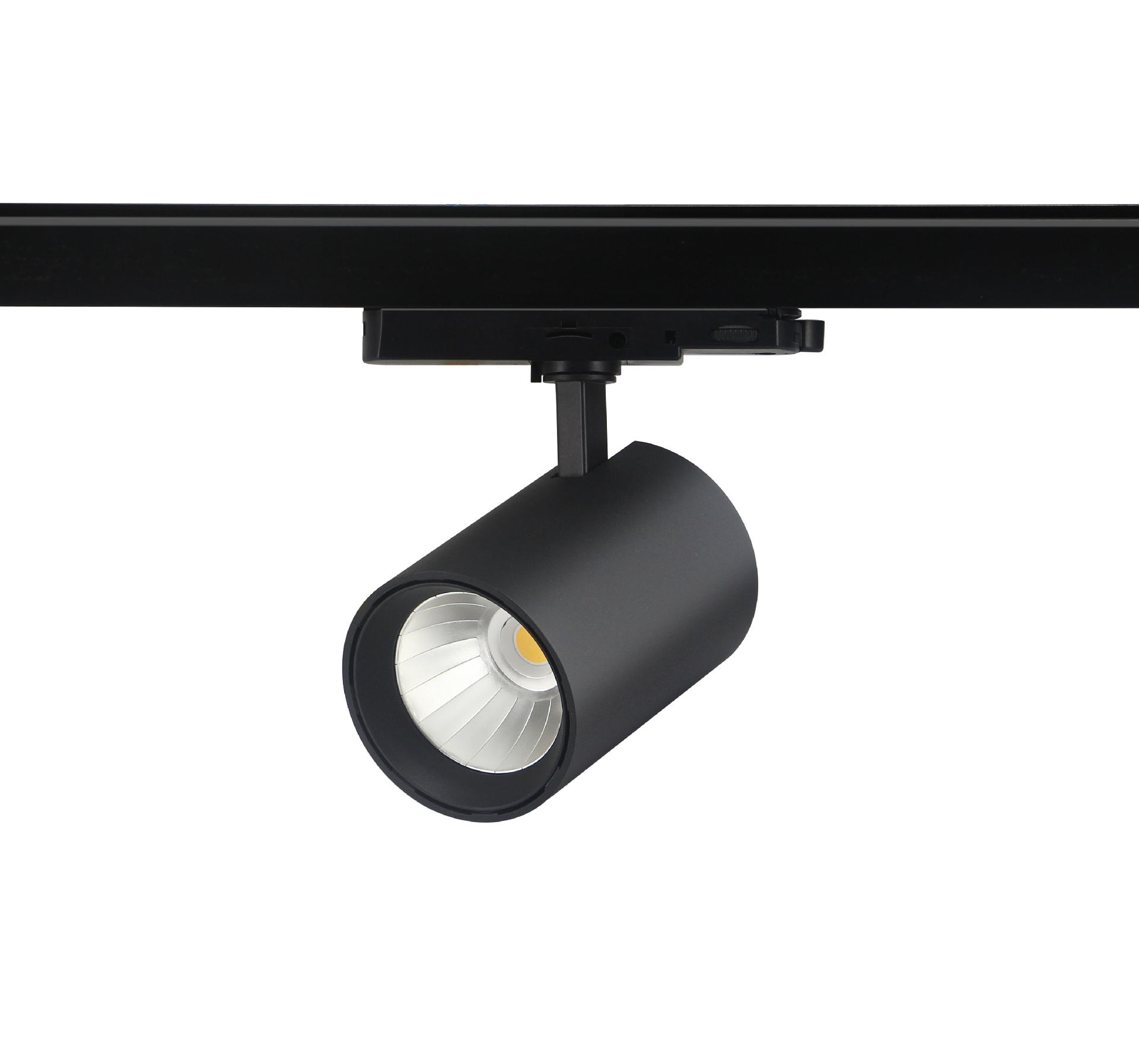
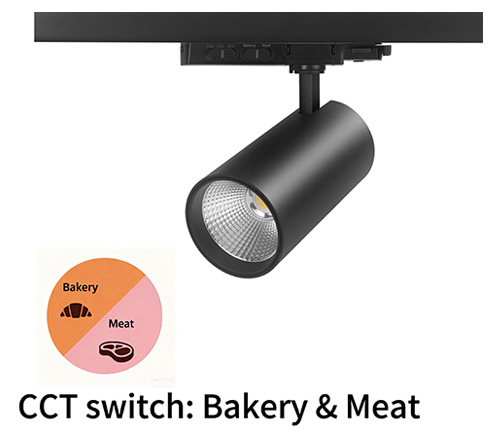
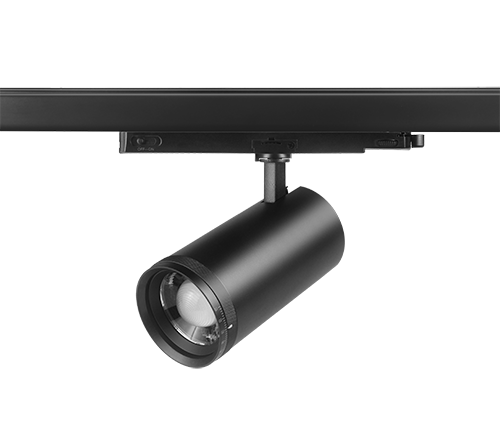
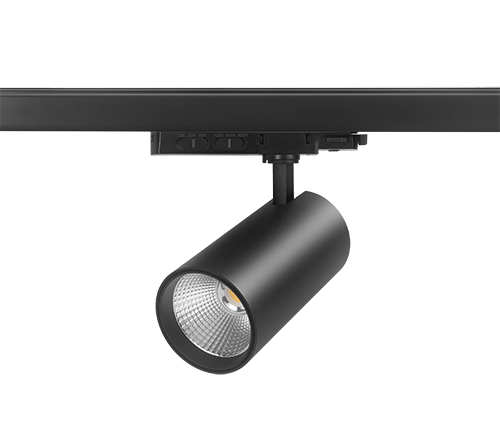
For distributors, importers, and commercial lighting contractors, the decision also involves product standardization and inventory management. A well-designed range of switchable LED track lights can cover several project requirements while reducing the need to stock multiple fixed-wattage models. The best choice is the one that balances lighting performance, commercial flexibility, energy consumption, and total procurement cost. In this article, we will show you the LED track light with 3POWER 3CCT & triac dimmable one.
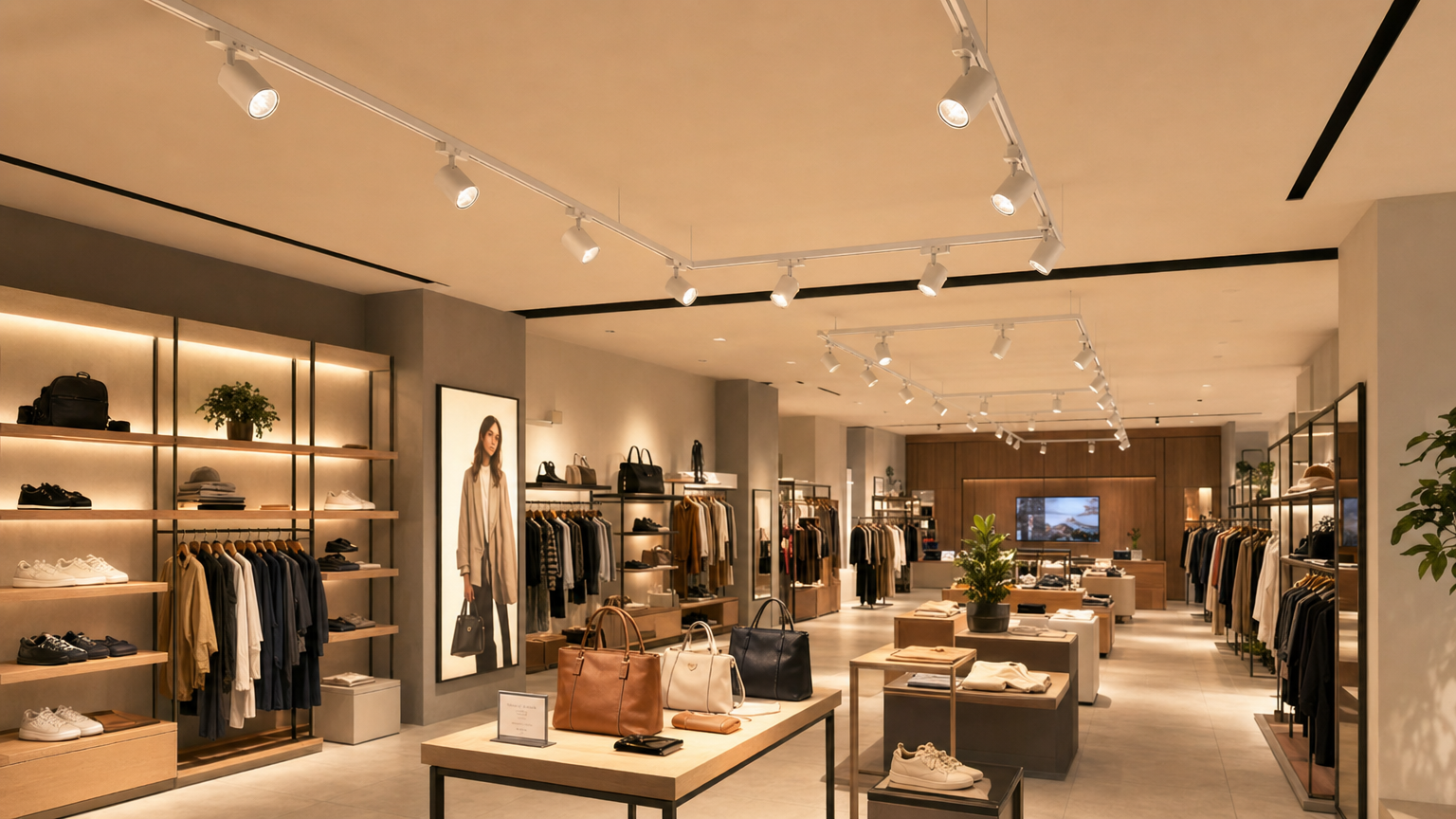
1. What Is the Difference Between 15W, 20W, and 30W LED Track Lights?
The main difference between 15W, 20W, and 30W LED track lights is their electrical power consumption and, when the products have similar efficiency, their potential lumen output. Higher wattage generally allows a fixture to produce more light, but the actual result depends on the LED chips, driver, heat management, reflector, lens, and operating conditions.
A 30W fixture is not automatically three times brighter than a 10W fixture, and a 20W fixture from one manufacturer may produce more light than a 30W fixture from another. Buyers should therefore compare complete-fixture lumen output rather than relying only on the wattage printed on the product label.
Basic wattage comparison
| Wattage | General lighting role | Typical commercial use | Main consideration |
| 15W | Focused illumination | Small displays, low ceillings | May be insufficient for large or distant displays |
| 20W | Balanced accent lighting | Fashion stores, cosmetics shops | Often provides a practical balance between output and energy use |
| 30W | Stronger accent or wider coverage | Large display, showrooms, feature walls | Requires careful beam-angle and glare evaluation |
These categories are general purchasing guidelines rather than universal lighting rules. The actual suitability of each wattage depends on the fixture’s lumen output, beam angle, mounting height, spacing, and the reflectance of the surrounding surfaces.
2. Wattage Is Not the Same as Brightness in the commercial lighting
Wattage describes how much electrical power a fixture consumes. Lumens describe the total amount of visible light produced. For commercial lighting selection, lumens are more useful than wattage when comparing the expected light output of different products.
For example, a 20W LED track light producing 2,400 lumens has a nominal efficacy of 120 lm/W. A 30W fixture producing 2,700 lumens has a nominal efficacy of 90 lm/W. In this example, the higher-wattage fixture consumes more power but produces only slightly more light.
Example lumen comparison
The following figures are illustrative examples for explaining the selection process. Buyers should use the verified lumen output of the exact model being purchased.
| Fixture power | Example system efficiency | Example lumen output | Relative lighting role |
| 15W | 100LM/W | 1500LM | Small accent lighting |
| 20W | 100LM/W | 2000LM | Standard display lighting |
| 30W | 100LM/W | 3000LM | Stronger accent lighting or larger displays |
If the supplier offers a more efficient product, the lumen output may be higher at the same wattage. Conversely, a fixture with poor thermal performance or inefficient optics may deliver fewer useful lumens than expected.
When requesting a quotation, ask whether the stated lumen value refers to:
The LED chip output
The driver output
The complete fixture output
The initial output under laboratory conditions
The output at a specific CCT or power setting
For a retail project, the complete-fixture lumen output is the most relevant figure.
3. When Should Retail Stores Use 15W LED Track Lights for commercial lighting solutions?
A 15W LED track light is generally suitable when the lighting task requires focused illumination rather than high-output general lighting. It can be useful for small merchandise displays, low ceiling applications, narrow shelves, decorative areas, and supplementary accent lighting.
Suitable applications for 15W
Small boutiques
Jewelry display cabinets
Cosmetics shelves
Low-level product displays
Small wall-mounted merchandise
Decorative feature areas
Narrow aisles with relatively short aiming distances
Accent lighting used alongside other fixtures
A 15W fixture may be the right choice when the goal is to create visual emphasis without over-lighting the space. It can also help reduce energy consumption when many fixtures are installed and the required illuminance is relatively modest.
However, 15W may not be appropriate when the ceiling is high, the display is large, or the fixture must illuminate a broad area. Using a narrow beam at a long distance can create a small, intense spot rather than even product illumination. In that situation, a higher-wattage fixture or a different optical arrangement may be more effective.
A 20W LED track light is often a practical middle option for retail stores because it can provide more output than a 15W fixture without the energy consumption and visual intensity associated with higher-powered models.
It may be suitable for:
Standard fashion retail stores
Cosmetics shops
General merchandise displays
Medium-sized boutiques
Shelving and display walls
Showrooms with moderate ceiling heights
Accent lighting over product tables
Retail environments requiring a balance between coverage and emphasis
For many commercial applications, 20W can provide a useful balance between brightness, fixture size, energy consumption, and purchase cost. Nevertheless, the actual performance still depends on the product’s efficacy and beam angle.
Example: standard retail display
A 20W fixture with a medium beam angle may be suitable for illuminating a clothing display or cosmetics shelf when the mounting height is moderate and the distance to the target surface is controlled. If the fixture is installed too far from the merchandise, the light may become less effective even if the nominal lumen output is adequate.
A 20W model with a 24° or 36° beam angle may create stronger product emphasis than a 30W model with a very wide beam, depending on the installation conditions. This is why buyers should compare photometric data and sample performance rather than selecting by wattage alone.
A 30W LED track light is generally considered when the project requires stronger accent lighting, greater mounting distance, larger display coverage, or higher light levels on feature products.
Common applications include:
Large retail stores
High-ceiling fashion stores
Automotive and furniture showrooms
Large display walls
Feature merchandise areas
Supermarkets with higher mounting heights
Commercial exhibition spaces
Architectural accent lighting
A 30W fixture can be useful for highlighting large products or creating a stronger visual hierarchy between key displays and surrounding areas. It may also reduce the number of fixtures required when the optical system is designed to distribute light effectively.
However, higher wattage can create excessive brightness or glare if the beam angle, aiming direction, and mounting height are not properly coordinated. A 30W fixture should not be selected simply because the buyer wants the “brightest” option.
Example: large showroom
In a furniture showroom with a high ceiling, a 30W track light may be more appropriate than a 15W model because the fixture must deliver useful light over a longer distance. The buyer should review the beam spread at the actual mounting height and confirm that the light reaches the product surface with sufficient intensity and uniformity.
6. How Mounting Height Changes the Wattage Decision in Commercial Lighting
Mounting height is one of the most important factors when choosing between 15W, 20W, and 30W LED track lights. As the distance between the fixture and the target surface increases, the illuminated area becomes larger and the light intensity on the target generally decreases.
A fixture that performs well at a ceiling height of 2.5 meters may not provide the same result at 4 or 5 meters. In high-ceiling applications, buyers may need:
Higher lumen output
A narrower or more appropriate beam angle
More precise aiming
Different fixture spacing
A higher mounting position with stronger optical control
Mounting-height selection table
| Mounting condition | Possible starting point | What to evaluate
|
| Low ceiling, small display | 15W | Avoid excessive brightness and glare |
| Standard retail ceiling | 15-20W | Balance coverage and accent intensity |
| Medium-height ceiling | 20W | Confirm lumen output and beam spread |
| High ceiling or large display | 20-30W | Review photometric data and aiming distance |
| Large showroom or feature wall | 30W ot higher | Evaluate uniformity, glare and fixture spacing |
These are starting points only. A lighting calculation or on-site sample test is preferable for commercial projects with strict illuminance or uniformity requirements.
7. How Beam Angle Affects the Choice Between 15W, 20W, and 30W Led Track Lights
Beam angle determines how widely the light spreads. A narrow beam concentrates light into a smaller area, while a wider beam distributes light across a larger area.
For retail stores, common beam-angle choices include:
15°–24°: focused accent lighting
24°–36°: balanced display lighting
36°–45°: wider product and wall coverage
60° or wider: broad illumination and ambient support
Beam angle and wattage comparison
| Wattage | Narrow beam application | Medium beam application | Wide beam application |
| 15W | Small product or artwork accent | Compact display | May provide limited intensity over a broad area |
| 20W | Focused merchandise lighting | General retial display | Moderate coverage at shorter distances |
| 30W | Strong feature-product emphasis | Large display , showroom | Wider coverage where higher output is required |
A 15W fixture with a narrow beam may create a stronger visual effect on a small product than a 30W fixture with a wide beam. The buyer should therefore consider the relationship between wattage, beam angle, mounting height, and target size.
Fixed beam angle or zoomable track light?
Fixed-beam products are suitable when the display layout is stable and the lighting requirements are predictable. Zoomable track lights may be more useful for distributors and multi-purpose commercial projects because the beam angle can be adjusted according to different display sizes and installation conditions.
A zoomable product should be tested for:
8. How CCT and CRI Influence Wattage Selection For Retail Lightings
Wattage determines electrical power consumption, but CCT and CRI influence how products appear under the light.
Common CCT options for retail track lighting include:
CCT
| Visual effect | Potential retail applications |
| 2700K | Warm and intimate | Luxury boutiques, premium interiors |
| 3000K | Warm white and inviting | Fashion, jewelry, boutique retail |
| 3500K | Balanced warm-neutral appearane | Mixed retail environment |
| 4000K | Neutral and clean | General retail, showrooms |
| 5000K | Cooler and more task-oriented | Selected technical or commercial applications |
For many retail stores, CRI 90 or higher is a useful specification target, especially where accurate product color is important. Fashion, cosmetics, jewelry, food, and premium merchandise may require additional attention to R9 and spectral quality.
A higher wattage does not compensate for poor color rendering. A 30W fixture with weak color quality may make merchandise look less attractive than a 20W high-CRI fixture. Buyers should therefore evaluate:
For retail projects, the best lighting solution is usually the one that makes the products look accurate and appealing while providing sufficient illumination.
9. Why Dimming Matters in Retail Stores Lighting
Retail stores often need different lighting levels during business hours, cleaning, restocking, events, and promotional campaigns. Dimming allows operators to adjust the atmosphere and energy consumption without replacing the fixtures.
A dimmable LED track light may be useful for:
Highlighting promotional displays
Creating different lighting scenes
Reducing light levels during quiet periods
Supporting daylight-responsive strategies
Adjusting the atmosphere for premium retail
Compensating for changing merchandise layouts
Dimming options to evaluate
| Dimming method | Typical consideration |
| Triac dimming | Confirm compatibility with the actual wall dimmer |
| 0-10V dimming | Requires suitable control wiring and driver |
| DALI-2 | Useful for addressable commerecial lighting control |
| Wireless control | Requires compatible control ecosystem |
| Non-dimmable | Suitable for simple installations with fixed output |
Dimming performance should be tested at low and high levels. Buyers should check for flicker, audible noise, unstable startup, limited dimming range, and compatibility with the intended control system.
10. Product Data Table: 15W vs 20W vs 30W LED Track Lights: How to choose the LED track light for commercial lighting
The following table can be used as a clear reference section for commercial buyers and search engines. The values shown are an example comparison framework; actual lumen output, efficacy, beam angle, and dimming performance must be confirmed for the selected model.
Commercial LED track light comparison table
Specification
| 15W led track light | 20W led track light | 30W led track light |
| Primary role | Focused accent lighting | Balanced retail dispaly lighting | Stronger accent and larger-area lighting |
| Typical use | Small displays and low ceilings | Standard retail stores and showrooms | High ceilings, large displays and feature walls |
| Example efficiency | 100lm/w | 100lm/w | 100lm/w |
| Recommended CCT switchable options | 2700K-3000K-4000K Adjustable | 2700K-3000K-4000K Adjustable | 2700K-3000K-4000K Adjustable |
| Color Rendering | CRI 90+ for selected models | CRI 90+ for selected models | CRI 90+ for selected models |
| Dimming | Model dependent | Model dependent | Model dependent |
| Mounting options | Low to moderate height | Low to medium height | Medium to high height |
| Suitable beam angle | 15-36° | 24-45° | 15-60°, model dependent |
| Suitable housing size | D85*L140MM | D85*L140MM | D85*L140MM |
The table should be updated with the exact product specifications before publication. This is particularly important if the page is intended to support product enquiries, technical comparisons, or distributor quotations.
11. How 3POWER and 3CCT Switchable Track Lights Simplify Product Selection
For distributors and importers, a switchable LED track light can reduce the complexity of stocking separate fixed-wattage and fixed-CCT models.
A product offering:
It can provide: 3POWER x 3CCT= 9 fixtures
This does not mean that every distributor can eliminate nine separate SKUs automatically. The actual inventory benefit depends on customer demand, product labeling, quality consistency, packaging, and whether the selectable settings meet the required performance.
Nevertheless, this configuration can help B2B buyers:
Reduce duplicated stock
Simplify product catalogues
Lower warehouse pressure
Reduce the risk of stocking the wrong CCT
Support different retail applications with one product platform
Improve quotation flexibility
Reduce dead-stock exposure
Simplify sample management
For distributors serving different retail segments, a switchable product can be particularly useful when customers request different wattages or CCTs after the project has already entered the quotation or installation stage.
12. How to Choose the Right Wattage: A Practical Decision Process
A reliable selection process should follow the project requirements rather than starting with the product catalogue.
Step 1: Define the display objective
Determine whether the fixture is required for general illumination, merchandise highlighting, wall washing, decorative accent lighting, or feature-product emphasis.
Step 2: Measure the mounting height
Record the distance between the track and the target display. A higher mounting height usually requires more careful evaluation of lumen output and beam angle.
Step 3: Identify the target area
Consider the size of the merchandise, shelf, display wall, mannequin, table, or architectural feature. A small target may require a narrow beam, while a large display may need a medium or wide beam.
Step 4: Select an initial wattage range
Use 15W for smaller and more focused applications, 20W for balanced retail displays, and 30W for larger or more demanding applications. Treat these as starting points rather than final specifications.
Step 5: Compare complete-fixture lumens
Do not compare wattage without reviewing lumen output and system efficacy. Confirm whether the data applies to the complete fixture.
Step 6: Check CRI and CCT
Select a color temperature that supports the store’s brand identity and merchandise. Confirm that the CRI and R9 performance are appropriate for the products being displayed.
Step 7: Confirm track and dimming compatibility
Check the track adapter, input voltage, circuit arrangement, dimming protocol, and compatibility with the existing control system.
Step 8: Test a sample
Evaluate the fixture in a realistic environment. Review brightness, beam shape, glare, color quality, dimming behavior, and installation convenience before placing a bulk order.
13. Common Mistakes When Choosing LED Track Light Wattage for commercial lighting solutions
Mistake 1: Selecting the highest wattage automatically
A higher wattage may create excessive brightness, glare, or energy consumption when the display requires only focused accent lighting.
Mistake 2: Comparing products only by wattage
Two fixtures with the same wattage can have different lumen output, beam quality, driver efficiency, and thermal performance.
Mistake 3: Ignoring mounting height
A fixture that works at a low ceiling may not provide sufficient illumination at a higher installation distance.
Mistake 4: Choosing the wrong beam angle
A wide beam may dilute the visual emphasis on a small product, while a narrow beam may create harsh spots on a large display.
Mistake 5: Treating CRI as an optional feature
Poor color rendering can reduce the visual quality of clothing, cosmetics, food, jewelry, and decorative materials.
Mistake 6: Forgetting dimming compatibility
A dimmable fixture may still perform poorly if the driver is incompatible with the installed dimmer or control system.
Mistake 7: Buying without sample approval
Frequently Asked Questions
1. Is 15W, 20W, or 30W better for retail stores?
None is universally better. A 15W LED track light may be suitable for small displays, a 20W model may provide balanced performance for standard retail applications, and a 30W model may be more appropriate for large displays or higher ceilings. The correct choice depends on lumen output, beam angle, mounting height, and the required lighting effect.
2. Is a 20W LED track light bright enough for a clothing store?
A 20W LED track light can be suitable for a clothing store when it provides sufficient lumen output and uses an appropriate beam angle. CRI, CCT, mounting height, and aiming distance should also be considered because clothing colors must appear attractive and accurate.
3. When should I choose a 30W LED track light?
Choose a 30W model when the project requires stronger accent lighting, higher mounting distances, larger display coverage, or illumination of large feature products. Confirm the photometric performance before using it in a small or low-ceiling retail space.
4. Can a 15W LED track light be used for jewelry displays?
Yes. A 15W fixture may be suitable for jewelry displays when it has a focused beam, good color rendering, controlled glare, and an appropriate mounting distance. The final result should be evaluated using a sample because jewelry requires precise highlights without uncomfortable glare.
5. What wattage is suitable for a high-ceiling retail store?
A 20W or 30W LED track light may be a useful starting point for high-ceiling retail stores, but wattage alone is not enough to determine suitability. The buyer should review mounting height, lumen output, beam angle, fixture spacing, and the required illuminance on the merchandise.
6. Does higher wattage always mean higher brightness?
No. Higher wattage generally allows more light output, but brightness also depends on system efficacy, optical efficiency, beam angle, and thermal design. A more efficient 20W fixture may produce more light than a less efficient 30W fixture.
7. What beam angle should I choose for retail track lighting?
A 15°–24° beam angle is often useful for focused accent lighting, while 24°–36° may be suitable for many merchandise displays. Wider beam angles can provide broader coverage. The correct choice depends on display size, mounting height, and the desired visual emphasis.
8. Is CRI 90 sufficient for retail LED track lights?
CRI 90 or higher is a practical target for many retail applications. However, buyers should also consider R9, CCT consistency, SDCM, and actual sample performance, especially for fashion, cosmetics, jewelry, food, and premium merchandise.
9. Are 15W, 20W, and 30W switchable track lights useful for distributors?
Yes. A switchable product can help distributors serve different project requirements with fewer stocked configurations. For example, three selectable wattages combined with three selectable CCTs provide nine configuration combinations. The actual inventory benefit depends on customer demand and verified product performance.
10. Should I choose a dimmable LED track light for a retail store?
A dimmable LED track light is useful when the store needs different lighting levels for displays, promotions, cleaning, events, or energy management. The buyer should confirm compatibility with the intended Triac, 0–10V, DALI, or other control system.
11. What should I test before buying LED track lights in bulk?
Test the fixture’s lumen output, beam shape, color quality, glare, dimming behavior, track compatibility, housing finish, installation mechanism, and performance at the intended mounting height. Sample approval can reduce the risk of costly project problems.
12. How can I reduce the number of LED track light SKUs?
Distributors can reduce duplicated SKUs by standardizing housing colors, track adapters, beam-angle options, and using reliable switchable wattage and CCT products where appropriate. SKU reduction should be based on actual customer requirements and should not compromise technical performance.
Conclusion
The choice between 15W, 20W, and 30W LED track lights should be based on the complete lighting requirement rather than wattage alone. A 15W fixture can be effective for small, focused displays; a 20W fixture often provides a balanced solution for standard retail applications; and a 30W fixture may be more suitable for large displays, higher ceilings, and stronger accent lighting.
The most important selection factors are complete-fixture lumen output, mounting height, beam angle, CRI, CCT, glare control, dimming compatibility, track compatibility, and long-term reliability. For B2B buyers, supplier documentation, sample testing, warranty terms, and inventory efficiency are equally important.
A well-selected LED track light should make merchandise look attractive, provide consistent lighting performance, and support the commercial objectives of the store. For distributors and importers, switchable wattage and CCT products can also provide greater quotation flexibility while helping simplify inventory when the product’s performance and reliability have been properly verified.
Need help selecting the right wattage for your retail lighting project? Contact Pust Lighting to discuss suitable LED track light configurations, technical specifications, samples, and OEM/ODM requirements.
 Tel.+86 15013617190
 Email:info@pustlux.com